
Dubai’s real estate market is like a series of cities within a city. There are regions full of tall buildings, fancy homes by the water, sleek developments, million-dollar homes, as well as commercial districts where people work and shop. Dubai is always building something new and amazing, making it a super exciting place to be. It also means there are many, many real estate opportunities for the savvy agent or brokerage owner, like you!
The Dubai real estate market is based on connections. So, building and maintaining a strong client database in the industry can help you stay ahead of the competition, by building long-term relationships, and helping you get repeat business.
Property Finder’s helpful guide walks you through the importance of a client database, the essential data points to capture, and other practical tips for keeping your information accurate and up-to-date. We will also look at the built-in CRM (Customer Relationship Management) database, a valuable tool for Dubai real estate professionals, while checking alternative CRM options, including a simple spreadsheet like Excel. In this guide we’ll use the terms “client database” and “CRM” interchangeably, since they perform the same essential functions.

Image Source: Pexels
You can think of a client database as a folder where you keep all the important information about the people you work with (or want to work with), like clients, potential customers, and even new leads you haven’t contacted. This database helps you remember things like the names and contact numbers of potential customers, what kind of property they’re looking for, and what exactly is their current need.
Having your client’s data within reach helps you to constantly remember their details and ensure you’re regularly communicating with them. By doing this, they’ll feel valued and build a strong connection with you and your real estate agency.
Staying in touch with past real estate clients through CRM tools increases the chances they’ll reach out to you when they’re looking for their next property or recommend you to others.
Analyzing your database also helps you to spot trends and make smart choices that can give you a competitive edge. For example, is there a particular day of the week or time of day that your potential customers open emails from you more often? Who are the potential customers that open most of your emails?
When you understand your clients’ wants and target them with personalized marketing, you maximize your advertising impact, because your communication is relevant and valuable.
If you are a real estate agent, having a client database is just as important as your listings. It helps you keep in touch with clients, get repeat business, and make smart decisions. For example, if you have a listing in a neighborhood you know some of your clients are interested in, you can send a message to just those clients, quickly and easily.
There are many ways to manage your client’s information, and each option has its own advantages. Turning your stack of business cards or contacts on your phone into a full fledged client database can be done using various CRM tools, including:
As a Property Finder agent, you have access to a built-in CRM, called “PF Expert”. It’s specifically designed for real estate agents and marketers who want to be successful in the Dubai real estate market. This platform offers features like lead capture forms, automated communication tools, and detailed reporting functionalities. Connect with one of Property Finder’s representatives for a free consultation.
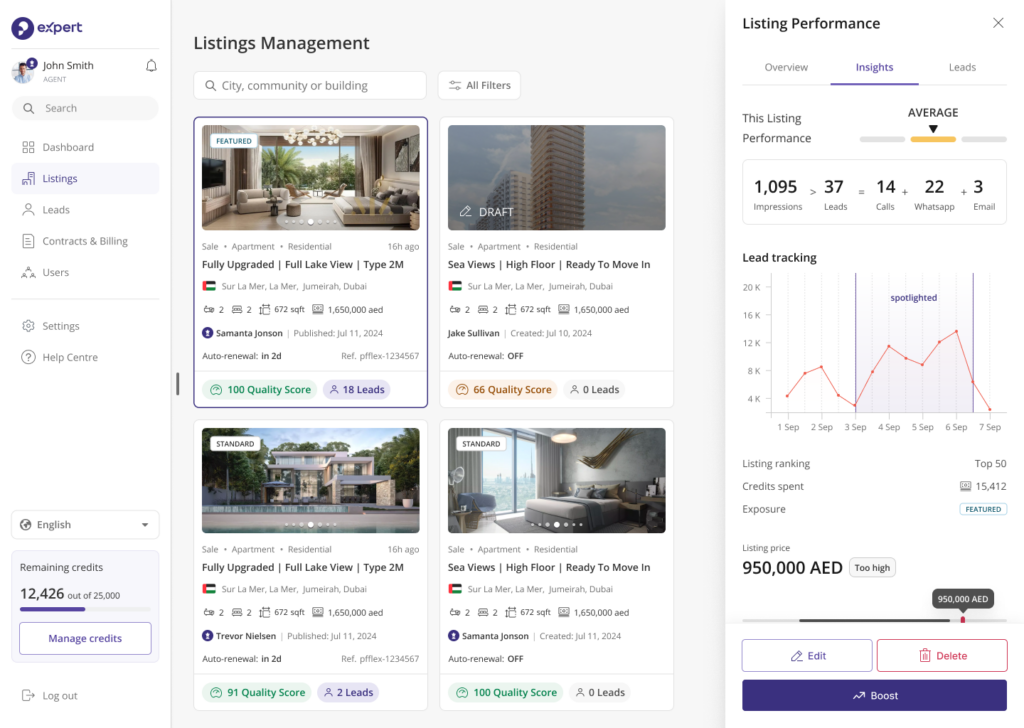
Numerous mobile and web-based client database apps are available. Some of these include Zoho, Zendesk, Monday, Salesforce, and so on. They offer varying levels of functionality and customization. In many cases they have a free trial or a free version, but may limit the number of clients you can input, or limit your access to other important features.
When choosing, it is advisable to consider factors like budget, ease of use, and integration with other tools. You don’t want to invest the time to enter all of your contacts and prospects, only to have to do it again later, on a different platform, if you made the wrong choice. Probably some of the most important things to consider are what tools the app offers to help you manage and contact your leads and customers, as well as how expensive it will be over the long term.
While not as sophisticated as CRM platforms, a well-designed spreadsheet in Excel can be a simple and cost-effective way to manage your database. Although it is important to note that maintaining data integrity and scaling your operations might get challenging with a spreadsheet as your database grows beyond a few hundred contacts. You’ll also want to think carefully about what fields you want in your spreadsheet, and ensure you enter the information the same way every time.
Regardless of the real estate CRM platform you choose, ensure it allows you to:
Choosing the right platform for your real estate client list is very important. It helps make your work easier, keeps your clients happy, and helps your business grow.

Image Source: Pexels
To build a comprehensive client database that improves your sales, there are relevant data points, or information, that provide insights into your customer’s preferences, behavior, and interactions. Some essential ones to include are:
Remember to always obtain consent before adding someone to your database and ensure you comply with local data privacy regulations.

Image Source: Pexels
Sometimes, entering and updating all that information can feel like a big task. Thankfully, Customer Relationship Management (CRM) tools make this task easier by organizing and managing all your client information in one place.
We’ve detailed five simple processes or steps for entering and maintaining accurate client data using CRM tools.
CRM tools often provide user-friendly interfaces with customizable fields, making it easy to enter client information accurately. Stick to essential details like names, contact information, and property preferences to keep data entry simple and efficient.
Take advantage of automation features offered by CRM tools to streamline data entry processes. For example, you can set up automated forms or workflows to capture client information directly from online inquiries or email communications, reducing manual entry errors. Property Finder’s Built-In CRM does this exceptionally well.
Many CRM tools include built-in validation rules to ensure data accuracy. These rules can flag incomplete or incorrect entries, helping you to see and correct them before saving. By enforcing data validation, you maintain a higher standard of accuracy across your database. Accuracy makes your CRM useful.
Use CRM tools to segment your client database based on specific criteria, such as property preferences or transaction history. By categorizing clients into groups or using tags, you can streamline your communications and marketing efforts more effectively, improving engagement and conversion rates from real estate leads to happy customers.
Schedule regular audits (maybe once every 3 months) and clean-up sessions to ensure your CRM database remains accurate and up-to-date. Remove duplicate entries, update outdated information, and verify contact details to prevent data degradation over time.
Structuring your real estate client database accurately and maintaining it makes everything easier to find and keeps things running smoothly.
Much more than just collecting data, effective customer database management involves actively nurturing real estate client relationships. To do that, follow these three important tips:
By focusing on personalized communication, regular follow-ups, and providing value-added services, you can strengthen your client relationships, so they come back to you with new real estate needs or real estate referrals. This will keep your real estate business thriving.
A well-maintained real estate CRM is an invaluable asset for any Dubai real estate professional who wants to be successful. By implementing the best practices outlined in this guide, hard working real estate professionals, like you, can more quickly get and close new potential customers, enhance client relationships, drive repeat business, and position themselves for long-term success in the market.
Whether you opt for a sophisticated CRM system like Property Finder’s Built-In CRM or utilize simpler tools like Excel, the most important thing is capturing relevant data points, ensuring accuracy, and actively following-up on real estate leads and your happy real estate customers.

Success in real estate is not only about market knowledge. It is also about how well you listen, communicate, stay steady under pressure, and build trust without losing professionalism. This...

Top agents build consistent results on purpose. They follow a weekly routine that gives space to new leads, active deals, and client care. This guide walks you through a model...

Dubai and the wider UAE move fast, and real estate clients expect sharp, reliable service. This guide shares 10 career-saving moves to protect your reputation, avoid common early missteps, and...
Owner looking to sell or rent? Browse more than 3,500 verified agents ready to partner with you on your property journey.
Find an Agent
