



Driving in Abu Dhabi is generally smooth, well-organised and closely monitored, well-organised and closely monitored, which is a major draw for those looking for an apartment for sale in Abu Dhabi. Behind that efficiency is a traffic regulation system designed to reduce accidents, manage heavy-vehicle movement, and keep roads flowing safely, even during peak hours.
Over the past two years, Abu Dhabi Police and the Integrated Transport Centre (ITC) have intensified efforts to improve road safety. Speed limits on several major highways have been revised, enforcement has become more precise, and smart systems, such as variable speed limits, have been deployed on key corridors. These changes are not isolated. They form part of a wider strategy to reduce serious injuries and fatalities while maintaining efficient travel across the emirate.
- How speed limits work in Abu Dhabi
- Understanding road types and designations
- Typical speed limits by street and road type
- Major roads with an 80 km/h speed limit
- Roads with a maximum speed limit of 100 km/h
- Roads operating at 120 km/h
- Abu Dhabi Highways with a 140 km/h speed limit
- Roads previously allowing 160 km/h
- New E311 speed limit reduction – September 2026
- New speed limit changes effective February 2026
- Speed limit changes in Abu Dhabi introduced earlier in 2025
- Variable speed limits and smart road systems
- Speed cameras, enforcement and penalties
- FAQs
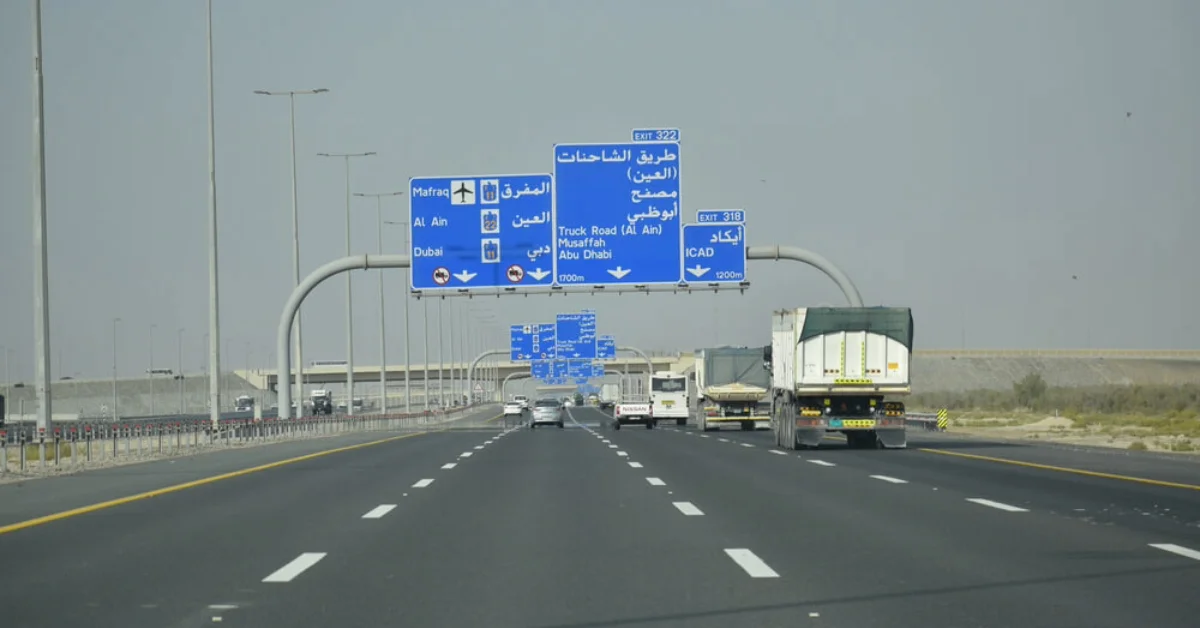
How speed limits work in Abu Dhabi
Before looking at individual roads, it is important to understand how speed limits are applied in Abu Dhabi.
Unlike Dubai and most other emirates, Abu Dhabi does not apply a speed buffer. The number shown on the sign is the enforceable limit. If the sign says 120 km/h, that is the maximum speed allowed. Even a small increase beyond that can trigger a fine.
Speed limits are set based on several factors, including:
- Road design and width
- Traffic volume and vehicle mix
- Nearby residential or commercial areas
- Accident history on the route
As a result, limits may change by direction, by interchange, or even within short stretches of the same road. Drivers are expected to follow all posted signage.
Understanding road types and designations
Abu Dhabi’s road network uses a mix of local street names and federal highway numbers. Knowing the most common designations helps drivers interpret speed limit updates and traffic announcements.
Common E-road designations
- E22 – Abu Dhabi–Al Ain Road: The main intercity highway linking the capital with Al Ain
- E20 – Sweihan Road: A key inland route connecting Abu Dhabi to the surrounding regions
- E11 – Sheikh Khalifa bin Zayed International Road: One of the longest highways in the UAE
- E30 – Al Rawdah Road: A parallel route to E22, heavily used by trucks
- E311 – Sheikh Mohammed bin Rashid Road: A major link between Abu Dhabi and Dubai
These highways carry long-distance traffic and are where most recent speed limit changes have occurred.
Typical speed limits by street and road type
While individual highways have specific speed limits, Abu Dhabi also applies standard speed ranges based on street type.
| Street or Road Type | Typical Speed Limit |
|---|---|
| School zones | 30 km/h |
| Shopping streets | 20 km/h |
| Residential areas | 40 km/h |
| Urban arterial roads | Up to 80 km/h |
| Single carriageways | 60–80 km/h |
| Dual carriageways | 100–110 km/h |
| Motorways | Up to 120 km/h (unless otherwise posted) |
These limits may be temporarily reduced due to roadworks, events, or safety considerations.
Major roads with an 80 km/h speed limit
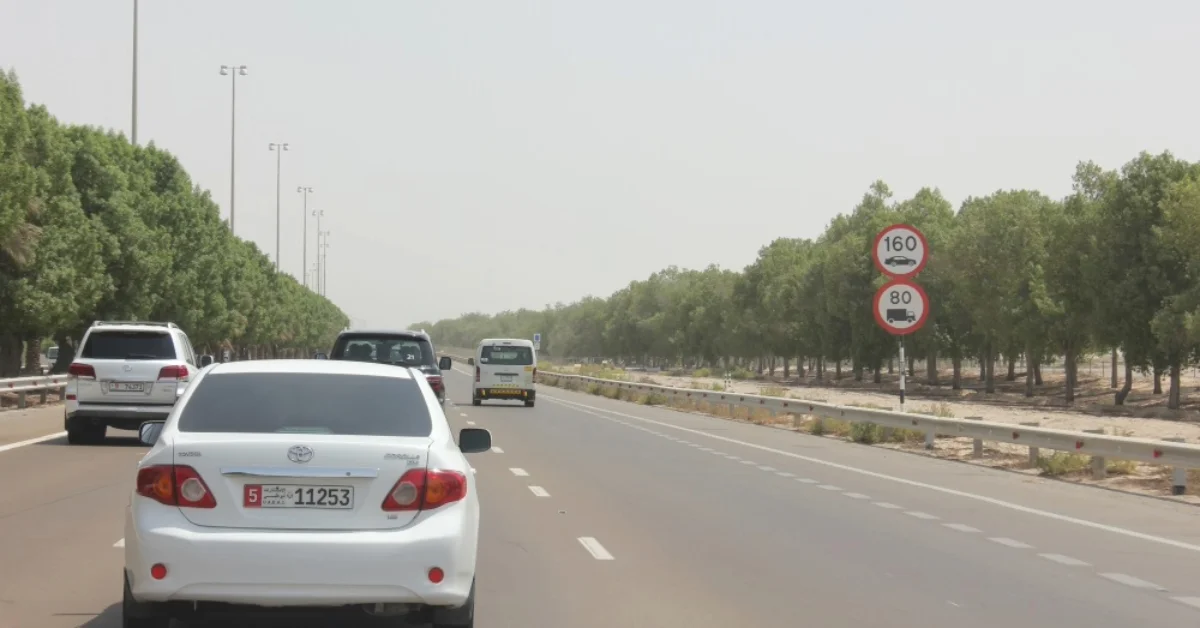
Several important streets within Abu Dhabi city operate at a maximum speed of 80 km/h. These roads usually serve mixed traffic and pass through dense urban areas.
Common examples include:
- Sheikh Rashid bin Saeed Street
- Sultan bin Zayed Street
- Corniche Street
- Zayed the First Street
- Al Falah Street
Lower limits on these roads help manage junctions, pedestrian crossings and nearby residential zones.
Roads with a maximum speed limit of 100 km/h
Many intercity connectors and truck routes operate at 100 km/h. These roads balance longer travel distances with safety, especially in areas with heavy vehicle traffic.
| Road Number | Road Name | Speed Limit |
| E30 | Abu Dhabi–Al Ain (Al Rawdah Road) | 100 km/h |
| E15 | Al Ruwais–Ghayathi Road | 100 km/h |
| E17 | Razeen–Al Qou’ Road | 100 km/h |
| E45 | Sheikh Salama bint Butti Road (selected sections) | 100 km/h |
Drivers should expect stricter enforcement on these routes due to frequent truck traffic.
Roads operating at 120 km/h
Although several highways have seen reductions, 120 km/h limits remain in place on selected routes.
| Road Number | Road Name | Notes |
| E65 | Abu Dhabi–Hameem Road | Selected sections |
| E95 | Umm Al Zamoul–Nahil Road | Long-distance desert route |
| — | Al Khaleej Al Arabi Street | Major urban connector |
On these roads, variable or temporary limits may still apply during adverse conditions.
Abu Dhabi Highways with a 140 km/h speed limit
Abu Dhabi continues to allow 140 km/h on certain highways, although this is now more limited than in the past.
| Road Number | Road Name | Direction |
| E311 | Sheikh Mohammed bin Rashid Road | Both directions |
| E11 | Dubai–Ghweifat International Highway | Selected sections |
| E66 | Al Ain–Dubai Road | Both directions |
These limits are clearly marked and closely monitored by speed cameras.
Roads previously allowed 160 km/h
The Abu Dhabi–Al Ain Road (E22) was once known for having 160 km/h sections. This is no longer the case.
Authorities reduced these limits after reviewing accident data and international safety benchmarks. The aim was to reduce crash severity without significantly increasing travel times.
New E311 speed limit reduction – September 2026
From Monday, September 14, 2026, Abu Dhabi Mobility reduced the speed limit on a section of Sheikh Mohammed bin Rashid Al Maktoum Street (E311) from 120 km/h to 100 km/h. The lower limit applies to the stretch between the At Turoush Street/Tawi Al Qaymah Street junctions and the Al Khayr Street interchange, covering traffic travelling in both directions between Abu Dhabi and Dubai. The change was announced ahead of implementation and follows a series of adjustments Abu Dhabi authorities have made to the emirate’s major highways in recent years, including the removal of E311’s minimum speed requirement in April 2025 and the February 2026 reductions on E22 and E30.
From February 9, 2026, new speed limits apply on several major roads following directives from the Joint Committee for Traffic Safety.
| Road | Section | Previous Limit | New Limit |
| E22 | Al Nahda Interchange to Bani Yas Interchange | 160 km/h | 140 km/h |
| E22 | Bani Yas Interchange to Bridge Complex | 140 km/h | 120 km/h |
| E30 | Entire road | 120 km/h | 100 km/h |
These reductions are intended to lower collision severity while maintaining steady traffic flow.
Speed limit changes in Abu Dhabi were introduced earlier in 2025
The February 2026 updates build on a series of changes introduced the previous year.
| Road | Old Limit | New Limit | Implementation Date |
| E11 | 160 km/h | 140 km/h | April 2025 |
| E20 | 120 km/h | 100 km/h | April 2025 |
| E311 | Minimum 120 km/h in left lanes | Minimum removed | April 2025 |
Removing the minimum speed limit on E311 improved driver flexibility and reduced risky lane changes.
Variable speed limits and smart road systems
Abu Dhabi has also introduced variable speed limit systems on selected roads, including Sheikh Zayed bin Sultan Street.
Under this system:
- Speed limits adjust between 80 km/h and 100 km/h
- Changes reflect traffic congestion, weather, road works or major events
- Digital signs display the active limit in real time
Drivers must follow the displayed speed, even if it is lower than the usual maximum.
Speed cameras, enforcement and penalties
Speed enforcement across Abu Dhabi is strict and technology-driven. Fixed radars, mobile cameras and overhead systems monitor most major roads.
| Speed Violation | Typical Penalty |
| More than 60 km/h over the limit | AED 1,500 traffic fine + black points |
| More than 60 km/h over limit | AED 2,000+ fine + black points |
| 80 km/h or more over the limit | AED 3,000 fine, black points and possible impoundment |
Because there is no buffer, accurate speed control is essential.
Key takeaways
- Abu Dhabi enforces posted speed limits with no tolerance buffer.
- Major highways have seen phased reductions since 2025, including further changes in February 2026.
- Variable speed zones are active and legally binding.
- Limits may change by road section, direction or conditions.
- Paying attention to signage is as important as knowing standard limits.
FAQs
No. The posted speed limit is the maximum allowed speed.
Depending on the section, speeds range from 120 km/h to 140 km/h.
No. The minimum speed rule has been removed. Only the maximum limit applies.
Yes. Variable systems and temporary signage may reduce capacity due to traffic, weather, or roadworks.
From September 14, 2026, the speed limit on the affected section of E311 in Abu Dhabi is 100 km/h, down from 120 km/h.