



Emirates Road, also known as E611, is one of the UAE’s most critical highways, linking key emirates and facilitating smooth inter‑emirate travel, logistics, and freight transport. Serving as an alternative bypass to the busy Sheikh Zayed Road (E11) and complementing Sheikh Mohammed bin Zayed Road (E311), E611 plays a vital role for commuters, fleet operators, and daily travellers alike.
This comprehensive guide explores everything you need to know about Emirates Road, including upgrades, expansions, closures, speed limits, truck bans, and practical route-planning tips, while also situating E611 within the broader Emirates route network.
- Overview of Emirates Road (E611)
- Location & Route Map Details
- Road Design, Lanes & Infrastructure
- Upgrades & Expansion Projects on Emirates Road
- Closure, Diversions & Construction Zones
- Speed Limits on Emirates Road
- Truck Rules, 2025 Truck Ban Heavy Vehicle Policies
- Driving Rules on E611: What Everyday Drivers Need to Know
- Emirates Road vs Other Major UAE Highways
- Environmental & Urban – Planning Aspects
- Future Outlook for Emirates Road
- Practical Checklists & Quick Reference
- Key Takeaways
- Frequently Asked Questions (FAQs)
Overview of Emirates Road (E611)
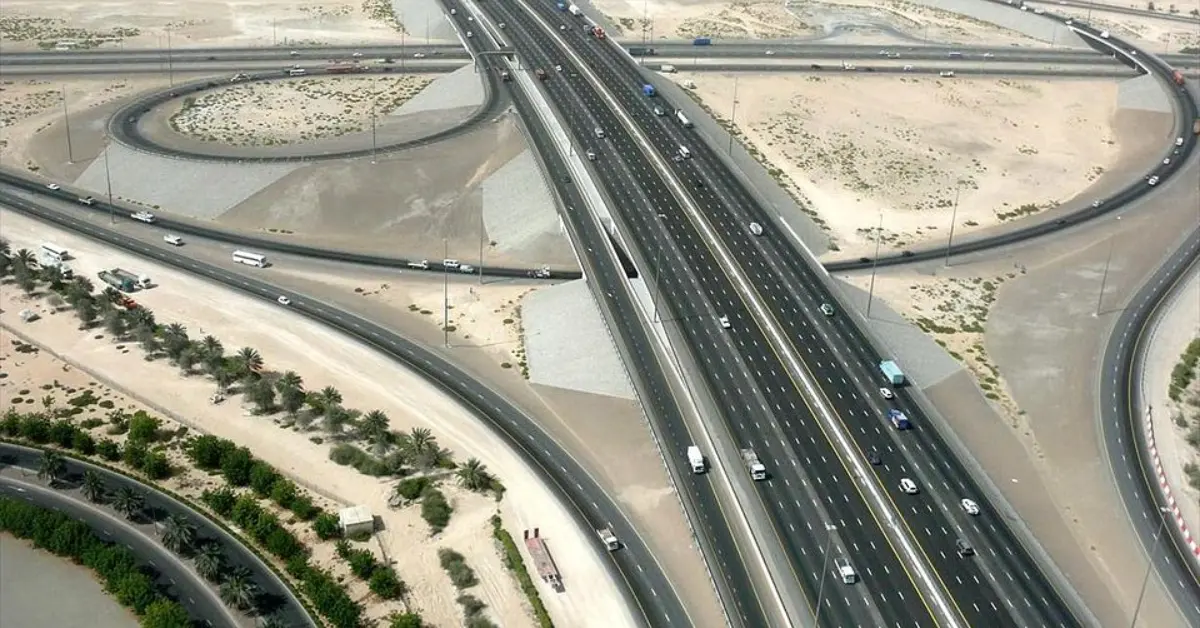
E611 is a high-capacity, modern highway designed to handle both light and heavy vehicles efficiently. It features multiple lanes in each direction, flyovers, underpasses, service roads, and Intelligent Transport Systems (ITS) for real-time traffic monitoring. The road provides access to industrial zones, logistics hubs, ports, residential communities, and business districts, making it an essential corridor for the UAE’s transport and economic infrastructure.
Route, Start-End Points & Key Intersections
- Starting Point: Al Awir Street, Dubai
- Ending Point: Northern emirates, including Ras Al Khaimah
- Major Intersections:
- Dubai – Al Awir Interchange
- Sharjah Industrial Zone junctions
- Ajman and UAQ access points
- Northern entry links to Ras Al Khaimah
These interchanges ensure smooth connectivity with E11, E311, and other feeder roads, supporting both daily commutes and heavy freight transport.
Difference Between Emirates Road, E11 & E311
| Highway | Role | Speed Limit |
| E611 | Outer bypass for inter‑emirate travel and freight | 110 km/h (radar triggers at 131 km/h) |
| E11 | Urban arterial connecting Dubai and Abu Dhabi | 100 – 120 km/h |
| E311 | Major residential and freight corridor | 110 km/h (radar triggers at 131 km/h) |
E611 is preferred for bypassing congested city areas, while E11 serves dense urban travel, and E311 provides a key corridor for residential and freight traffic.
Importance for:
- Commuters: Offers a faster, less congested route for daily travel across the Emirates.
- Logistics Operators: Critical for freight movement, connecting industrial zones, distribution hubs, and ports.
- Inter‑Emirate Travel: Enables smooth travel across multiple emirates, reducing inner-city congestion and travel time.
Location and Route Map Details
Emirates Road (E611) spans the length of several key emirates, providing a strategic corridor for inter-emirate connectivity. Starting from Al Awir in Dubai, the highway stretches northwards through Sharjah, Ajman, Umm Al Quwain (UAQ), and Ras Al Khaimah (RAK), linking industrial hubs, residential communities, and business districts along the way.
Its alignment is designed to bypass city centres, allowing smoother travel for both private vehicles and freight transport.
E611 features a well-mapped route with major interchanges connecting to other highways like E11, E311, and E44, as well as feeder roads to residential and industrial zones. Digital maps and navigation apps provide real-time guidance for drivers, highlighting closures, diversions, and alternative routes when necessary.
Emirates Covered
- Dubai: Connects Al Awir, Dubai Industrial City, and residential communities in outer Dubai.
- Sharjah: Links industrial zones, free zones, and suburban areas.
- Ajman: Provides access to the Ajman industrial and commercial districts.
- Umm Al Quwain (UAQ): Supports light and heavy traffic through northern industrial areas.
- Ras Al Khaimah (RAK): Connects logistics hubs, northern communities, and entry points to the UAE–Oman border.

Major Interchanges and Connection Points
E611 features multiple high-capacity interchanges and connection points, including:
- Dubai – Al Awir Interchange
- Sharjah Industrial Area junctions
- Ajman Access Points linking to E11 and local roads
- Northern entry links to RAK highways and border crossings
- Feeder connections to logistics corridors near Jebel Ali and major ports
These interchanges ensure seamless connectivity for both private and commercial vehicles while supporting heavy logistics traffic.
Access to Industrial Zones, Ports & Logistics Hubs
E611 is a lifeline for logistics, offering direct access to:
- Industrial Zones: Dubai Industrial City, Sharjah Airport Free Zone, Ajman Industrial Area.
- Ports: Jebel Ali Port via feeder routes and nearby logistics corridors.
- Logistics Hubs: Warehouses and distribution centres along the route, supporting freight and delivery operations.
Residential Communities & Business Areas Along E611
Along its route, Emirates Road passes near several residential and commercial areas, including:
- Suburban communities in outer Dubai
- Housing developments in Sharjah and Ajman
- Mixed-use business districts and commercial hubs near industrial zones
Road Design, Lanes, and Infrastructure
E611 is a modern, multi-lane highway built for high-volume traffic and heavy vehicles. Its design includes:
- Carriageway Layout: 3 – 4 lanes in each direction, separated by central medians.
- Lane Count: Dedicated lanes for light and heavy vehicles in specific sections.
- Service Roads, Exits & Flyovers: Numerous service roads, on/off ramps, flyovers, and underpasses to facilitate smooth merging and exit.
- Lighting & Signage: Comprehensive street lighting and road signs enhance visibility and safety.
- Intelligent Transport Systems (ITS): Real-time traffic monitoring, smart cameras, and dynamic signs provide updates on closures, diversions, and speed limits.
Parking, Lay-bys & Official Truck Rest Areas
E611 includes official truck rest areas and lay-bys, supporting compliance with the 2025 truck ban and providing safe stops for drivers. There are 19 designated rest areas across Dubai, with a total capacity of around 1,000 trucks, equipped with facilities such as parking, restrooms, and safety features to ensure secure breaks for freight operators.
Upgrades and Expansion Projects on Emirates Road
Emirates Road (E611) is continually upgraded to meet the growing needs of commuters and freight operators. The highway has undergone lane widening, new interchanges, ramps, and service road construction, while integrating with mega projects like Dubai South and logistics corridors.
Future plans include smart road technologies and adaptive traffic management to improve safety and traffic flow.
1. Recent & Ongoing Widening Projects
Several stretches of E611 have been widened to accommodate higher traffic volumes. Additional lanes have been added in both directions, shoulders expanded, and median barriers improved to reduce congestion and enhance road safety.
2. New Interchanges, Ramps and Service Roads
New interchanges and ramps have been constructed at strategic points along E611 to provide better access to industrial zones, residential communities, and business districts. Service roads and flyovers facilitate smoother merging and exit, minimising bottlenecks and travel delays.
3. Integration with Mega Projects
E611 connects seamlessly with major UAE initiatives, including Dubai South, logistics corridors near Jebel Ali, and northern emirates. These connections support freight operations, industrial access, and inter-emirate commuting.
4. Future-Planned Enhancements & Smart Road Technology
Future plans for E611 include further lane expansions, adaptive traffic signals, and integration with Intelligent Transport Systems (ITS). Smart monitoring, real-time congestion updates, and potential autonomous vehicle corridors will further improve traffic efficiency.

Closures, Diversions & Construction Zones
- Typical Reasons for Closures
Sections of E611 may be temporarily closed due to roadworks, accidents, or major events. These closures are necessary to maintain infrastructure and ensure safety for all road users.
- How RTA Announces Closures
The RTA communicates closures and diversions through smart electronic signs, mobile traffic apps, and social media updates. Drivers can access real-time information to plan alternative routes.
- Common Diversion Routes
When parts of E611 are closed, drivers are usually diverted to E311 (Sheikh Mohammed bin Zayed Road), E44 (Dubai – Hatta Road), or local industrial feeder roads near logistics hubs. These alternative routes help maintain smooth traffic flow.
- Safety Tips When Driving Through Work Zones
Drivers should reduce speed, maintain a safe distance from construction vehicles, and follow all posted signs. Avoid lane changes in work zones and remain alert to temporary detours to ensure safety.
Speed Limits on Emirates Road
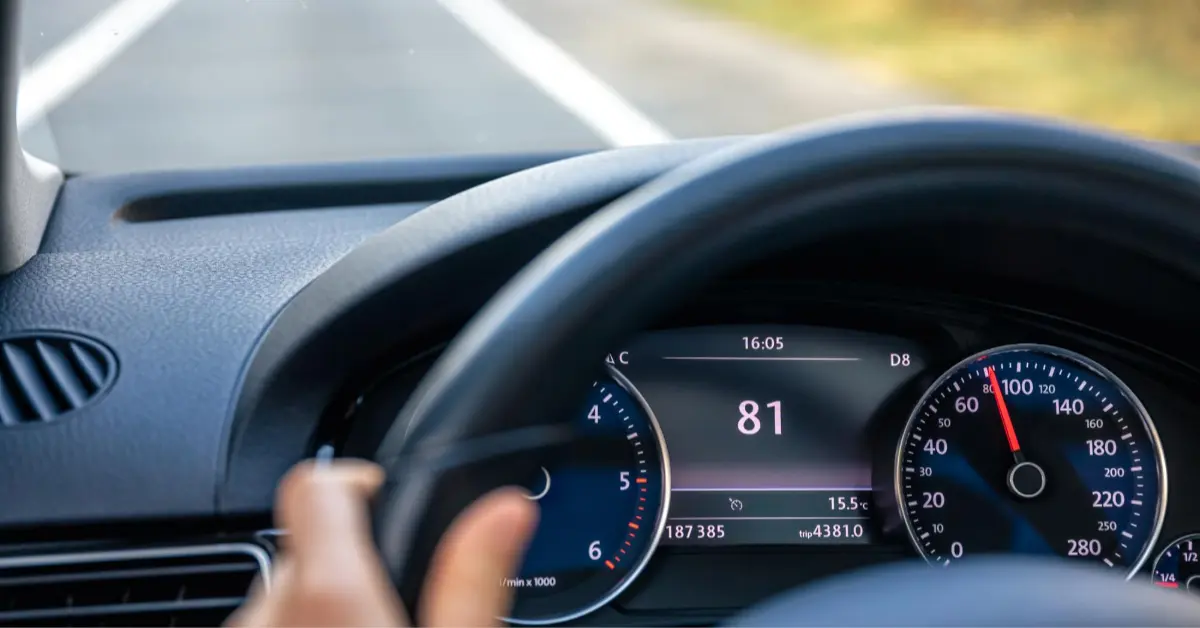
The general speed limit on E611 for light vehicles is 110 km/h, with radar systems typically triggering fines at 131 km/h.
On the other hand, buses and heavy vehicles have lower dedicated speed limits, especially near industrial zones and construction areas.
Exceeding the posted speed limit can result in fines and legal penalties enforced by the RTA and Dubai Police. Strict monitoring ensures compliance and helps maintain safety across the highway.
Truck Rules, 2025 Truck Ban & Heavy Vehicle Policies
Heavy vehicles on Emirates Road (E611) must comply with specific regulations designed to ensure safety and smooth traffic flow. These include lane restrictions, speed limits, and peak-hour movement controls for trucks to minimise congestion and reduce accident risks.
In 2025, a new truck ban was introduced on a section of Emirates Road to reduce congestion during peak hours. The ban specifically targets heavy trucks while allowing light vehicles unrestricted access.
Affected Section (Al Awir Street to Sharjah)
The truck ban applies to the stretch of E611 between Al Awir Street and Sharjah, which is a high-traffic corridor frequently used by freight operators.
The restriction applies towards Sharjah, preventing heavy trucks from entering this direction during designated peak periods.
Peak-Hour Truck Ban Timings (Full Schedule)
The truck-ban schedule includes three peak periods on E611:
- Morning Peak: 06:30 – 08:30
- Midday Peak: 13:00-15:00
- Evening Peak: 17:30 – 20:00
Trucks violating the ban face fines and legal penalties enforced by RTA and Dubai Police. Strict adherence is necessary to avoid repeated offences and ensure smooth traffic flow.
Alternative Routes & Truck Rest Areas
During peak-hour restrictions, trucks are directed to:
- Sheikh Mohammed bin Zayed Road (E311) for long-haul freight travel
- Dubai – Hatta Road (E44) for northern access
- Truck Road via Al Lehbab connecting industrial corridors
- Industrial corridors near Jebel Ali to maintain freight flow
Driving Rules on E611: What Everyday Drivers Need to Know
- Lane Discipline & Overtaking Guidelines
Drivers must maintain lane discipline, overtake safely, and avoid abrupt lane changes. Heavy vehicles are restricted to specific lanes to reduce congestion and enhance safety.
- Minimum Speeds & Heavy-Vehicle Lane Restrictions
A minimum speed applies to light vehicles, and trucks must adhere to lower dedicated limits. Heavy-vehicle lane restrictions are enforced to separate slower traffic from faster-moving cars.
- Fog, Sandstorm & Weather-Related Advisories
Drivers should monitor weather alerts during fog, sandstorms, or rain. Reduced speed limits and hazard lights are advised to prevent accidents in low-visibility conditions.
Emirates Road vs Other Major UAE Highways
- Comparison with Sheikh Zayed Road (E11)
E11 runs along the coast and serves as an urban arterial highway, with lower speed limits in some sections and more urban congestion compared to E611.
- Comparison with Sheikh Mohammed bin Zayed Road (E311)
E311 is another outer bypass used for both residential and freight traffic, with similar speed limits to E611. It offers an alternative route for heavy vehicles during E611 truck-ban periods.
When to Choose E611 Over E11/E311
| Highway | Code | Typical Speed Limit | Main Role |
|---|---|---|---|
| Emirates Road | E611 | 110 km/h (radar 131 km/h)[2] | Outer bypass, inter‑emirate & freight |
| Sheikh Zayed Road | E11 | 100–120 km/h (radar 121–141 km/h)[2] | Urban arterial through Dubai/Abu Dhabi coast |
| Mohammed bin Zayed Road | E311 | 110 km/h (radar 131 km/h)[2] | Major residential & freight corridor |
Environmental & Urban – Planning Aspects
- How E611 Supports Decongesting Inner City Roads
Emirates Road (E611) functions as a major outer bypass, diverting heavy traffic and long-distance vehicles away from Dubai’s inner-city roads. By providing an alternative corridor for freight and inter-emirate commuters, E611 helps reduce congestion, travel time, and the environmental impact on densely populated urban areas.
- Emissions, Noise & Buffer Corridors Near Communities
The highway incorporates buffer corridors and landscaped areas near residential communities to minimise noise and air pollution. By regulating truck access and promoting lane discipline, E611 contributes to a cleaner, quieter, and safer environment for nearby neighbourhoods.
- Integration with Dubai’s 2030 Road‑Safety Vision
E611’s traffic management measures, including truck bans, speed monitoring, and smart signage, align with Dubai’s 2030 Road-Safety Vision. These initiatives aim to reduce road deaths to zero and cut truck-related crashes by approximately 20%.
Future Outlook for Emirates Road
- Expected Policy Changes (Truck Rules, Speed Limits)
Future policies on E611 are likely to include updates to truck regulations, revised speed limits in certain segments, and new enforcement measures to ensure smooth traffic flow. Fleet operators should stay informed about any changes to comply with upcoming rules.
- Planned Extensions or New Interchange Projects
Authorities plan to expand E611 with additional lanes, interchanges, and service roads to meet growing traffic demands. These projects aim to improve connectivity with industrial hubs, residential areas, and other major highways.
- Potential Smart-Road & Autonomous-Vehicle Features
E611 is set to integrate smart road technologies, including AI-powered traffic management, real-time congestion updates, and support for future autonomous vehicle operations. These features will enhance safety, efficiency, and predictive traffic control.
- What Motorists & Fleets Should Monitor in the Coming Years
Drivers and fleet operators should monitor roadwork schedules, policy updates, truck-ban timings, and smart traffic systems. Staying informed ensures compliance, safer driving, and optimised route planning.
Practical Checklists & Quick Reference
- Follow the posted speed limits and lane discipline
- Avoid driving in prohibited heavy-vehicle lanes
- Use emergency lanes only when necessary
- Check weather alerts for fog, sandstorms, or rain
What to Do in Case of Breakdown or Accident on E611
- Move vehicles to designated lay-bys or emergency lanes
- Notify RTA or Dubai Police through official communication channels.
- Follow safety protocols and wait for assistance while keeping passengers safe.
- Report incidents promptly to avoid further congestion or risk.

Key Takeaways
Emirates Road (E611) is a key outer bypass highway in the UAE, connecting multiple emirates and serving both daily commuters and heavy logistics traffic. The posted speed limit for light vehicles on E611 is generally 110 km/h, with radar enforcement typically triggered around 131 km/h, while heavy vehicles follow lower, dedicated limits.
Starting in 2025, a targeted truck ban has been implemented on the stretch between Al Awir Street and Sharjah (towards Sharjah), enforced jointly by the RTA and Dubai Police. Peak-hour truck restrictions occur in three windows: 06:30–08:30, 13:00–15:00, and 17:30–20:00, significantly impacting freight scheduling and route planning.
To support compliance, Dubai provides 19 dedicated truck rest areas along key corridors, including E611, accommodating approximately 1,000 trucks, alongside clearly signposted diversion routes. The combination of truck bans, strict speed enforcement, and smart-road technologies is designed to reduce congestion, enhance road safety, and contribute to Dubai’s 2030 road-safety and sustainability objectives.
FAQs
The general speed limit for light vehicles on Emirates Road (E611) is 110 km/h, with speed cameras usually triggering fines at around 131 km/h.
In 2025, trucks are prohibited on E611 during three peak periods: 06:30 – 08:30, 13:00 – 15:00, and 17:30 – 20:00. There is an additional focused restriction between Al Awir Street and Sharjah in the evening towards Sharjah.
The truck ban primarily affects the stretch between Al Awir Street and Sharjah for vehicles travelling towards Sharjah during designated peak hours.
Trucks that violate the ban face fines and penalties, with enforcement carried out by the RTA and Dubai Police.
During restricted times, trucks can use Sheikh Mohammed bin Zayed Road (E311), Dubai – Hatta Road (E44), the dedicated truck road via Al Lehbab, and industrial corridors near Jebel Ali, along with designated truck rest areas for waiting.