


Bait Sheikh Saeed Bin Hamad Al Qasimi is a primary heritage landmark on Sharjah’s east coast, situated in the historic coastal town of Kalba. Constructed at the turn of the 20th century, the house played a central role in the political and administrative life of the Emirate of Kalba during the pre-oil era, functioning as both a ruling residence and a seat of governance.
- Introduction to Bait Sheikh Saeed Bin Hamad Al Qasimi
- Location and access
- Historical background of the house
- Architecture and design
- From the governing house to museum
- Museum collections and exhibitions
- Cultural and Historical Significance
- Current Exhibition
- Key takeaways
- FAQs
Introduction to Bait Sheikh Saeed Bin Hamad Al Qasimi
Originally constructed as the residence of Sheikh Saeed bin Hamad Al Qasimi, ruler of Kalba, the house was designed to accommodate both official duties and family life within a single coastal complex. Governance activities, formal receptions, and correspondence were conducted alongside domestic routines, reflecting the integrated nature of leadership at the time.
Now operating as an active museum under the management of the Sharjah Museums Authority, the site preserves Kalba’s political, social, and architectural heritage. Its restored spaces and curated collections provide a site-specific perspective on governance, family structure, and coastal defence on Sharjah’s east coast, without removing the house from its original historical context.
Location and access
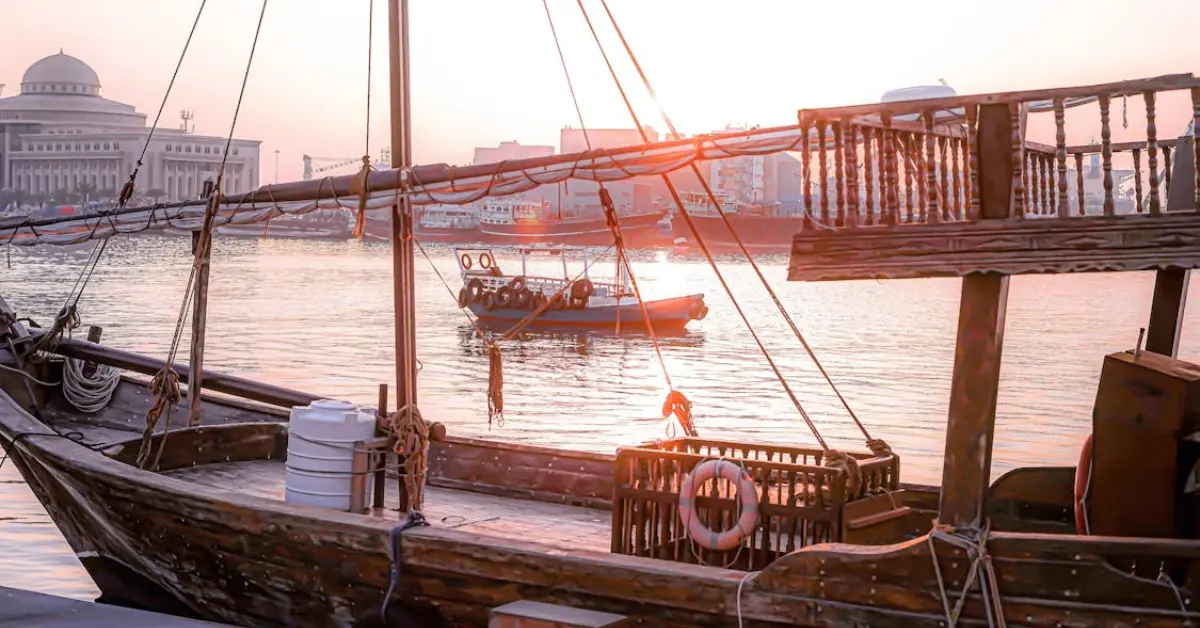
Located along the Kalba Corniche, it is accessible via Sharjah–Kalba Road (E88 / E102). It is also worth noting that it is opposite Kalba Fort, making it easy to combine both sites in a single visit
Opening hours
Saturday–Thursday: 8:00 AM – 8:00 PM
Friday: 4:00 PM – 8:00 PM
Historical background of the house
The historical value of the house is inseparable from Kalba’s period as an autonomous emirate and its strategic position along the Gulf of Oman.
Construction period (1898–1901)
The house was built between 1898 and 1901 using traditional Emirati construction methods and locally available materials suited to the coastal climate.
Sheikh Saeed bin Hamad Al Qasimi and Kalba’s governance
From 1903 to 1937, the house served as the official seat of governance for the Emirate of Kalba under Sheikh Saeed bin Hamad Al Qasimi.
Administrative and diplomatic role
The house hosted political meetings, tribal negotiations, and diplomatic exchanges, including agreements with British representatives during the Trucial States period. Its proximity to Kalba Fort reinforced its administrative and defensive function.
Architecture and design
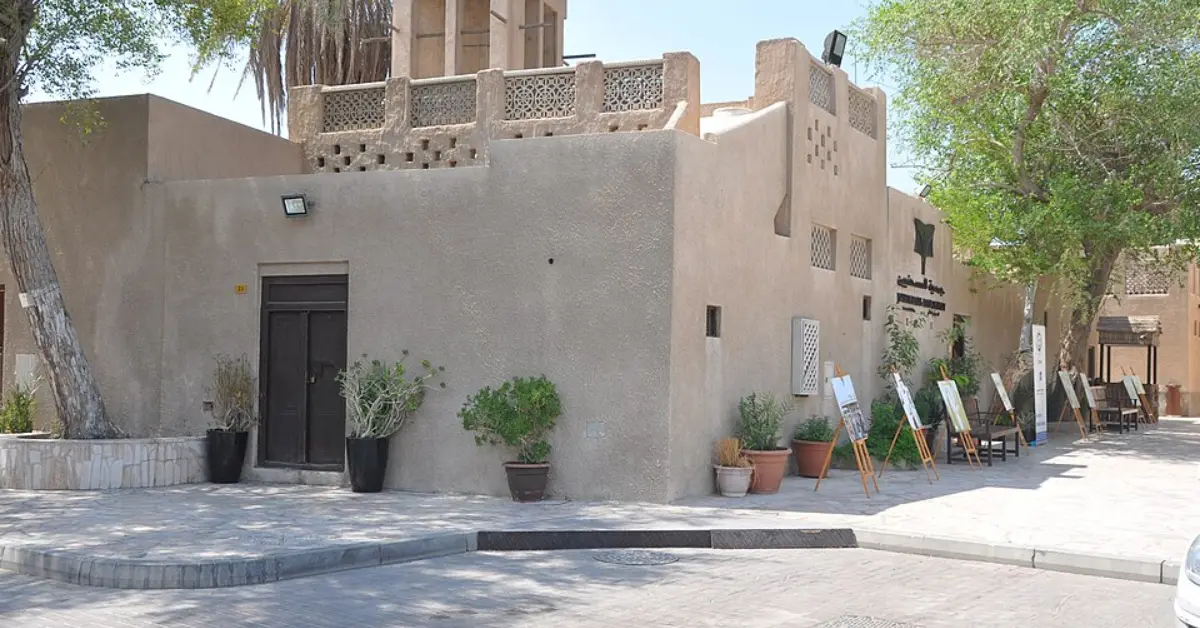
The architectural layout reflects both authority and privacy, shaped by social norms, security needs, and environmental conditions.
Dual-section structure
The house follows a strictly divided dual-zone layout, reflecting both governance needs and cultural norms of privacy.
Eastern section (public and administrative):
- Dedicated to governance and male guest reception
- Includes the Majlis, used for meetings and decision-making
- Contains the Morabba’a, a square defensive tower
- Features a surrounding defensive wall fitted with Mazaqhel (narrow loopholes used for surveillance and shooting)
Western section (private and domestic):
- Reserved for family living quarters
- Includes bedrooms, service areas, storage rooms, and domestic circulation spaces
- Designed to ensure privacy while maintaining airflow and thermal comfort
Materials, orientation, and climate response
The house was built using locally available materials, including:
- Coral stone
- Gypsum plaster
- Wooden beams and palm components
Instead of large windows in private areas, the structure relies on wind-catcher systems and controlled openings, allowing ventilation while maintaining privacy.
The house faces the beach directly and is positioned opposite Kalba Fort, reinforcing its combined administrative and defensive role within the coastal settlement.
Discover more Famous Forts in the UAE.
From the governing house to museum
As Kalba’s political status changed, the role of the house evolved from authority to preservation.
Decline and restoration
Following Kalba’s integration into Sharjah, the house gradually lost its administrative role. Restoration efforts began in the 1990s to protect its architectural integrity.
Museum opening and recent reopening
- First opened to the public: 5 December 1999
- Major restoration and enhancement: Completed in line with SMA directives
- Reopened: October 2023, with updated exhibitions and interpretive displays
Museum collections and exhibitions
The museum’s displays focus on governance, religion, daily life, and coastal defence in the pre-oil era.
Rare correspondence and personal documents
A standout current display is “Letters Exchanged”, an exhibition featuring 125-year-old handwritten correspondence between Sheikh Saeed bin Hamad Al Qasimi and members of his family. These letters are being publicly displayed for the first time, offering rare insight into governance, family relations, and daily administration.
Weapons and security artefacts
The collection includes historically significant arms, such as:
- A matchlock gun (Um-Fateela) decorated with sheet silver
- A Sahili Khanjar (coastal dagger) featuring gold and silver wirework
These items reflect the defensive realities of coastal rule during the period.
Islamic heritage and manuscripts
Among the most important artefacts is a Qur’an manuscript inlaid with gold, preserved for approximately 700 years, highlighting the religious and scholarly traditions connected to the region.
Domestic tools and everyday life
Exhibits also document pre-oil daily life through objects such as:
- Alyazrh, a traditional irrigation tool made from palm trunks and pulleys
- Mandoos, a carved wooden storage chest
- Hawin, a mortar carved from a tree trunk
Together, these items reconstruct the rhythm of domestic and agricultural life in coastal Kalba.
Cultural and Historical Significance
Bait Sheikh Saeed Bin Hamad Al Qasimi stands as:
- A symbol of Kalba’s political autonomy in the early 20th century
- A witness to British–Trucial States relations
- A rare example of a coastal ruling house preserved on site.
- A key anchor within Sharjah’s east coast heritage trail
Its value lies not only in its architecture, but in its ability to document governance, defence, religion, and domestic life within a single, coherent site.
Current Exhibition
Below is what visitors can see at Bait Sheikh Saeed Bin Hamad Al Qasimi today, along with practical details for planning a visit, including exhibitions, opening hours, and access.
Ongoing exhibition
The Spectra of the Beautiful Past Exhibition
- Dates: 25 September 2025 – 31 May 2026
- Focuses on memory, material culture, and continuity between past and present
Key takeaways
Bait Sheikh Saeed Bin Hamad Al Qasimi is a rare example of a coastal ruling house that functioned simultaneously as a family home and a seat of governance. Its architecture, collections, and location offer a detailed window into Kalba’s political history and everyday life on the UAE’s east coast before the oil era.
FAQs
In Kalba, on Sharjah’s east coast, facing the Gulf of Oman.
It is built between approximately 1898 and 1901.
Sheikh Saeed bin Hamad Al Qasimi and his extended family.
Islamic manuscripts, weapons, correspondence, household artefacts, and reconstructed living spaces.
It documents Kalba’s autonomy, governance, and social life during the Trucial States era.