



Dubai rent prices are shifting, and this change is in renters’ favour. After years of steady increases, asking rents across some of the most established communities witnessed notable year-on-year declines through 2026, with market data pointing to continued softening into 2027. For anyone looking to rent or renegotiate, this is the most tenant-friendly leasing environments in several years.
This guide covers what the latest data shows, which areas recorded rent price drops, and what the rent decrease in Dubai means for anyone deciding whether to move, renew, or negotiate.
- Dubai rent prices in 2026–2027: What the data shows
- Which areas have seen the biggest rent drops?
- Areas where rents are still rising
- Why are Dubai rents falling?
- Average rent price in Dubai by unit type
- What this means if you’re renewing your lease
- What this means if you’re moving to a new home
- Key takeaways
- FAQs
Dubai rent prices in 2026–2027: What the data shows
The median asking rent across ten key apartment communities peaked at AED 135,000 per year in December 2025. By June 2026 it had fallen to AED 100,000, a drop of roughly 26% in six months, before a modest recovery to AED 105,000 in September 2026. For anyone tracking Dubai apartment rent prices, this represents the clearest downward repricing the market has seen since the post-pandemic surge.
The supply shift driving this change is significant. Daily apartment listings in September 2026 were 55.1% higher than the same month in 2025. Renter enquiries also grew, up 15.4% year-on-year, but the pool of available properties expanded far faster. Each listing attracted 23% fewer enquiries than it did twelve months prior.
A further measure of the market’s direction: in July and August 2026, new leases outpaced renewals for the first time since records began in January 2023. Renewals had led for 36 consecutive months before that shift.
Which areas have seen the biggest rent drops?
Apartments
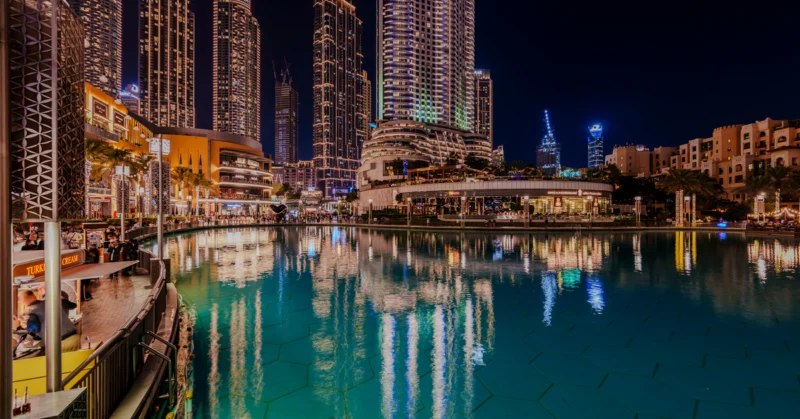
Downtown Dubai is one of the communities where the repricing has been most pronounced, with average new leases registered at AED 211,300 per year across 11,175 contracts in the past 12 months. Cherif Sleiman, Property Finder’s Chief Revenue Officer, described this as a genuine repricing rather than a migration toward smaller units.
Dubai Marina is the most transacted rental community in the city, with 15,785 registered leases and average new contracts at AED 128,500 per year. Business Bay averages AED 105,800 per year for new leases, while Jumeirah Village Circle, the highest-volume rental community with over 33,000 registered leases, comes in at AED 75,300. At the premium end, Palm Jumeirah averages AED 388,900 per year for new leases across all unit types, including villas.
| Community | Avg new lease (AED/yr) |
| Downtown Dubai | 180,000 |
| Dubai Marina | 128,500 |
| Business Bay | 105,800 |
| Jumeirah Village Circle | 75,300 |
| Palm Jumeirah | 388,900 |
Villas
Dubai’s villa market followed a similar pattern. The sharpest declines were in Arabian Ranches 3 (-18.9%), Mohammed Bin Rashid City (-15.0%), and Dubai South (-12.4%). New villa leases in Al Hebiah Fourth dropped 15.8%, and Al Hebiah Third recorded a 9.9% decline.
For renters weighing the Dubai rent house price in villa communities, the gap between current asking rents and those of a year ago represents a meaningful saving, particularly in outer-belt communities where handover volumes have been highest.
Areas where rents are still rising
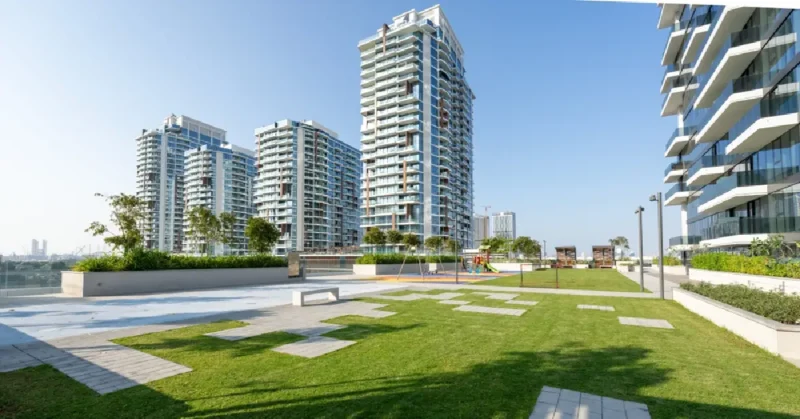
Not all of Dubai is seeing a Dubai rent decrease. Outer and more affordable communities saw upward rent movement in the same period, as cost-conscious renters relocated away from prime areas.
Among apartments, Me’Aisem First recorded the strongest growth (+11.3%), followed by Al Yelayiss 2 (+10.3%), Wadi Al Safa 2 (+9.1%), and Warsan Fourth (+7.9%). For villas, Jabal Ali First saw an increase, as well as Dubai Hills Estate and Al Warsan First.
These communities are absorbing renters who have relocated outward. Al Yufrah 1, home to Emaar’s The Valley development, saw lease registrations rise 144% year-on-year, while Al Hebiah Second leases rose 47.6%.
Why are Dubai rents falling?

Supply is the primary driver. Many off-plan properties bought by investors in 2022 and 2023 have since completed and entered the rental market simultaneously, increasing available stock across prime and established communities far faster than demand has grown.
The pipeline ahead amplifies this. Over 160,000 homes are scheduled for completion across Dubai in 2027, well above the five-year annual average of roughly 35,500 units. Around 66% of those homes were already sold off-plan, meaning a large share will be listed for rent on handover. Communities such as Jumeirah Village Circle and Business Bay are among those with the highest incoming supply.
Average rent price in Dubai by unit type
Renters assessing the market will find significant variation by unit size. Based on new lease data from 2026, the average rent price in Dubai breaks down as follows:
| Unit type | Average annual rent — Dubai Marina (AED) |
| Studio | 64,600 |
| One-bedroom apartment | 94,500 |
| Two-bedroom apartment | 169,400 |
| Three-bedroom apartment | 227,700 |
Studios and one-bedroom units account for the overwhelming majority of new lease activity, dominating enquiries in apartment communities.
Whether you are comparing a Dubai home rent price across communities or reviewing the Dubai rent apartment price for a larger unit, the current market offers more competitive entry points than at any stage in the past three years.
For renters specifically focused on Dubai flat rent prices at the studio or one-bedroom level, asking rents have eased materially across most established areas. Browse apartments for rent in Dubai on Property Finder.
What this means if you’re renewing your lease
Renewal rents are still rising, but at a much slower pace than new leases are falling. Landlords pushed renewal rents up by 4% to 14% depending on unit type, while new-lease rents for comparable units in the same buildings were running 15.3% below January 2026 levels by mid-year.
If your permitted rent increase feels steep, you can check comparable listings before accepting. Property Finder’s Chief Revenue Officer recommended that renters compare their options and negotiate, noting that landlords are more motivated to retain reliable tenants in a market with significantly more choice.
For high-rent communities such as Downtown Dubai or Business Bay, the gap between renewal terms and current new-lease pricing may be substantial enough to make a move financially worthwhile.
What this means if you’re moving to a new home
Renters entering the market, or upgrading within it, have more bargaining power than at any point since early 2023. With listings up over 55% year-on-year and each property attracting fewer competing enquiries, landlords are more open to negotiation on price, payment terms, and contract length.
For value-focused renters, Jumeirah Village Circle, Arjan, Dubai Sports City, and Dubai South offer some of the most competitive Dubai apartment rent prices in the city, combined with strong transport links and modern amenities.
Barney Crompton of Eden Realty expects the market to remain stable or softer over the next three to six months, particularly in areas with heavy handover pipelines. Business Bay and Downtown Dubai, he noted, are showing early signs of stabilisation, suggesting that the steepest rent decreases in those communities may already be priced in.
Key takeaways
- Dubai rent prices have fallen across most established communities. Average new leases now sit at AED 128,500/yr in Dubai Marina, AED 105,800/yr in Business Bay, and AED 75,300/yr in Jumeirah Village Circle, creating a more competitive market for renters than in prior years.
- Supply is outpacing demand: listings rose 55.1% year-on-year in September 2026 while enquiries per listing fell 23%, giving renters more choice and stronger negotiating power than in several years.
- Renters on renewals continue to face increases of 4-14%, while new leases in comparable buildings were running 15.3% below January 2026 levels, making switching a financially sound option in many cases.
- Over 160,000 new homes are due for completion in Dubai in 2027, keeping downward pressure on rents in supply-heavy communities through the year ahead.
FAQs
Yes. Asking rents fell year-on-year in nine of the ten apartment communities tracked by Property Finder between Q3 2025 and Q3 2026. The combined median asking rent dropped from AED 135,000 in December 2025 to AED 100,000 by June 2026, before a partial recovery to AED 105,000 in September 2026.
Areas that have recorded notable rent reductions include Downtown Dubai, Dubai Marina, Business Bay, and Meydan. Property Finder transaction data shows average new leases in Dubai Marina at AED 128,500 per year and Business Bay at AED 105,800, reflecting a meaningful step down from the peak levels seen in 2024 and early 2025.
The average rent price in Dubai varies significantly by area and unit size. Property Finder transaction data for Dubai Marina — one of the most transacted communities — shows studios averaging AED 64,600 per year, one-bedroom apartments at AED 94,500, and two-bedroom apartments at AED 169,400. More affordable communities such as Jumeirah Village Circle average AED 75,300 across all unit types.
Market analysts expect continued downward or stable pressure through 2027. Over 160,000 homes are scheduled for handover that year, well above the five-year annual average of approximately 35,500 units. Outer affordable communities may see continued rent growth, while prime districts are expected to remain flat or soften further.
Yes. With listings up 55.1% year-on-year and landlords receiving fewer enquiries per property, tenants have more leverage than at any point in recent years. Property Finder’s Chief Revenue Officer recommends that renters compare available options in their target community before accepting a quoted rent or a renewal increase.


