



Leaving a vehicle unattended in public areas is no longer treated as a minor issue in Ajman. With the introduction of Law No. 5 of 2024, the emirate has established a clear legal framework to address abandoned vehicles that affect safety, public health, and the city’s appearance.
Whether you own a private car, commercial vehicle, boat, or caravan, understanding how the law works and what happens if a vehicle is deemed abandoned is essential to avoid fines, impoundment, or auction loss.
- Law Overview
- What Qualifies as an “Abandoned Vehicle”?
- Key Players and Committees Involved
- Process for Impounding and Recovery
- Fees and Fines for Vehicle Release
- Vehicle Types and Special Scenarios
- Timeline and Key Deadlines
- Penalties and Consequences
- Step-by-Step: How to Recover Your Vehicle
- How to Avoid Your Vehicle Being Classified as Abandoned
- Key Takeaways
- FAQs
Law Overview
Law No. 5 of 2024 was enacted to strengthen traffic laws and address the growing problem of abandoned vehicles in Ajman. The Ajman abandoned vehicles law targets cars left unused in public areas, which can affect neighbourhood appearance, reduce available parking, and pose safety or environmental concerns over time. The law aims to establish a clear, structured process for handling these vehicles while encouraging owners to act before enforcement becomes necessary.
Under the legislation, the Ajman Municipality and Planning Department has the authority to identify and impound abandoned vehicles and oversee their disposal if they remain unclaimed. The process is supported by traffic, licensing, and law enforcement authorities where ownership checks, notifications, or legal steps are required. This coordinated approach ensures the Ajman abandoned vehicles law is applied fairly, efficiently, and in the public interest.
Why does Ajman Enforces Abandoned Vehicle Laws So Strictly
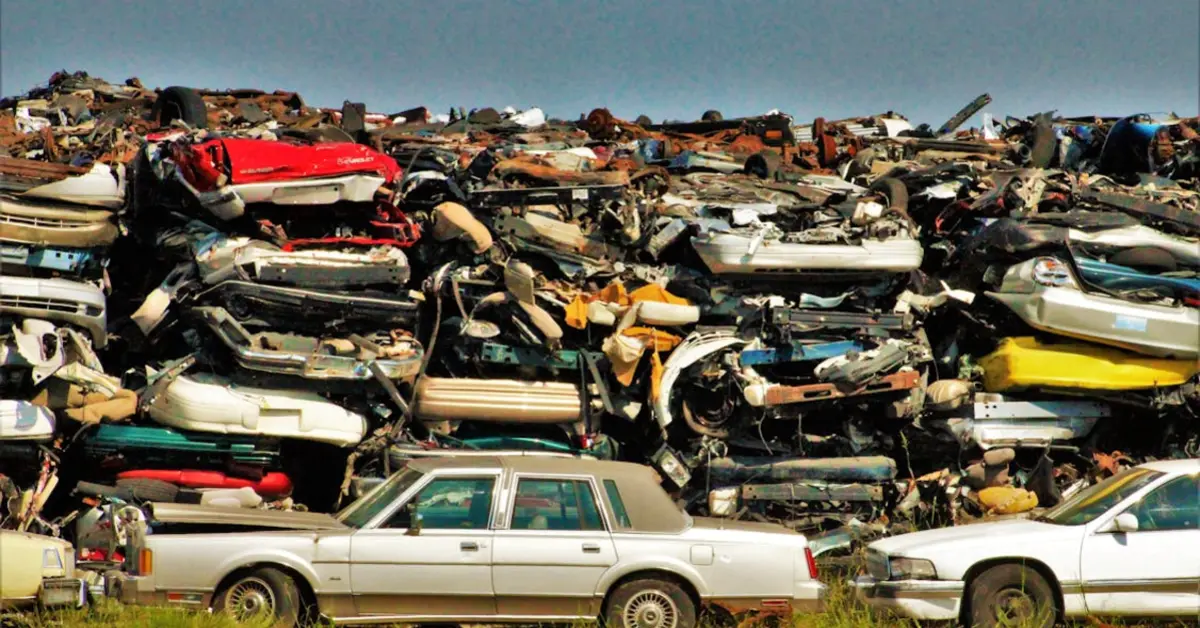
Abandoned vehicles can quickly become a problem; they take up parking spaces, block access, and detract from the overall appearance of neighbourhoods.
For residents and property owners, this can mean fewer available parking spots and cluttered streets. From a city-planning perspective, it affects how clean, organised, and liveable an area feels.
The Ajman abandoned-vehicle law is designed to prevent these issues early by establishing clear rules and timelines. The goal is not to penalise owners unnecessarily, but to protect shared public spaces and maintain safe, orderly communities.
What Qualifies as an “Abandoned Vehicle”?
Under Ajman’s abandoned vehicles law, a vehicle does not need to be damaged beyond repair to be classified as abandoned. Instead, authorities look at how the vehicle is being used, or not used, within public spaces.
A vehicle may be classified as abandoned if it meets specific criteria set out in the law. This typically includes vehicles that are:
- Left unattended in public areas without maintenance
- Visibly neglected, damaged, or affecting the appearance of the area
- Missing number plates or showing signs of long-term disuse
Once an authorised official identifies a vehicle as potentially abandoned, it enters a formal monitoring stage. If the vehicle remains in the same condition and location for seven consecutive days after identification, it can be officially classified as abandoned under the Ajman Abandoned Vehicles Law. This grace period gives owners a final opportunity to remove or address the situation before enforcement begins.
Key Players and Committees Involved
Enforcement of the abandoned vehicles law is not handled by a single authority. Instead, it relies on coordination between several government bodies to ensure due process and protect ownership rights.
- Municipality and Planning Department: Identifies vehicles, issues notices, impounds vehicles, and manages storage. The municipality also oversees the administrative side of vehicle release and disposal.
- Abandoned Vehicle Disposition Committee: Inspects vehicles, assesses condition and value, reviews objections, and prepares auction lists.
- Traffic, Licensing, and Judicial Authorities: Notified as part of the enforcement and ownership verification process.
This layered structure helps ensure vehicles are not removed or sold without proper checks and notifications.
Process for Impounding and Recovery
Ajman’s abandoned vehicle process follows a clearly defined timeline that balances enforcement with fairness. The process follows a structured timeline:
- Identification: Officials locate a neglected vehicle and mark it for monitoring.
- Seven-day period: If the vehicle remains untouched for seven days, it is officially classified as abandoned.
- Notification: Formal notifications are issued to the registered owner and any known creditors.
- Thirty-day window: Owners have 30 days from the date of notification to reclaim the vehicle, settle any fees, or submit a formal objection.
- Auction: If no action is taken, the vehicle is listed for public auction. Once auctioned, ownership is transferred, and the original owner generally loses any further claim.
Acting early in the process is therefore critical for anyone hoping to recover their vehicle.
Fees and Fines for Vehicle Release
Recovering an impounded vehicle involves more than a single payment. Fees are set by the Ajman Municipality and Planning Department and depend on the vehicle type and the length of storage.
| Fee Type | Amount |
|---|---|
| Vehicle release fee | AED 300 |
| Light vehicle transfer | AED 100 |
| Heavy vehicle transfer | AED 600 |
| Boat transfer | AED 200 |
| Caravan transfer | AED 1,000 |
| Prefabricated house transfer | AED 1,000 |
| Administrative / ground/guard fee | AED 15/day |
| Fine for displaying a vehicle for sale in an unauthorised area | AED 500 |
| Fine for violating the removal undertaking | AED 500 |
All outstanding amounts must be settled in full before a release certificate is issued.
Vehicle Types and Special Scenarios
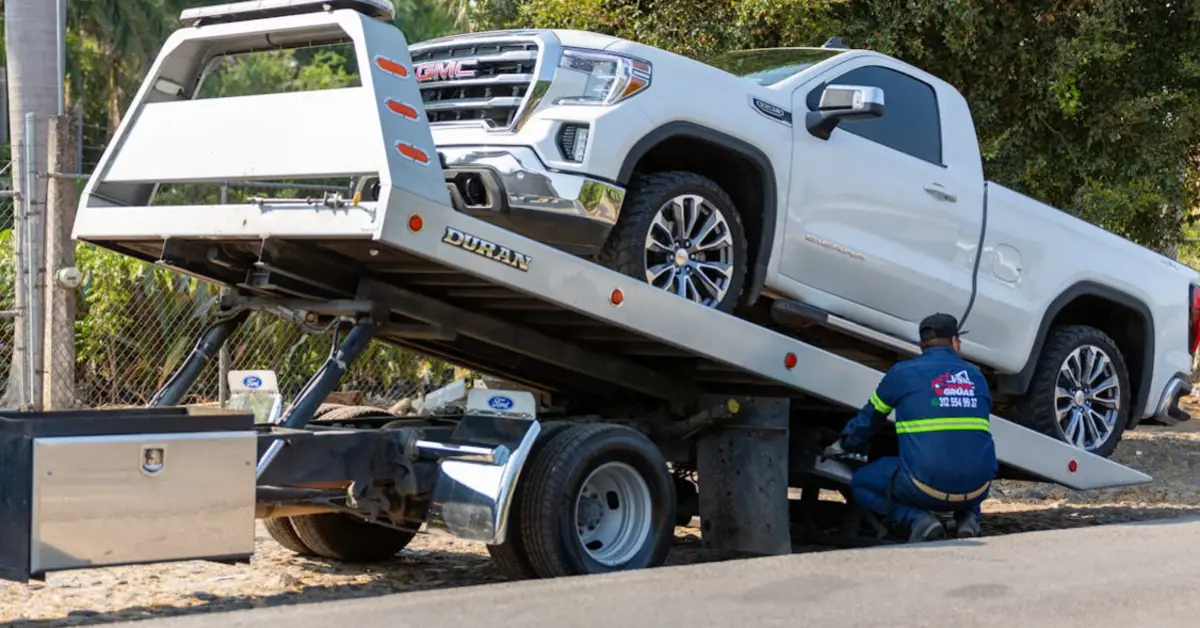
The law extends beyond standard private cars. Different categories of vehicles and structures are treated separately, reflecting their impact on public space and the logistics involved in removal.
- Light vs heavy vehicles incur different transfer charges.
- Boats, caravans, and prefabricated houses are categorised independently and carry higher charges.
- Vehicles without number plates or clear ownership records may require additional documentation before release.
Timeline and Key Deadlines
Timing is one of the most important elements of Ajman’s abandoned vehicles law.
Understanding deadlines is critical:
- Seven days: Minimum period after identification for a vehicle to qualify as abandoned.
- 30 days: Time given to owners or creditors to reclaim or object after notification.
- After 30 days, the vehicle may be auctioned if no action is taken.
What This Means for Vehicle Owners
For vehicle owners, the timelines set out in the law move quickly. A car left unattended for just over a week can already be at risk of classification, and the 30-day recovery window can pass faster than expected if notices are missed or ignored.
This is especially relevant for residents travelling abroad, selling a vehicle, or leaving a car parked long-term in public areas. Regularly checking on parked vehicles and responding promptly to official notices can prevent unnecessary fees, delays, or the permanent loss of a vehicle.
Penalties and Consequences
Failure to comply with the law can result in a range of consequences, including impoundment. Once impounded, vehicles accumulate daily storage fees, increasing the cost of recovery over time.
If a vehicle remains unclaimed, it may be auctioned and disposed of, ending the owner’s legal claim. Additional fines may apply for related violations, such as displaying vehicles for sale in unauthorised locations or failing to honour prior removal undertakings.
In practice, the longer a case goes unresolved, the more costly and complicated it becomes for the owner.
Step-by-Step: How to Recover Your Vehicle
If your vehicle has been impounded in Ajman, recovery usually follows a straightforward but time-sensitive process.
- Confirm the impoundment with Ajman Municipality or the traffic authorities.
- Gather required documents, such as ownership papers and identification, noting that expired or incomplete paperwork may require car registration updates.
- Pay all outstanding release fees, transfer charges, and daily storage fees.
- Obtain a vehicle release certificate.
- Collect the vehicle from the designated impound facility.
Delays at any stage can increase costs, so prompt action is strongly advised.
How to Avoid Your Vehicle Being Classified as Abandoned
In many cases, vehicles are impounded not because owners intended to abandon them, but due to travel, relocation, or delayed maintenance. Taking a few preventative steps can significantly reduce the risk of your vehicle being flagged.
Simple ways to avoid issues include:
- Avoid long-term street parking: If you plan to travel or leave the vehicle unused, consider private parking or a building-managed space rather than public roads.
- Maintain visible condition: Even if unused, keeping tyres inflated, the exterior clean, and plates intact helps signal active ownership.
- Respond quickly to notices: If a warning sticker or notice is placed on your vehicle, act immediately. The seven-day countdown begins once the vehicle is officially identified.
- Inform relevant parties: If your vehicle is immobile due to repairs or documentation issues, notifying building management or local authorities can help prevent misunderstandings.
- Arrange temporary movement: Moving the vehicle, even briefly, can reset attention and demonstrate that it is not abandoned.
For residents, tenants, and property owners, awareness is the most effective way to avoid fines, storage fees, or the stress of recovery procedures later on.
Key Takeaways
- Ajman abandoned vehicles law is designed to keep public spaces safe, orderly, and visually clean.
- Vehicles left unattended for seven days after official identification can be impounded, and owners have a strict 30-day window to respond before auction.
- Fees increase over time, particularly for heavy vehicles and non-standard items.
- For vehicle owners, awareness of the rules and early action are the most effective ways to avoid unnecessary penalties or permanent loss.
FAQs
It may be listed for public auction and disposed of in accordance with the law.
Yes. Objections are reviewed by the Abandoned Vehicle Disposition Committee.
Yes. All accumulated fees and traffic fines must be cleared.
Yes. Transfer fees vary by vehicle or item type.
From the designated impounded vehicles service centre after approval.