



Cycling has become increasingly popular across Dubai, from dedicated desert tracks to community cycle lanes. However, understanding the official bike rules in Dubai is essential before heading out. Whether you ride a traditional bicycle, an electric bike or an e-scooter, strict regulations apply to ensure safety for riders, pedestrians and motorists alike.
This guide explains the legal framework, where you can ride, safety requirements, penalties and everything else you need to know about bike rules in Dubai.
- Legal Framework Governing Bike Rules in Dubai
- Definitions and Cycle Types
- Where You Can Ride Under Bike Rules in Dubai
- Age and Permit Requirements
- Technical and Safety Equipment Requirements
- Behaviour and Riding Rules
- Speed Limits
- Group Training and Events
- Penalties and Fines
- Reporting and Enforcement
- Key Takeaways
- FAQs
Legal Framework Governing Bike Rules in Dubai
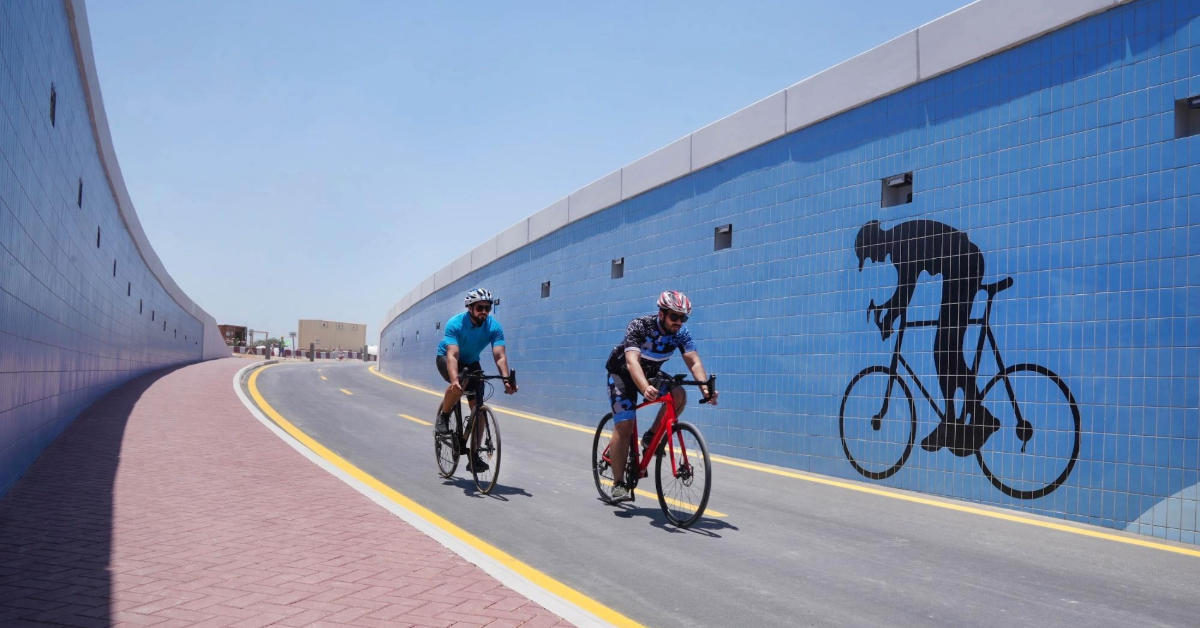
The legal foundation of bike rules in Dubai is primarily based on Executive Council Resolution No. 13 of 2022. This resolution regulates the use of pedal cycles, electric bikes, electric scooters and similar devices across the emirate.
It operates alongside Federal Traffic Law No. 21 of 1995 and its implementing regulations. Together, these laws outline where cycles may be used, who can ride them, safety obligations and applicable penalties.
The framework gives enforcement authority to relevant bodies while ensuring cycling infrastructure is integrated safely into Dubai’s wider transport network.
Discover The Top Communities for Cycling in Dubai.
Definitions and Cycle Types
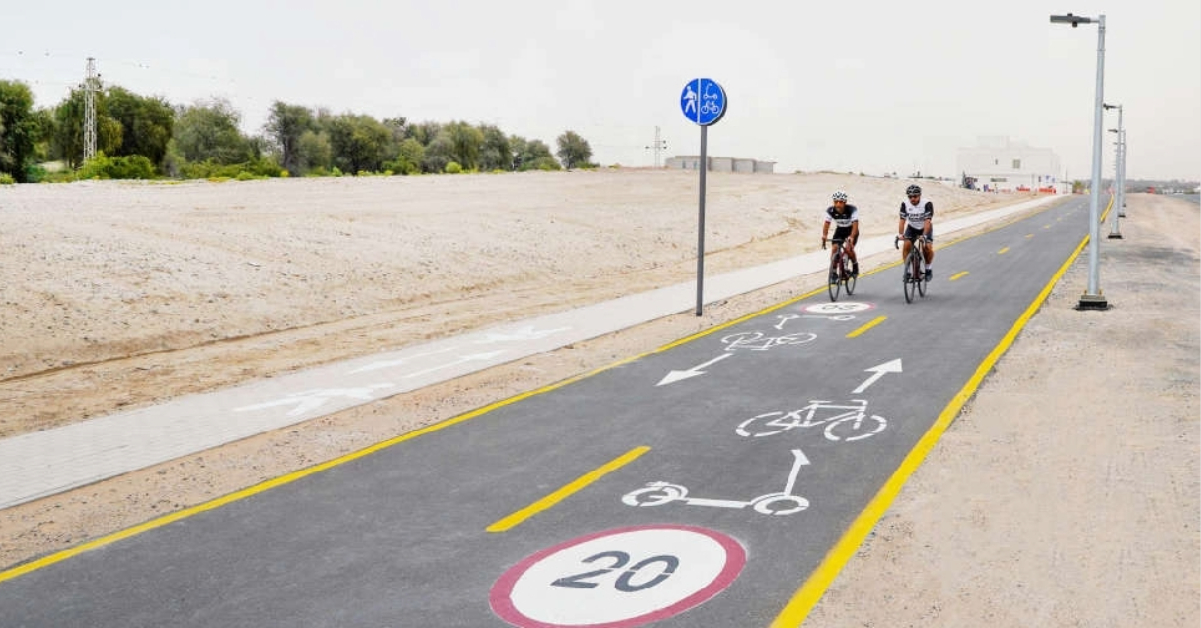
Understanding the terminology used in bike rules in Dubai helps avoid confusion, especially when comparing bicycles and electric devices.
Under the law:
- Pedal Cycle: A two- or multi-wheeled cycle powered solely by physical effort.
- Electric Bike (E-bike): A cycle fitted with an electric motor and may also be pedal-assisted.
- Electric Scooter: A motor-driven device typically ridden standing up and usually without a seat.
- Cycle Lane: A lane designated by Dubai’s Roads and Transport Authority (RTA) specifically for cycle use.
The classification matters because age limits, permits, and speed restrictions differ depending on the type of device used.
Where You Can Ride Under Bike Rules in Dubai
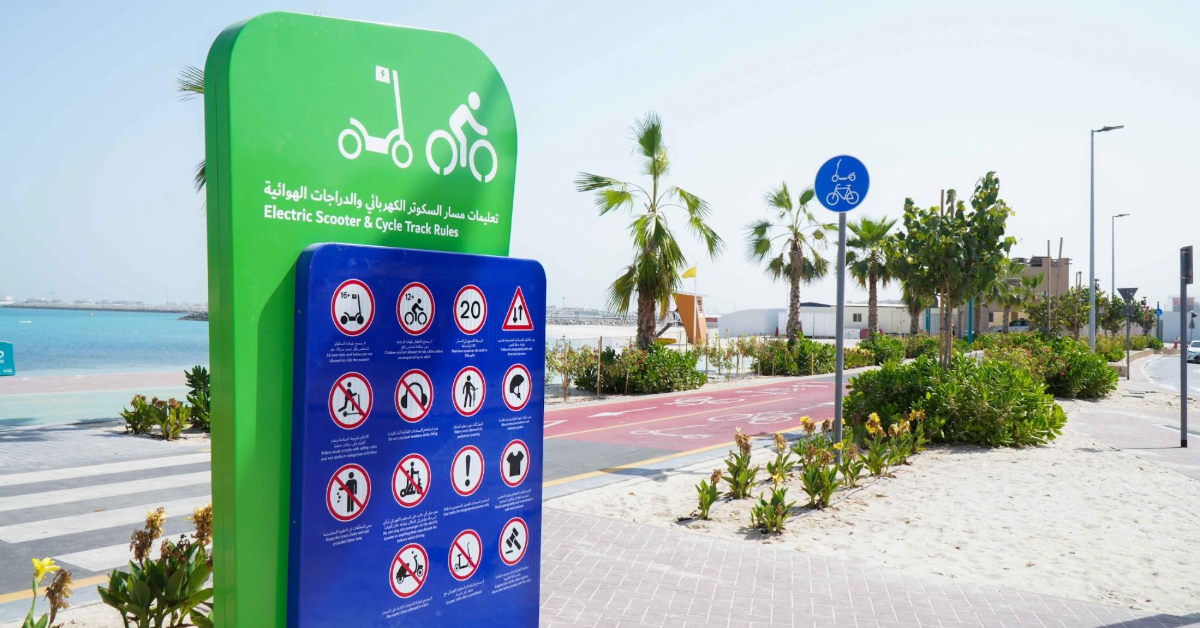
Location restrictions are a major component of bike rules in Dubai, and violations in this category often result in fines. Luckily, there are plenty of mountain bike trails in Dubai.
Cyclists must use RTA-designated cycle lanes whenever they are available. Riding on roads with posted speed limits above 60 km/h is generally prohibited unless a dedicated cycle track exists alongside the road.
It is also not permitted to ride on:
- Pedestrian-only walkways
- Jogging tracks
- Areas clearly marked for foot traffic only
Shared pedestrian and cycling paths are allowed, but these typically carry lower speed limits to protect public safety.
Age and Permit Requirements
Age restrictions are clearly defined within bike rules in Dubai and vary depending on the type of cycle.
- Riders must be at least 12 years old to ride a pedal cycle unaccompanied.
- Children under 12 must be accompanied by someone aged 18 or above.
- Riders must be at least 16 years old to operate electric bikes or electric scooters.
In addition, a Rider’s Permit issued by Dubai’s Roads and Transport Authority may be required for electric scooters and other cycle types as determined by the authority.
Parents and guardians should note that if a minor commits a violation, the guardian is responsible for paying the fine.
Technical and Safety Equipment Requirements
Safety compliance is non-negotiable under bike rules in Dubai. All cycles must meet technical specifications before being used on public roads or tracks.
Mandatory equipment includes:
- A white front light
- A red rear light
- A red rear reflector
- A bell fixed to the handlebars
- Functional brakes on both front and rear wheels
In addition, riders must wear:
- A protective helmet
- A reflective vest
Failure to meet these requirements can result in fines. These rules are designed to increase visibility, especially during low-light conditions, and reduce accident risks.
Behaviour and Riding Rules
Proper conduct forms a significant part of bike rules in Dubai. Cyclists are expected to follow the same disciplined road behaviour as motorists.
Riders must travel on the right-hand side of the road and move in the direction of traffic. Riding against traffic is prohibited.
The following actions are strictly forbidden:
- Holding onto moving vehicles
- Riding one-handed except when signalling
- Zig-zagging between lanes
- Failing to maintain a safe distance from vehicles and pedestrians
When using pedestrian crossings, cyclists must dismount and wheel their cycle across rather than ride through the crossing.
Passengers may only be carried if the bicycle or e-bike is properly fitted for that purpose. Electric scooters are not permitted to carry passengers under any circumstances.
Speed Limits
Speed control is a critical element of bike rules in Dubai, particularly on shared pathways.
| Area Type | Maximum Allowed Speed |
| Dedicated cycle lanes | 30 km/h |
| Shared pedestrian paths | 20 km/h |
| Roads with a speed limit of over 60 km/h | Cycles generally prohibited |
Exceeding these limits may lead to fines and possible confiscation of the cycle.
Group Training and Events
Cycling groups must comply with additional requirements under bike rules in Dubai.
Group training involving four or more riders requires prior approval from the RTA. Organisers must submit route details and may need to provide an escort or safety vehicles, depending on the event.
Smaller independent groups of fewer than four riders do not require trainer supervision, but all participants must comply fully with existing regulations.
Penalties and Fines
Failure to comply with bike rules in Dubai can result in financial penalties and, in some cases, confiscation of the cycle.
| Violation | Fine (AED) |
| Failure to use designated cycle lanes | 200 |
| Riding on roads over 60 km/h | 300 |
| Endangering safety | 300 |
| Cycle on a walking or jogging lane | 200 |
| No permit for an electric scooter | 200 |
| Carrying a passenger without proper equipment | 200 |
| Violating track speed limits | 100 |
| Riding against traffic | 200 |
| Obstructive parking | 200 |
Repeat violations within one year may result in impounding the cycle for 30 days or in a temporary riding ban.
Reporting and Enforcement
Enforcement of bike rules in Dubai is carried out by Dubai Police and Dubai’s Roads and Transport Authority. Officers have legal authority to document violations, issue fines, and confiscate cycles where necessary.
Members of the public are encouraged to report unsafe riding behaviour through Dubai Police’s “Police Eye” feature or the “We Are All Police” service.
Active enforcement reflects Dubai’s broader commitment to road safety and urban planning standards.
Key Takeaways
Understanding bike rules in Dubai is essential for anyone cycling in the emirate. Riders must use designated lanes, respect age restrictions, obtain required permits for electric devices and comply with strict safety equipment standards. Speed limits of 30 km/h on dedicated tracks and 20 km/h on shared paths are enforced, and high-speed roads above 60 km/h are generally off-limits. Non-compliance can result in fines, impounding or riding bans, so following the rules ensures both safety and peace of mind.
FAQs
No permit is required for a standard pedal bicycle. However, permits may be required for electric scooters and certain electric cycles as determined by the RTA. Age conditions must also be met.
You may face fines of up to AED 300 and possible confiscation. Roads with speed limits above 60 km/h are generally prohibited unless a dedicated cycle track is provided.
Yes. A helmet and reflective vest are compulsory. Cycles must also be equipped with proper lights, reflectors and functioning brakes.
Passengers are only allowed if the bicycle or e-bike is specifically fitted for carrying them. E-scooters may not carry passengers under any circumstances.
Riders must be at least 16 years old. Children under 12 may only ride pedal bicycles when accompanied by an adult aged 18 or above.