



King Faisal Street is one of Sharjah’s most recognisable and active roads, forming a central thread through the emirate’s commercial, cultural, and religious life. For decades, it has served not just as a transport route, but as a place where daily routines, worship, trade, and social interaction all unfold side by side. The street tells the story of how Sharjah grew, how it functions today, and why it continues to matter to residents and visitors.
Unlike newer districts built around single uses or lifestyle branding, King Faisal Street reflects a layered city. It is busy, practical, and deeply rooted in everyday life, offering a clear snapshot of Sharjah’s urban character.
- Where it is located
- How the street shaped Sharjah’s growth
- King Faisal Mosque
- Architecture and urban character
- Markets and landmarks along the street
- Key attractions along and around King Faisal Street
- What everyday life feels like there
- What King Faisal Street offers beyond landmarks
- Living near King Faisal Street
- Why the street matters culturally
- Key Takeaways
- FAQs
Where King Faisal Street is located
King Faisal Street runs through central Sharjah, close to Al Ittihad Park and intersecting with Al Arouba Street. Its position places it at the heart of the emirate, linking residential neighbourhoods with commercial zones, mosques, and traditional markets.
The surrounding area is characterised by mid-rise buildings, active ground-floor retail, and steady pedestrian movement, reinforcing the street’s role as a functional urban spine rather than a purely scenic boulevard.
How the street shaped Sharjah’s growth
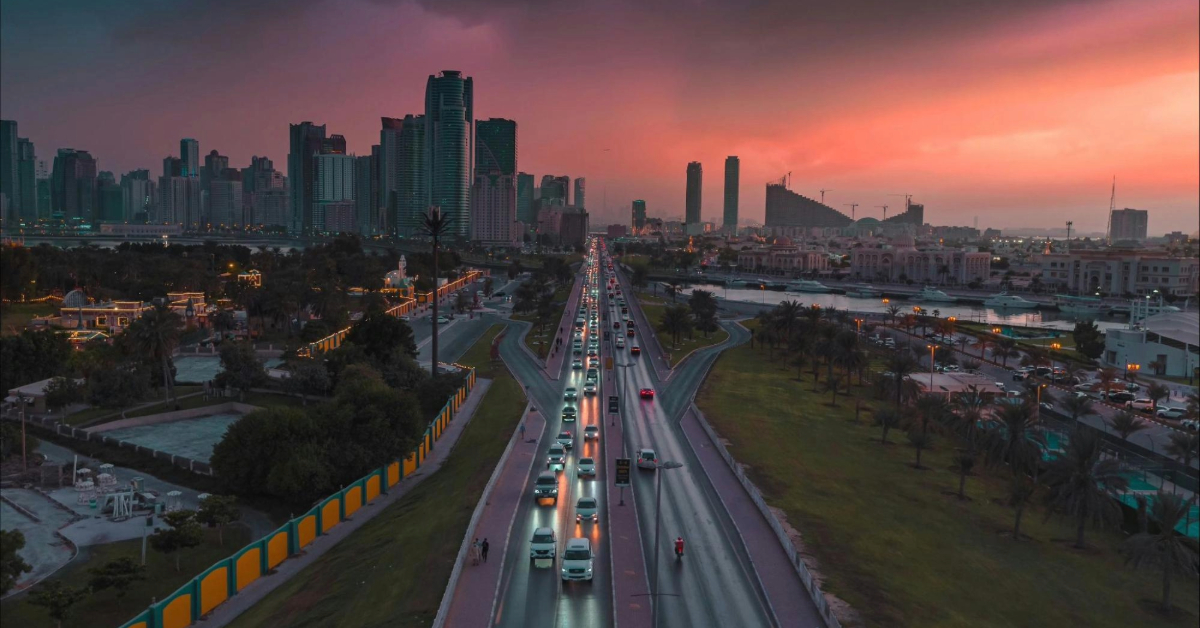
King Faisal Street emerged during a pivotal period in Sharjah’s development. In the 1970s and 1980s, oil revenues, population growth, and expanding regional trade drove rapid urban transformation across the emirate.
Rather than developing without direction, Sharjah’s expansion followed a series of master plans prepared by the British firm Halcrow in 1963, 1969, and 1984. These plans shaped road hierarchies, public spaces, and the placement of civic landmarks, including the prominence of King Faisal Street.
As a result, the street became a focal point where religious, commercial, and administrative functions could coexist. This planned yet human-scale approach helped distinguish Sharjah’s urban form from that of neighbouring emirates.
King Faisal Mosque
King Faisal Mosque is the defining landmark of the street and one of Sharjah’s most significant religious buildings. Inaugurated on 23 January 1987, it was the largest mosque in the UAE until 2007.
The mosque rises to around 70 metres and covers approximately 12,000 square metres, with capacity for more than 16,000 worshippers. Its location overlooking Al Ittihad Park places it at both a physical and symbolic centre of the city.
For many residents, the mosque is more than a place of prayer. It serves as a familiar reference point that shapes orientation, movement, and daily rhythms along the street.
Architecture and urban character
Designed by architect Abdul Rahman Al Junaidi, the King Faisal Mosque is widely recognised for its restrained and functional architectural language. Rather than relying on elaborate decoration, the design prioritises structure, proportion, and spatial clarity.
Key architectural elements include:
- Three ascending levels with cantilevered forms
- Two understated minarets positioned along the roofline
- A shaded inner courtyard at ground level
- Offices and an Islamic library are housed above
This approach helped define a regional Gulf architectural style that values form and function over ornamentation. The mosque’s influence can be seen in later religious buildings across Sharjah and the wider UAE.
Markets and landmarks along the street
It is closely associated with several long-established landmarks that continue to shape how the area is used and experienced.
Blue Souk
The Blue Souk is one of Sharjah’s most visually distinctive buildings. Its blue-tiled façade and arched design combine traditional market concepts with permanent retail units. The souk remains popular for jewellery, textiles, souvenirs, and everyday shopping, drawing a steady mix of residents and visitors.
Location
It’s located in King Faisal St, Al Majaz 1, Al Majaz, Sharjah
Central Market
Located near the mosque, the Central Market continues to function as both a commercial and social hub. Designed by architect Michael Lyle, its layout and location encourage foot traffic and casual browsing, reinforcing the street’s role as a place to stop rather than pass through.
Location
It’s located in Al Majaz 1, Sharjah
Al Ittihad Park
Overlooking parts of the street, Al Ittihad Park provides a rare open green space in a dense urban setting. It offers visual relief and informal seating, particularly appreciated outside peak traffic hours and around prayer times.
Location
It’s located in Al Ittihad Monument, S105, Al Soor, Hay Al Qasimiah, Sharjah.
Key attractions along and around King Faisal Street
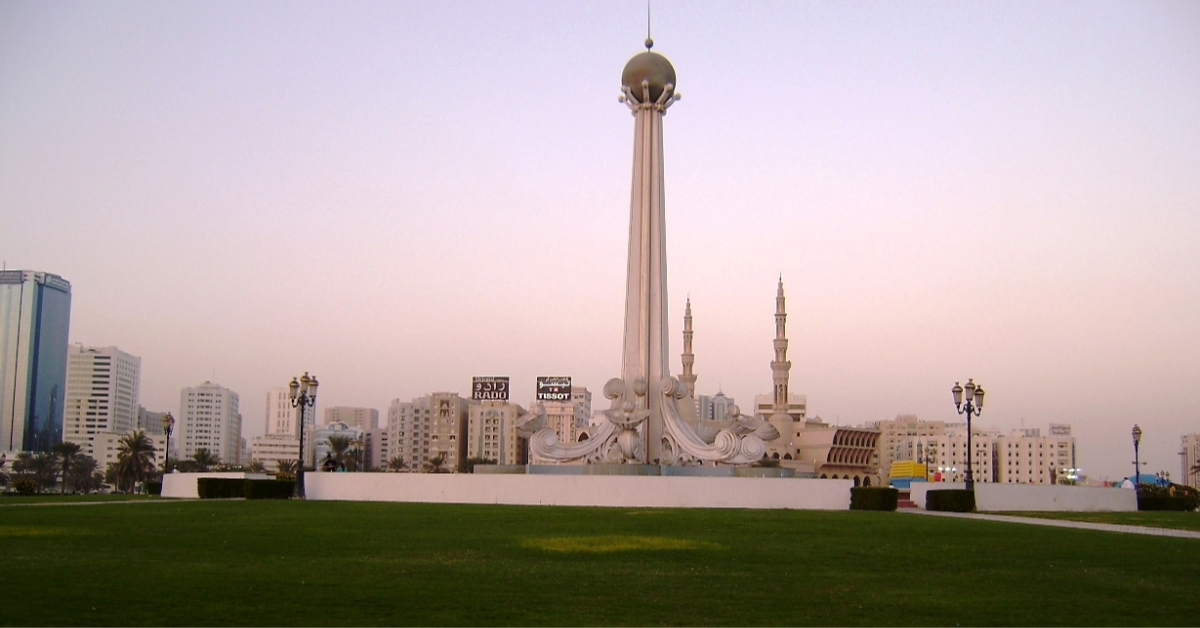
Beyond the landmarks directly on the street, It is close to several attractions that enhance its appeal as a destination.
Visitors often combine time on the street with:
- Exploring nearby traditional markets and retail areas
- Visiting public parks and waterfront spaces in adjacent districts
- Walking between mosques, shops, and cafés within a compact area
Its proximity to areas such as Al Majaz means the street often forms part of a wider itinerary rather than a single stop, especially for those spending a day in central Sharjah.
What everyday life feels like there
More than its landmarks, It is defined by daily rhythm. Shops open early, cafés remain active throughout the day, and offices, tailors, electronics stores, and pharmacies line the pavements. Pedestrian crossings are busy, and buses and taxis move steadily through the area.
Traffic can be heavy at peak times, but it reflects constant use rather than congestion for its own sake. The street feels practical and lived-in, especially compared with newer developments that prioritise aesthetics over functionality.
What King Faisal Street offers beyond landmarks
King Faisal Street’s value lies not only in its attractions, but in what it offers day to day. Residents and workers rely on the street for routine errands, services, and connectivity.
Beyond shopping and worship, the street supports:
- Daily services such as pharmacies, clinics, and banks
- Small independent businesses and family-run shops
- Easy access to public transport and taxis
- Walkable connections between residential and commercial areas
This everyday usefulness is what keeps the street active across generations, even as the city around it continues to evolve.
Living near King Faisal Street
While King Faisal Street itself is primarily commercial, it sits close to several established residential neighbourhoods. Many residents choose to live nearby for the convenience it offers, with daily needs accessible on foot or by short drives.
Housing in the surrounding areas typically consists of apartments in low- to mid-rise buildings, appealing to families and long-term residents who prioritise central access over luxury amenities.
Simply put, living near King Faisal Street provides convenience and access to a range of daily services.
Who does King Faisal Street suit best
It tends to appeal to people who value practicality and connectivity over curated lifestyle environments.
It suits:
- Long-term residents who rely on central services
- Families who prefer established neighbourhoods
- Small business owners and traders
- Commuters who value access to main roads and public transport
Why the street matters culturally
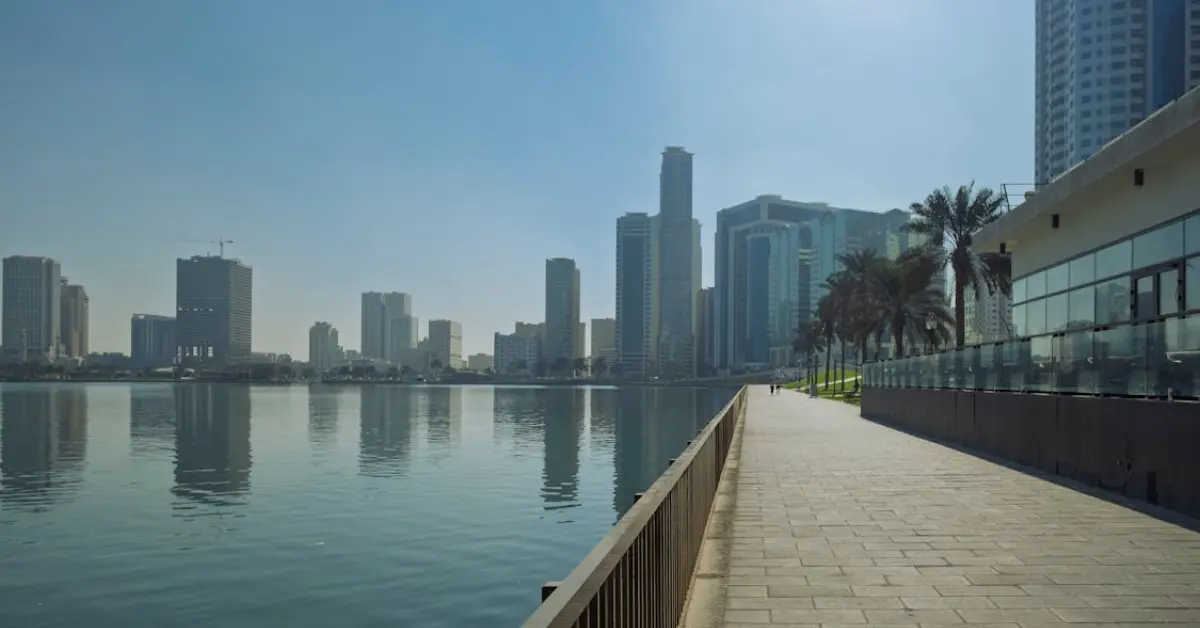
King Faisal Street reflects Sharjah’s broader approach to urban identity. Named after King Faisal of Saudi Arabia, the street highlights long-standing regional ties and shared heritage, reinforced by the mosque built in his honour and its central role in civic life.
Streets like this often sit close to long-established residential areas, which explains why central districts continue to feature prominently in searches for buying property in Sharjah.
Urban commentators have described the area as an example of a regional Gulf architectural school that prioritises form, function, and civic presence over decorative excess. This philosophy remains visible today, not only in the mosque’s design, but in how the street continues to serve real social and economic needs.
Key Takeaways
King Faisal Street is one of Sharjah’s most critical urban corridors, combining history, religious landmarks, traditional markets, and everyday commercial life in a central location. Developed during the emirate’s significant expansion in the 1970s and 1980s, it reflects a planned approach to city growth shaped by master plans and regional values. Anchored by the King Faisal Mosque and supported by long-established markets and daily activity, the street continues to play a vital role in Sharjah’s identity and urban rhythm.
FAQs
King Faisal Street runs through central Sharjah, close to Al Ittihad Park and Al Arouba Street, connecting residential and commercial districts.
It serves as a significant commercial and cultural artery and reflects Sharjah’s planned urban development over several decades.
The King Faisal Mosque is the most prominent landmark and one of the largest mosques in the emirate.
It is primarily commercial, but it sits close to established residential neighbourhoods that depend on it for daily services and access.
It is suitable for short walks, especially for errands and access to shops and mosques, though it can feel busy at peak hours.
Late mornings and early evenings are usually the most comfortable, with active shops and lighter traffic.
Yes, it sits near central areas such as Al Majaz and other well-known public spaces.
Parking is available nearby, but availability varies by time of day.