



Ramadan shifts the pace of everyday life, especially when it comes to food. Mornings start earlier, evenings stretch later, and meals suddenly carry more meaning than usual. When groceries aren’t planned, the month can feel rushed and tiring. But with a Ramadan grocery list in place, Ramadan becomes calmer, more intentional, and far easier to manage.
Having the right ingredients at home means fewer last-minute supermarket trips, less daily decision-making, and more time for rest, worship, and family. This grocery guide brings together practical pantry staples, fresh essentials, and simple meal ideas to support both Suhoor and Iftar throughout the month, without overcomplicating things.
- Setting Yourself Up for a Smoother Ramadan
- Core Nutritional Principles for Suhoor & Iftar
- Pantry Staples You Can Rely On
- Refrigerator & Freezer Essentials
- Time-Saving Tools & Strategies
- Easy Recipe Ideas Using Essentials
- Sample Weekly Grocery Checklist
- Key Takeaways
- FAQs
Setting Yourself Up for a Smoother Ramadan
Ramadan naturally changes how and when we eat, but it doesn’t need to turn the kitchen into a daily challenge.
Without planning, meals can become repetitive, heavier than intended, or stressful to prepare after a long fasting day. However, having a clear grocery plan helps you build Suhoor meals that actually last through the day and Iftar dishes that gently restore energy. Instead of starting from scratch every evening, you rely on a familiar set of ingredients that work across many meals.
Planning ahead also helps you:
- Avoid overbuying food that goes unused
- Control spending during a month of higher grocery demand
- Reduce time spent shopping after long fasting days
- Keep meals familiar and comforting without excessive effort
With a little preparation, cooking during Ramadan becomes simpler, more efficient, and far less stressful, leaving more time for rest, worship, and family.
Core Nutritional Principles for Suhoor & Iftar

Before filling your trolley, it helps to understand what your body actually needs during long periods of fasting. Suhoor and Iftar play different roles, but both should focus on balance, hydration, and digestion rather than heaviness or excess.
Energy and macronutrients
To stay energised and avoid sharp hunger or fatigue during the day, meals should be built around a balance of macronutrients:
- Complex carbohydrates release energy slowly and keep you fuller for longer
- Lean protein to support muscle health and reduce hunger swings
- Healthy fats to improve satiety and prevent energy crashes
This combination is especially important at Suhoor, when food needs to sustain you for many hours.
Micronutrients and hydration support
Ramadan places extra strain on hydration, digestion, and overall stamina. Choosing foods rich in essential vitamins and minerals helps reduce common issues such as headaches, bloating, and low energy.
- Potassium-rich foods support fluid balance
- Fibre aids digestion and prevents discomfort
- Vitamins and minerals help maintain immunity and focus
Including a variety of whole foods naturally covers these needs without relying on supplements.
Finally, hydration during Ramadan is most effective when it comes from both fluids and food. Instead of relying on plain water alone, include items that naturally contribute to fluid intake:
- Soups and light broths at Iftar
- Fruits and vegetables with high water content
- Dairy options such as yoghurt or labneh, especially at Suhoor
This helps your body absorb and retain fluids more effectively.
Pantry Staples You Can Rely On
A well-stocked pantry is the backbone of Ramadan cooking. These are the ingredients that allow you to prepare nourishing meals even on days when time or energy is limited.
Grains, Legumes & Carbohydrates
Grains and legumes form the foundation of many Suhoor and Iftar meals. They provide sustained energy, are filling without being heavy, and work across a wide range of traditional and modern recipes.
- Basmati and brown rice
- Couscous, bulgur, and quinoa
- Dried or frozen lentils and chickpeas
- Pasta and whole-wheat flour
- Flatbreads and wraps
These items store well and can be adapted easily to Middle Eastern, South Asian, North African, or simple home-style meals.
Spices, Herbs & Flavourings
Spices are what turn basic ingredients into familiar, comforting Ramadan dishes. Keeping a core spice collection on hand means you can vary flavours without needing complex recipes or extra ingredients.
- Cumin, coriander, turmeric, cinnamon, cardamom
- Paprika, garlic powder, chilli flakes
- Sumac, za’atar, and dried herbs
- Rosewater, citrus zest, and pomegranate molasses
With these on hand, meals stay varied without needing complex recipes.
Fats, Oils & Sweeteners
Fats and natural sweeteners play an important role in both flavour and nutrition during Ramadan. Used in moderation, they support satiety, enhance taste, and help maintain traditional elements on the Suhoor and Iftar table.
- Olive oil, ghee, and coconut oil
- Nuts and seeds such as almonds, walnuts, pistachios, chia, and flax
- Dates and honey for gentle, natural sweetness
Many families in Dubai enjoy picking these items from the Ramadan Souq, where shopping feels seasonal and communal rather than routine.
Refrigerator & Freezer Essentials
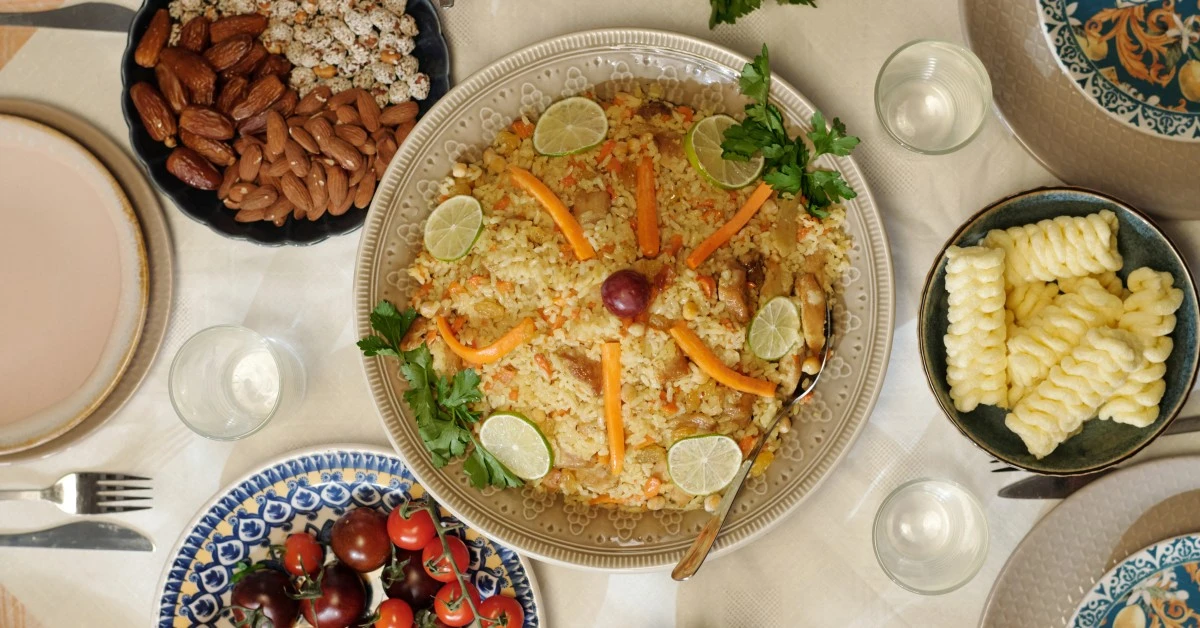
Your fridge and freezer play a key role in keeping meals balanced and practical throughout Ramadan. Choosing items that last well or freeze easily helps reduce waste and makes last-minute meal prep far easier.
Protein Sources
Protein is essential during Ramadan to support energy levels, prevent mid-day fatigue, and help you feel satisfied between meals. Keeping a mix of fresh and frozen protein options gives you flexibility, especially on busy days.
- Eggs, Greek yoghurt, and labneh
- Chicken, fish, lamb, and ground meat
- Pre-marinated or frozen proteins for quick cooking
These work equally well for light Suhoor meals and heartier Iftar dishes.
Vegetables & Fruits
Fruits and vegetables provide fibre, vitamins, and hydration, all of which support digestion and overall well-being during fasting. Prioritising sturdy produce and freezer-friendly options helps maintain variety throughout the month.
- Long-lasting vegetables such as onions, potatoes, carrots, and squash
- Leafy greens and herbs, including mint, parsley, and coriander
- Fruits like bananas, apples, and citrus
- Frozen fruits and vegetables for smoothies, soups, and backup meals
This combination lets you cook fresh meals while always having a fallback option.
Dairy & Cooling Items
Cooling foods are particularly helpful after Iftar, when the body is rehydrating and digestion is restarting. Dairy products offer a balance of protein, calcium, and comfort, especially when used in moderation.
- Milk and cheese
- Yoghurt for sauces, bowls, and drinks
- Cottage cheese or labneh as a light protein option
These items work well for Suhoor, light evening meals, or simple snacks between prayers.
Time-Saving Tools & Strategies
Ramadan days are already full, so cooking works best when it’s planned ahead rather than decided at the last minute. A few habits make a noticeable difference:
- Batch cooking soups, stews, sauces, and rice dishes that can be reused across several meals
- Freezing meals in small, clearly labelled portions for quick reheating
- Washing, chopping, and storing vegetables in advance to speed up daily prep
- Rotating a weekly menu instead of choosing meals from scratch every day
Planning meals ahead is especially helpful when evenings are filled with prayers, family visits, and Ramadan activities around Dubai that leave little time for cooking. These strategies reduce stress, conserve energy, and help prevent cooking fatigue as the month progresses.
Easy Recipe Ideas Using Essentials
With the right ingredients on hand, many Ramadan meals come together easily. These ideas rely on everyday staples and work across Suhoor and Iftar without feeling repetitive.
Even simple home-cooked meals feel special when attention is given to Ramadan decorations and presentation, especially for shared Iftar gatherings with family and guests.
| Recipe | When to Serve | Key Ingredients |
|---|---|---|
| Lentil Soup | Iftar | Lentils, onion, tomato, spices |
| Mujadara | Iftar or Suhoor | Rice, lentils, caramelised onions |
| Grilled or Baked Fish with Rice | Iftar | White fish, rice, olive oil, lemon |
| Chicken & Roasted Vegetables | Iftar or next-day Suhoor | Chicken, carrots, potatoes, spices |
| Veggie Hummus Pita | Light Iftar | Chickpeas, pita, and vegetables |
| Yoghurt-Marinated Chicken with Salad | Iftar | Chicken, yoghurt, cucumber, herbs |
| Overnight Oats | Suhoor | Oats, yoghurt, nuts, fruit |
| Makloubeh or Mansaf | Group Iftar | Rice, meat, spices, yoghurt |
Simple protein-and-vegetable meals are especially helpful on nights when you want something nourishing but not heavy. Traditional desserts are best saved for special evenings rather than daily meals.
Sample Weekly Grocery Checklist

A weekly grocery checklist helps you stay organised throughout Ramadan without overbuying or wasting food. Instead of shopping daily, this approach allows you to restock essentials once a week and make small top-ups only when needed. It also makes meal planning easier, especially during fasting hours when energy levels are lower.
This checklist is designed to cover multiple Suhoor and Iftar meals, with enough flexibility to rotate dishes and avoid repetition. Quantities can be adjusted based on household size and how often you cook.
| Category | Items | Notes |
|---|---|---|
| Grains & Legumes | Rice, lentils, chickpeas | Enough for several Suhoor and Iftar meals |
| Proteins | Eggs, chicken, fish | Rotate proteins to avoid boredom |
| Vegetables & Fruits | Onions, carrots, leafy greens, fruit | Buy seasonal for better value and freshness |
| Dairy & Cooling | Yoghurt, milk, cheese | Best used within the week |
| Snacks & Extras | Dates, nuts, dark chocolate | Keep portions small and intentional |
| Spices & Oils | Core spices, olive oil | Check stock before Ramadan begins |
Key Takeaways
A smooth Ramadan begins with thoughtful grocery planning. Stocking up on essential pantry items early helps reduce daily stress, keeps meals balanced, and frees up time during a busy month.
Suhoor works best when it focuses on slow-releasing energy and hydration, while Iftar should start gently, restoring fluids and nutrients without overloading the body. Simple habits like batch cooking and using the freezer wisely can make a big difference, and traditional sweets are best enjoyed occasionally and with intention.
FAQs
Overnight oats, boiled eggs with toast, yoghurt smoothies, or wraps prepared the night before.
Drink steadily between Iftar and Suhoor, include soups and fruits, and limit caffeine.
Use smaller portions, rely on pantry meals, and freeze only the bases, such as soups or sauces.
Keep portions small, reduce sugar slightly, and reserve sweets for special evenings.
Cumin, coriander, turmeric, cinnamon, cardamom, sumac, and rosewater are widely used across cultures.