



From its origins in the wider Islamic world to its modern-day ceremonial use, the cannon has evolved from a practical time signal into a cherished symbol of heritage and communal identity during the holy month of Ramadan.
This guide explores the history, purpose, and enduring cultural significance of the Ramadan cannon in the UAE. Visitors and residents are often curious about the Ramadan cannon Dubai location, as well as other key sites across the Emirates, including Sharjah and Abu Dhabi.
- Introduction to the Ramadan Cannon Tradition
- Historical Origins of the Ramadan Cannon
- Arrival and Development of the Ramadan Cannon in the UAE
- How the Ramadan Cannons Work in the UAE Today
- Key Locations of Ramadan Cannons in the UAE
- Cultural and Social Significance in the UAE
- Media, Tourism, and Public Engagement
- Regulation, Safety, and Modernisation
- Key takeaways
- FAQs
Introduction to the Ramadan Cannon Tradition
For centuries, the sound of the Ramadan cannon has marked one of the most anticipated moments of the holy month, blending faith, history, and community into a single powerful ritual.
From key Ramadan cannon Dubai location sites and firing rituals to legends, media coverage, safety protocols, and future perspectives, the article offers a complete look at how the Ramadan cannon has evolved from a practical time signal into a cherished symbol of heritage and communal identity during the holy month.
What is a Ramadan Iftar Cannon?
A Ramadan cannon, also known as an iftar cannon, is a ceremonial artillery piece fired to signal the end of the daily fast during Ramadan. Traditionally, it marks the precise moment of Maghrib, when Muslims are permitted to break their fast. Additionally, in some regions, cannons were historically fired at Suhoor, the pre-dawn meal before fasting begins.
In the UAE, the cannon has evolved from a practical timekeeping tool into a deeply symbolic ritual. While modern technology now provides exact prayer times through mobile apps, television, and mosque loudspeakers, the cannon remains an enduring emblem of Ramadan’s arrival and daily rhythm.
Purpose: Signalling Iftar and Suhoor
Before clocks, radio broadcasts, or digital notifications, the cannon served a vital role in ensuring entire communities observed fasting times accurately. Its loud report carried across towns and coastal settlements, reaching fishermen, traders, and families alike. The sound created a shared moment, synchronising households across neighbourhoods.
Why Cannons in the Age of Apps and Loudspeakers?
Despite the availability of precise digital tools, the cannon continues to fire because it represents continuity. In the UAE, the cannon is no longer necessary for timekeeping, but it preserves a sensory link to the past, sound, sight, and anticipation that technology alone cannot replicate.
Historical Origins of the Ramadan Cannon
The tradition of firing cannons during Ramadan did not originate in the Gulf but travelled across regions through empire, trade, and shared religious practice.
Early Origins in the Islamic World
Historical accounts trace the earliest use of the Ramadan cannon to Egypt during the Mamluk period. One widely cited story suggests the cannon was fired accidentally at sunset during Ramadan, coinciding perfectly with iftar time.
The positive response from the public led to its continued use. Other narratives connect the practice to the reign of Muhammad Ali of Egypt, while the popular legend of “Fatimah’s cannon” credits a royal woman with endorsing its use for Ramadan announcements.
Egyptian Roots and Ottoman-Era Spread
From Egypt, the tradition spread throughout the Ottoman world, reaching the Levant, Anatolia, and parts of North Africa. As Ottoman influence expanded, so did shared ceremonial customs, including the cannon as a marker of sacred time.
How the Tradition Reached the Arabian Peninsula
Trade routes, pilgrimage, and governance all played a role in carrying the practice eastwards.
From Egypt to the Levant, Hijaz, and the Wider Muslim World
The Ramadan cannon became established in cities such as Mecca and Madinah, where its use was later adopted and formalised by the Saudi state. Its presence in these holy cities reinforced its religious legitimacy and encouraged its adoption elsewhere.
Adoption in the Arabian Peninsula
As pilgrims and scholars travelled between regions, the idea of the cannon as a public signal for iftar gained acceptance, eventually reaching coastal settlements along the Gulf.
Arrival and Development of the Ramadan Cannon in the UAE
In the UAE, the cannon’s story reflects both local traditions and wider regional influence.
Early Use in the Trucial States
Local accounts suggest that Sharjah was among the earliest emirates to adopt the Ramadan cannon, with references dating back to the 19th century. These early cannons were often positioned near forts or key gathering points, ensuring their sound travelled widely.
Some scholars argue that the canon was introduced later, around the 1950s, aligning with increased urban development and formal governance structures. These differing accounts highlight the blend of oral history and documented scholarship surrounding the tradition.
Dubai’s Adoption of the Ramadan Cannon
Dubai’s relationship with the Ramadan cannon is central to its modern visibility.
The cannon was initially overseen by the ruler and his representatives, reflecting its importance as an official religious marker. Its firing was closely coordinated with scholars and mosque authorities to ensure accuracy.
In 1960, responsibility for the cannon shifted to the Dubai Police. This transition formalised the practice, introducing structured procedures, training, and safety measures that remain in place today.
How the Tradition Spread Across the Emirates
The practice expanded to Abu Dhabi, Ajman, Ras Al Khaimah, Fujairah, and Umm Al Quwain. After the formation of the UAE in 1971, the cannon became a shared national tradition rather than a localised custom.
How the Ramadan Cannons Work in the UAE Today
Modern operations balance ceremonial heritage with strict regulation.
Who Operates the Cannons?
Today, the cannons are operated primarily by police ceremonial units. Teams are trained in artillery handling, crowd management, and emergency procedures, ensuring the ritual is both safe and precise.
Firing Schedule and Rituals
Cannons are fired daily at Maghrib to signal iftar. Moreover, firings may occur on the first day of Ramadan and on Eid to mark significant moments in the Islamic calendar. The firing is carefully synchronised with official prayer timings and the adhan.
Technical Details of the Cannons
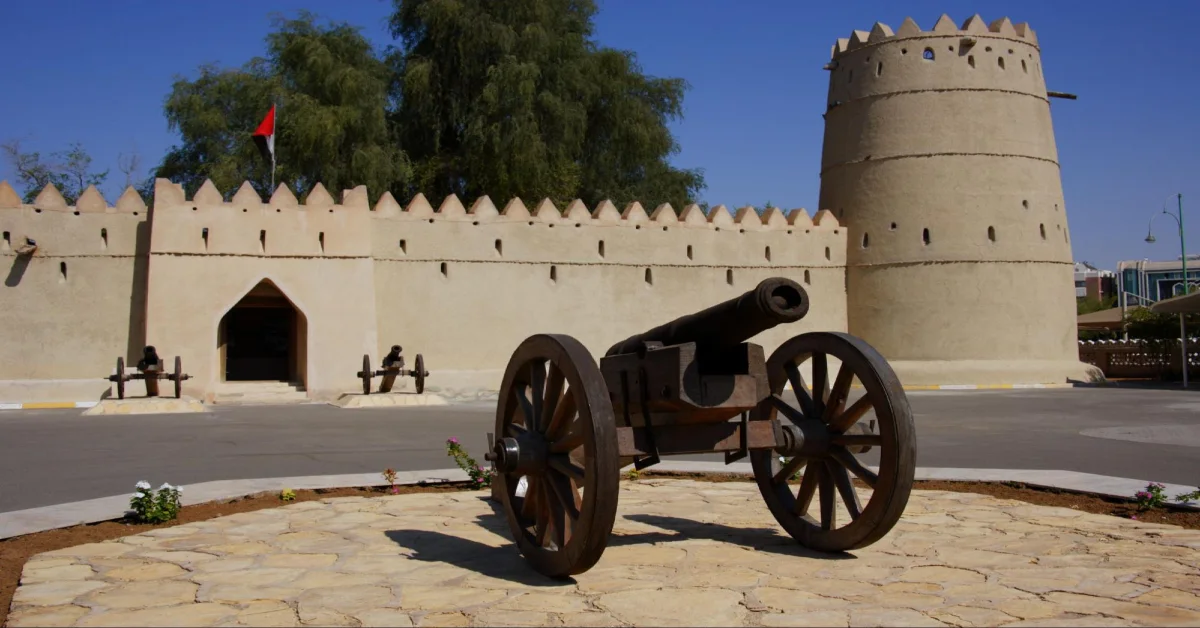
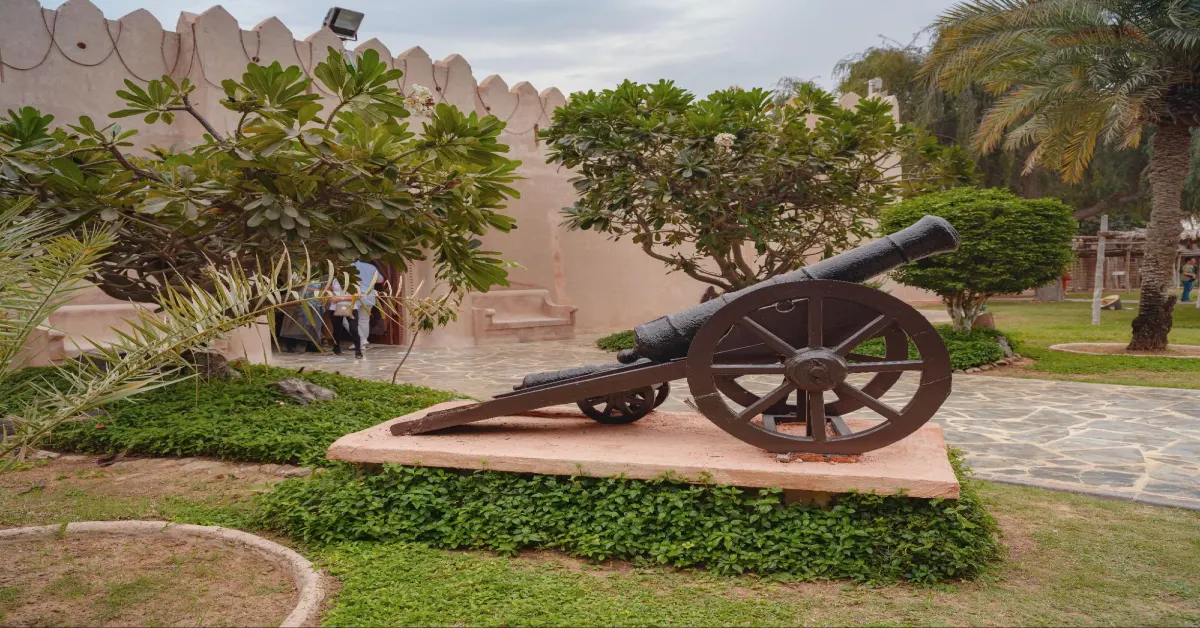
The UAE uses a mix of historic artillery, such as QF 25-pounder howitzers, and replica cannons designed for ceremonial use. Blank ammunition is used, and safety distances are strictly enforced. The daily routine includes transport, setup, loading, checks, and a countdown before firing.
Key locations of Ramadan cannons in the UAE
The setting of the cannon is as significant as the sound itself.
Dubai
Traditional and current firing sites have included areas near major mosques and prominent landmarks. As the city expanded, locations were adapted to accommodate crowds and tourism, making the Ramadan cannon Dubai location a point of interest for residents and visitors.
Specifically, in Dubai, the cannons tend to be placed at Burj Khalifa, Expo City, Al Satwa Big Mosque, Al Barsha Park, and Zabeel Park.
Abu Dhabi
Cannons are typically positioned near landmark mosques and waterfront areas. For example, the Sheikh Zayed Grand Mosque, the Um Al Emarat Park, and the Qasr Al Hosn host public firing events.
Sharjah and Other Emirates
Sharjah’s historical cannon sites reflect early adoption, including Al Majaz Waterfront, Al Dhaid Fort, and Khorfakkan Amphitheatre. Similarly, other emirates maintain practices centred around main mosques or civic spaces.
Cultural and Social Significance in the UAE
Beyond timekeeping, the cannon shapes the emotional texture of Ramadan.
Symbol of Ramadan Atmosphere
The boom of the cannon creates a collective pause, a shared breath before breaking the fast. For many, it is an emotional signal that connects sound, faith, and memory.
Community Gathering and Family Rituals
Families attend cannon firings together, especially with children experiencing Ramadan traditions firsthand. Additionally, these events have become social outings with photography, media coverage, and social sharing.
Preserving Heritage in a Modern Cityscape
In hyper-modern cities like Dubai and Abu Dhabi, the cannon serves as living heritage, while balancing tradition with contemporary life.
Media, tourism, and public engagement
The cannon has found new life through modern storytelling.
Coverage by Local and International Media
Television broadcasts and Ramadan programmes often centre around the firing, reinforcing its visibility and significance.
Tourist Experience
Visitors frequently seek out the Ramadan cannon Dubai experience, with designated viewing areas offering safe and respectful access. Etiquette and safety guidelines are emphasised.
Social Media and Modern Storytelling
Short-form videos and vlogs allow younger generations to reinterpret the tradition. Moreover, these platforms help preserve awareness across generations.
Regulation, safety, and modernisation
Strict oversight ensures continuity without compromise.
- Legal and Regulatory Framework: Police and government bodies oversee licensing, inspections, and coordination with municipalities.
- Safety and Crowd Management: Buffer zones, barriers, and emergency protocols are standard, ensuring public safety during firings.
- Technology and Logistics: Modern communications equipment and precise timing devices support the ritual, ensuring synchronisation with official timetables.
Key Takeaways
The Ramadan cannon (iftar cannon) is a historic method of signalling iftar, and in some regions Suhoor, that originated in Egypt before spreading across the Ottoman world and eventually reaching the Gulf.
In the UAE, the tradition took root in Sharjah and Dubai during the 19th and mid-20th centuries, gradually evolving from a practical time-keeping tool into a cherished Ramadan ritual.
Today, the cannons are operated primarily by police ceremonial units, fired using blank ammunition under strict safety protocols at Maghrib and on key religious occasions.
Major cannon sites, including the Ramadan cannon Dubai location and other emirates such as Sharjah and Abu Dhabi, have become popular gathering points, bringing together worship, family traditions, tourism, and media attention.
In this modern context, the Ramadan cannon serves mainly as a symbol of heritage and communal identity, preserving a historic sound and spectacle within an increasingly digital Ramadan experience.
FAQs
Because they preserve cultural heritage and create a shared communal moment.
No, they use blank ammunition and operate under strict safety protocols.
Yes, designated public viewing areas are available in several emirates.
In the UAE, they primarily fire at Maghrib, with additional firings on special days.
Historic and replica cannons, including QF 25-pounder howitzers, are commonly used.