



UAE traffic fines are designed to promote road safety, regulate driving behaviour, and ensure compliance with traffic laws across all seven emirates. Whether you are a resident driver, commercial vehicle operator, or visitor using a rental car, understanding the UAE’s traffic violation framework is essential to avoid costly penalties and licence-related consequences.
The UAE follows a federal traffic law system, meaning many traffic offences carry standard penalties nationwide. However, each emirate may have slight procedural differences regarding enforcement, payment systems, and impoundment processes.
In this guide, you’ll find:
- Federal Traffic Laws and Black Points Framework
- Common Violations, Fines & Black Points (UAE-Wide Violations)
- Licence Suspension & Black Points Thresholds
- Dubai-Specific Rules & Penalties
- Abu Dhabi: Key Rules, Fines & Point Chart
- Sharjah: Penalties, Black Points & Enforcement Highlights
- Other Emirates (Ajman, Fujairah, Umm Al-Quwain, Ras Al Khaimah)
- How to Check & Pay Fines, Transfer & Reduce Black Points
- Key Takeaways
- Frequently Asked Questions
Federal Traffic Laws & Black Points Framework

The UAE traffic fines system is governed by Federal Decree-Law No. 14 of 2024 on Traffic Regulation, which applies across all emirates. The law establishes a unified framework for regulating road conduct, issuing penalties, and assigning black points to drivers who commit traffic violations.
Recent updates have strengthened traffic monitoring through advanced enforcement systems, including AI-enabled radars and digital offence tracking. These systems allow authorities to monitor driving behaviour more efficiently and apply penalties in real time.
A key aspect of the federal framework is the black points system. Black points are linked directly to a driver’s licence rather than the vehicle itself. Every qualifying traffic offence adds a specified number of points to the licence record.
If a driver accumulates 24 black points within 12 months, the licence is suspended.
Depending on the severity of the violation, penalties may include:
- Monetary fines
- Black points
- Vehicle impoundment
- Licence suspension
- Licence cancellation
- Court-imposed penalties for serious offences
Common Violations, Fines & Black Points (UAE-Wide Violations)
Many UAE traffic fines remain standard across all emirates.
| Violation | Fine (AED) | Black Points | Additional Penalty |
| Reckless driving endangering lives | 2,000 | 23 | 60-day impoundment |
| Driving under the influence | Court decided | 23 | 60-day impoundment |
| Jumping a red light | 1,000 | 12 | 30-day impoundment |
| Using a mobile phone while driving | 800 | 4 | None |
| Not wearing a seatbelt | 400 | 4 | None |
Smaller violations may also result in penalties.
Examples include:
- Defective indicator lights
- Improper overtaking
- Lane discipline violations
- Minor documentation-related breaches
These generally carry between 2 and 4 black points, depending on the offence.
Licence Suspension & Black Points Thresholds
Accumulating 24 black points within 12 months results in licence suspension under the UAE traffic law framework.
The suspension period increases with repeated breaches. A first offence typically results in an approximately three-month suspension, while a second offence may lead to a six-month suspension. A third breach can result in licence cancellation and mandatory re-testing before driving privileges are restored.
Black points are not permanent and generally expire automatically 12 months from the date of the offence, provided no further qualifying violations are committed during that period. This system encourages long-term compliance and responsible driving behaviour across the UAE.
Dubai Specific Rules & Penalties
Dubai has one of the most detailed traffic enforcement systems in the UAE, managed by Dubai Police and the Roads and Transport Authority.
Speeding penalties in Dubai vary depending on how far you exceed the speed limit.
| Speed Limit Exceeded By | Fine (AED) | Black Points | Impoundment |
| Up to 20 km/h | 300 | 0 | None |
| 21–30 km/h | 600 | 0 | None |
| 31–40 km/h | 700 | 0 | None |
| 41–50 km/h | 1,000 | 6 | None |
| 51–60 km/h | 1,500 | 6 | 15 days |
| Over 60 km/h | 2,000–3,000 | 12–23 | 30–60 days |
Other major Dubai violations include:
- Reckless driving: AED 2,000, 23 black points, 60-day impoundment
- Running a red light: AED 1,000, 12 black points, 30-day impoundment
- Using a mobile phone: AED 800 and 4 black points
- Seatbelt violations: AED 400 and 4 black points
Dubai also enforces child safety regulations. Allowing a child under 10 years old to sit in the front seat can result in penalties.
In some cases, Dubai offers discounted settlement periods for certain UAE traffic fines if payment is made within a specified timeframe.
Abu Dhabi: Key Rules, Fines & Point Chart
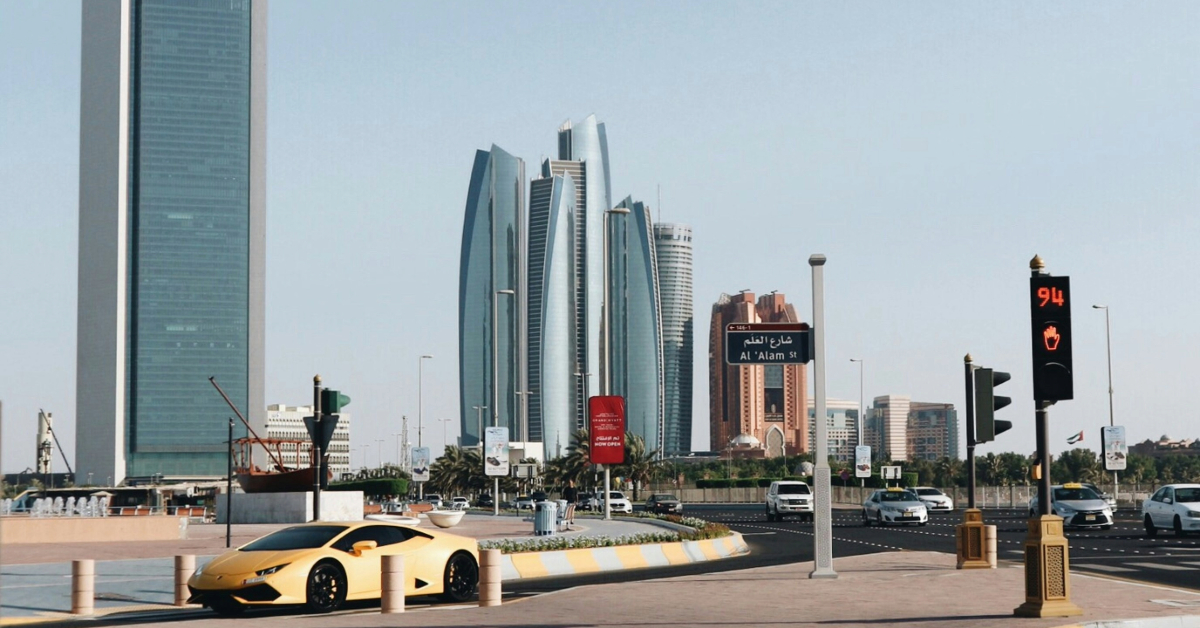
Abu Dhabi follows the federal framework but applies emirate-level enforcement procedures through its traffic authorities.
Speeding penalties generally align with federal standards.
Examples include:
- More than 60 km/h over the speed limit: AED 2,000, 12 black points, 30-day impoundment
- More than 80 km/h over the limit: AED 3,000, 23 black points, 60-day impoundment
Other common penalties include:
- Red light violation: AED 1,000 and 12 black points
- Mobile phone use while driving: AED 800 and 4 black points
- Failure to wear seatbelt: AED 400 and 4 black points
Documentation-related offences are also strictly enforced.
Examples include:
- Expired registration
- Driving without valid insurance
- Expired driving licence
These may carry AED 500 fines, black points, and temporary registration restrictions.
Sharjah: Penalties, Black Points & Enforcement Highlights
Sharjah has strengthened road safety enforcement through extensive camera monitoring and active traffic patrols.
One of the most serious offences is running a red light.
Penalty:
AED 1,000, 12 black points, and 30-day impoundment
Other common Sharjah violations include:
- Using a mobile phone while driving: AED 800 and 4 black points
- Seatbelt violations: AED 400 and 4 black points
- Driving with expired registration: AED 500 and 4 black points
Sharjah also places strict focus on:
- Expired tyres
- Vehicle misuse
- Overloaded heavy vehicles
- Dangerous driving behaviour
Some offences may result in non-payable fines, meaning the penalty cannot be settled until black points are transferred to the responsible driver’s licence.
This can delay:
- Vehicle registration renewal
- Licence renewal
- Government service access
Other Emirates (Ajman, Fujairah, Umm Al-Quwain, Ras Al-Khaimah)
The remaining emirates largely follow the same UAE traffic fines schedule established under federal law.
This includes:
- The 24-point black point threshold
- Standard speeding fines
- Seatbelt penalties
- Mobile phone violations
- Red light offences
Minor administrative procedures may vary depending on the local police authority, but the overall penalty structure remains consistent.
Drivers travelling between emirates should maintain the same compliance standards throughout the UAE.
How to Check & Pay Fines, Transfer & Reduce Black Points

For UAE traffic fine check, drivers can check and pay fines through official government platforms.
Common channels include:
Some UAE traffic fines remain unpaid because black points have not yet been transferred to the responsible licence holder.
These are often referred to as non-payable fines.
Outstanding fines or unresolved black point issues may block:
- Vehicle registration renewal
- Licence renewal
- Clearance certificate issuance
To reduce black points:
- Avoid violations for 12 months
- Attend approved traffic awareness courses where applicable
Maintaining a clean record is the most effective way to prevent suspension.
Key Takeaways
The UAE follows a unified federal traffic framework, with 24 black points within 12 months triggering licence suspension. Both minor and serious offences carry significant penalties, reinforcing the country’s strict approach to road safety. Major violations such as reckless driving, driving under the influence, running red lights, and driving without number plates attract some of the highest penalties, including fines ranging from AED 1,000 to AED 3,000 or more, along with 12 to 23 black points and possible vehicle impoundment. While all emirates largely follow the same federal penalty structure, each has its own traffic authority and slight procedural differences in enforcement and fine management, with Dubai, Abu Dhabi, and Sharjah offering more detailed public systems. Drivers should regularly check fines and black point records through official online platforms, as some fines may remain non-payable until points are properly linked to the driver’s licence. Ultimately, maintaining compliance with seatbelt laws, speed limits, and traffic signals is essential, as safe driving behaviour goes far beyond simply avoiding speeding fines.
Frequently Asked Questions (FAQs)
Your driving licence will be suspended once you accumulate 24 black points within 12 months. A first suspension is typically for around three months, while repeated offences may result in longer suspensions or even licence cancellation.
No. Minor violations may only result in monetary fines. Black points are generally assigned to moderate and serious offences, depending on the official traffic offence schedule.
Non-payable fines are penalties that cannot be settled until the associated black points are correctly linked to the driver’s licence. This usually happens when the offence is initially recorded against the vehicle rather than the individual driver, which may delay renewal services.
Yes. Black points usually expire automatically 12 months after the offence date if no further violations occur. In some cases, approved traffic awareness or rehabilitation programmes may also help reduce points.
Traffic offences involving rental vehicles are generally recorded against the vehicle first and may later be transferred to the driver once identified. Rental companies often process these charges directly, making timely payment important to avoid administrative complications.