



Travelling by the Abu Dhabi to Oman bus has become one of the most convenient and affordable ways to reach Muscat from the UAE. Operated by Oman’s national transport company Mwasalat, this cross-border bus route connects Abu Dhabi directly to Muscat with scheduled daily services, comfortable seating, and organised immigration stops along the way.
Whether you are planning a weekend getaway or visiting Oman for business, understanding the ticket prices, stations, timings, and border requirements will help you prepare for the journey smoothly.
In this guide, learn about:
- Key details of the Abu Dhabi to Oman bus route
- Stations and route stops (Route 202)
- Timings and schedule of the Abu Dhabi to Oman buses
- Booking options and prices for the Abu Dhabi to Oman buses
- Border and entry requirements
- Practical tips and things to know
- Common comparisons among modes of transport
- Key takeaways
- FAQs
Key details of the Abu Dhabi to Oman bus route
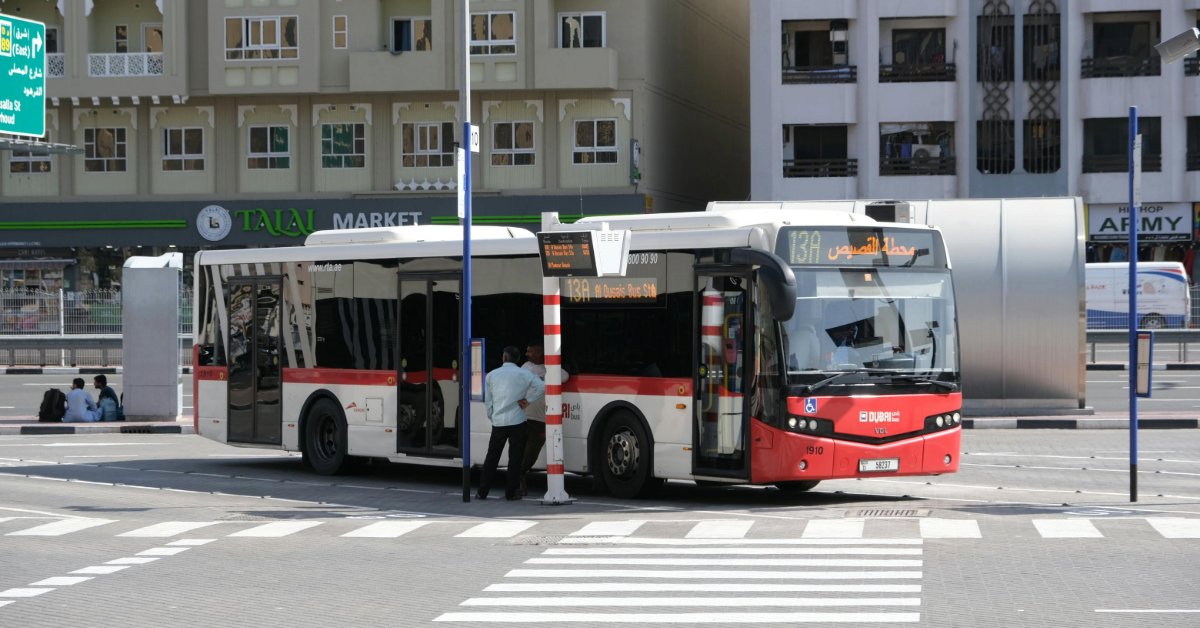
The Abu Dhabi to Oman bus operates through Mwasalat Route 202, connecting Abu Dhabi in the UAE to Muscat in Oman.
Here are the main details travellers should know before planning the trip:
- Route: Abu Dhabi Central Bus Station to Azaiba Bus Station in Muscat
- Operator: Mwasalat
- One-way fare: Around AED 110 (approximately OMR 11.5)
- Journey duration: About 8 hours 40 minutes
- Comfort features: Air-conditioned coaches with free Wi-Fi
- Baggage allowance: 7 kg hand baggage and up to 23 kg checked baggage
The route has become a popular alternative to driving or flying because it allows passengers to travel comfortably while the bus handles the logistics of the border crossing.
For many travellers planning this journey, understanding the Abu Dhabi to Oman bus service route and travel details can help clarify how the transport connection between the UAE and Muscat works.
Stations and route stops (Route 202)
The bus journey passes through several key towns and transport hubs before reaching Muscat.
Departure and arrival stations
The journey begins at Abu Dhabi Central Bus Station in Al Wahda, which serves as the primary intercity bus hub in the emirate.
Travellers unfamiliar with the terminal layout often explore the routes and facilities at Abu Dhabi Central Bus Station before departure to understand ticket counters, boarding areas, and transport connections.
The final stop in Oman is the Azaiba Bus Station in Muscat. This station is located near Muscat International Airport and offers easy access to taxis, local buses, and hotels.
Major stops along the Abu Dhabi to Oman bus route
Route 202 stops at several locations between the UAE and Oman.
Important stops include:
- Al Ain Central Bus Station in the UAE
- Al Buraimi near the UAE-Omani border
- Wadi Al Jizi
- Barka area
- Muscat International Airport
- Additional local stops before reaching Azaiba Bus Station
These stops allow passengers travelling from intermediate towns to board the service without needing to start from Abu Dhabi.

Timings and schedule of the Abu Dhabi to Oman buses
The Abu Dhabi to Oman bus operates daily with fixed departure times.
| Direction | Departure Time | Arrival Time |
| Abu Dhabi → Azaiba (Muscat) | 10:45 a.m. (UAE time) | 8:35 p.m. (Oman time) |
| Azaiba (Muscat) → Abu Dhabi | 6:30 a.m. (Oman time) | 3:40 p.m. (UAE time) |
The journey duration averages 8 hours and 40 minutes, though border procedures and traffic can slightly affect arrival times.
Travellers planning cross-country journeys often consider the Dubai to Oman bus route when evaluating regional transport connections and travel times across the UAE.
Booking options and prices for the Abu Dhabi to Oman buses
Tickets for the Abu Dhabi to Oman bus are typically booked through the official Mwasalat website.
The booking process generally involves:
- Selecting the departure city and destination
- Choosing travel dates
- Selecting a one-way or a return ticket
- Completing payment online
Once booked, travellers receive their ticket confirmation via email.
Ticket price
- Standard fare: Around AED 110 one way
- Return tickets: These are usually priced similarly, depending on availability.
Passengers should print their ticket or keep a digital copy ready for verification before boarding.
Border and entry requirements

Crossing the UAE-Omani border requires a few simple immigration steps and travel documents.
Immigration and border crossing
During the journey, the bus stops at the UAE-Omani border near the Al Ain Al Buraimi region.
Passengers typically follow this process:
- Disembark with luggage at the UAE exit checkpoint
- Clear UAE immigration formalities
- Reboard the bus and proceed to the Oman immigration
- Clear entry checks before continuing the journey
Travellers planning alternative routes into Oman should know the crossing procedures at the Hatta and UAE border, as it is another popular entry point used by drivers and tour groups.
Required travel documents
Passengers must carry the following documents:
- Passport valid for at least six months
- Emirates ID for UAE residents
- Valid Oman visa if required for their nationality
Many nationalities can obtain a visa on arrival in Oman, while others need to apply for an e-visa beforehand. Before travelling, understanding the Oman tourist visa requirements for UAE residents helps confirm eligibility, visa options, and applicable fees.
Additional charges may apply:
- UAE exit fee: Approximately AED 36 (if applicable).
- Oman visa fees: Around AED 50 for some nationalities.
Practical tips and things to know
Travelling by bus between Abu Dhabi and Oman is generally smooth, but a few tips can make the experience easier.
- Arrive early: Passengers should arrive at least 30 minutes before departure since the bus leaves on schedule.
- Pack appropriately: Only 7 kg of hand baggage is allowed, while checked baggage can go up to 23 kg.
- Expect rest stops: The bus makes several rest stops along the route, though smaller stops may not have shops or cafes.
- Time zone: UAE and Oman share the same time zone (UTC +4), so there is no time difference during the journey.
- Health rules: As of 2026, COVID-19 testing and vaccination requirements for this route have been lifted.

Common comparisons among modes of transport
| Aspect | Bus vs Driving vs Flying |
| Cost | Bus (~AED 110 one way) is cheaper than flights and often cheaper than driving when fuel, tolls, and wear are considered |
| Time | Bus takes about 8.5 to 9 hours; driving time is similar, depending on traffic and border queues; flights are faster but cost significantly more |
| Convenience | Bus operators manage immigration stops and provide a relaxed travel experience compared with long drives; flights require airport transfers and check-in procedures |
Key takeaways
The Abu Dhabi to Oman bus route provides a reliable and budget-friendly way to travel between the UAE and Muscat. Operated by Mwasalat, Route 202 connects Abu Dhabi Central Bus Station with Azaiba Bus Station in Muscat with a journey time of about 8 hours and 40 minutes. Tickets cost around AED 110 one way and include baggage allowance and onboard amenities. Travellers must carry a valid passport, an Emirates ID for UAE residents, and the appropriate Oman visa when required. Border formalities take place during the journey, making the bus one of the simplest ways to cross between the two countries.
FAQs
Online booking through Mwasalat is recommended. Station counters may sell tickets if seats are available, but booking in advance is safer.
The bus usually runs daily at 10:45 a.m. from Abu Dhabi and 6:30 a.m. from Muscat. Schedules may change during holidays, so checking before travel is advisable.
Changes or cancellations depend on Mwasalat’s policies. Requests typically need to be made before departure and may involve a fee.
Travel insurance is not mandatory but recommended, especially for medical emergencies or travel disruptions.
Adult fares generally apply, though discounts for children or special categories may sometimes be available during booking.