


Driving in Dubai can be quick, and all main roads have radar monitoring. It’s important to know the speed limit on your regular route, whether you drive every day or just on weekends. Each road has its own speed limit, and some roads have different limits in different sections.
Speed limits can change over time. The Roads and Transport Authority (RTA) and Dubai Police have set new speed limits for five streets starting November 1, 2026. Below, you can see the speed limits and radar details for Dubai’s main roads, what the buffer means, and what changes are coming.
- How speed limits work in Dubai
- Dubai speed limit buffer and radar control
- Roads with a speed limit of up to 70 km/h
- Roads with a speed limit of up to 90 km/h
- Roads with a speed limit of up to 110 km/h
- Roads with a speed limit of 120 km/h
- New speed limits in Dubai from November 1, 2026
- Emirates Road (E611) lane closures for self-driving taxi tests
- Dubai speed cameras and fines
- Key takeaways
- FAQs
How speed limits work in Dubai
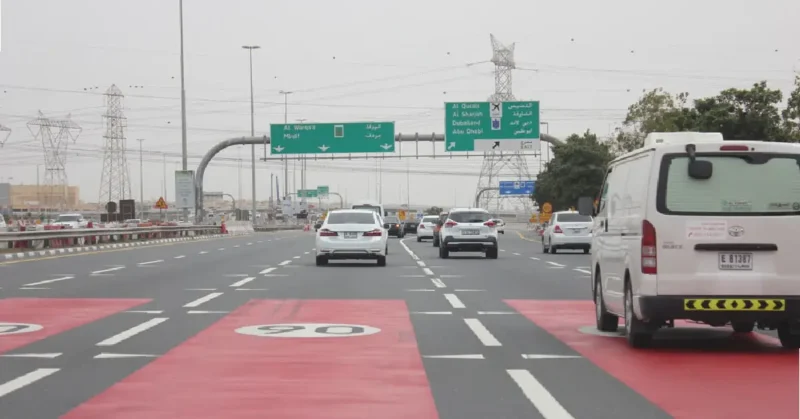
Dubai Police publishes two figures for major roads: the road speed, which is the posted speed limit, and the radar control speed, which indicates the threshold used to detect speeding violations.
Dubai’s road speed limits vary from one road to another. Some roads have two or three different limits, depending on the section. For example, Sheikh Zayed Road has parts where the limit is 120 km/h and others where it’s 100 km/h. Always follow the speed limit signs for the section you’re on.
The tables below list the current speed limits from Dubai Police, updated in January 2026. If a section’s limit changes on November 1, 2026, you’ll find the new limit noted below the table and detailed in the new speed limits section.
As a general guide:
- On inner-city roads like Al Wasl and Al Jumeira, the speed limit is 70 km/h. For Palm Jumeirah, the limit is 60 km/h.
- Main city roads, including Al Nahda, Damascus Street, and Airport Road, have a speed limit of 80 km/h.
- On major roads, the speed limit is 100 km/h on Al Khail Road and 110 km/h on Emirates Road.
- Major highways like Sheikh Zayed Road and Dubai–Al Ain Road can have speed limits up to 120 km/h, depending on the section.
- The fastest speed limit listed in the Dubai Police’s road-speed table is 120 km/h and this limit applies to parts of Sheikh Zayed Road, the Dubai–Al Ain Road, Al Yalayis Road and Hatta Main Road. Since each emirate establishes its own speed limits, the highest speed limit on roads in the UAE outside Dubai may vary.
Dubai speed limit buffer and radar control
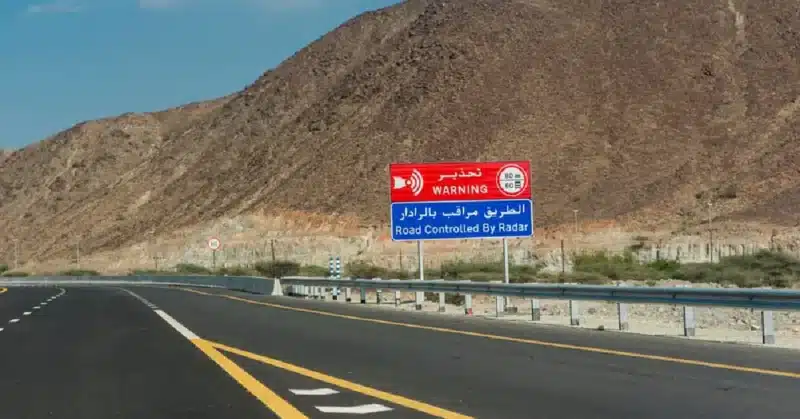
If you’ve seen “road controlled by radar” on a sign or a speed limit table, it means a fixed or mobile speed camera checks that stretch. The radar control speed is the threshold at which that camera records a violation.
In Dubai, the radar control speed sits above the road speed. This gap is what drivers often call the Dubai speed limit buffer, commonly described as 20 km/h. On many major Dubai roads, radar control is set at 21 km/h above the posted limit, so an 80 km/h road has a radar control threshold of 101 km/h:
| Road speed | Radar control |
| 70 km/h | 91 km/h |
| 80 km/h | 101 km/h |
| 90 km/h | 111 km/h |
| 100 km/h | 121 km/h |
| 110 km/h | 131 km/h |
| 120 km/h | 141 km/h |
Roads signed at 60 km/h are the exception. Palm Jumeirah, and the 60 km/h sections of Amman Street, Oud Metha Street and Al Amardi Street, all have radar control set at 91 km/h. Because the difference varies by road, always follow the posted speed limit.
Think of the buffer as a camera setting, not a higher limit. The road speed on the sign is still the legal limit. Other UAE speed limit rules differ by emirate, so if you drive in the capital too, check our Abu Dhabi speed limit guide.
Roads with a speed limit of up to 70 km/h
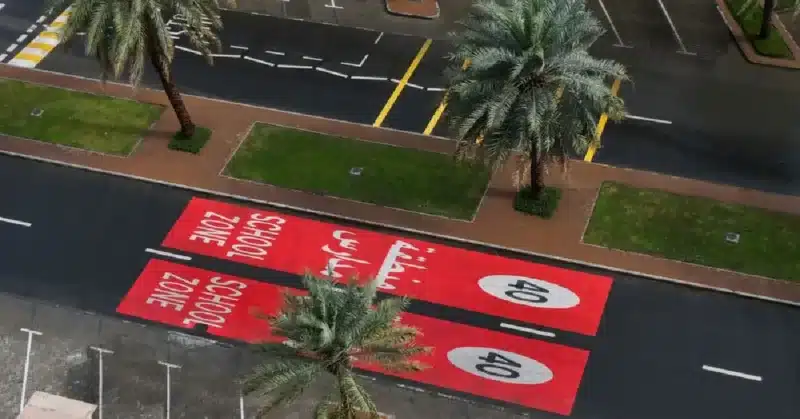
Most roads in this group run through established neighbourhoods like Jumeirah, Umm Suqeim and Al Sufouh, where there are more junctions and crossings. If you’re asking about the Al Wasl Road speed limit, it’s 70 km/h, with radar control at 91 km/h.
| Road | Road speed (km/h) | Radar control (km/h) |
| Palm Jumeirah | 60 | 91 |
| Sheikh Khalifa | 70 | 91 |
| Al Jumeira | 70 | 91 |
| Nad Al Sheba | 70 | 91 |
| Al Wasl | 70 | 91 |
| Umm Al Sheif | 70 | 91 |
| Al Manarah | 70 | 91 |
| Al Athar | 70 | 91 |
| Al Thunaya | 70 | 91 |
| Al Hadeeqa | 70 | 91 |
| Al Seif | 70 | 91 |
| Al Orouba | 70 | 91 |
| Towers | 70 | 91 |
| King Salman Bin Abdulaziz (previously Al Sufouh) | 70 | 91 |
| Al Sufouh 2 | 70 | 91 |
| Casablanca | 70 | 91 |
| Al Mafraq | 70 | 91 |
Roads with a speed limit of up to 90 km/h
This band covers many of the main roads through Deira, Bur Dubai and the areas around the airport. Several have more than one limit, so you’ll see two or three figures for some of them.
| Road | Road speed (km/h) | Radar control (km/h) |
| Al Nahda | 80 | 101 |
| Damascus | 80 | 101 |
| Al Quds | 80 | 101 |
| Tunisia | 80 | 101 |
| Al Minaa | 80 | 101 |
| Beirut | 80 | 101 |
| Za’abeel Second | 80 | 101 |
| Airport Tunnel to Beirut | 80 | 101 |
| Muscat | 80 | 101 |
| Al Khaleej | 80 | 101 |
| Airport | 80 | 101 |
| Nad Al Hamar | 80 | 101 |
| Umm Hurair | 80 | 101 |
| Al Mankhool | 80 | 101 |
| Al Manama | 80 | 101 |
| Dubai Financial | 80 | 101 |
| Algeria | 80 | 101 |
| Al Jamayel | 80 | 101 |
| Seeh Shuaib | 80 | 101 |
| Umm Suqeim | 90 | 111 |
| Amman | 80 / 60 | 101 / 91 |
| Oud Metha | 80 / 60 | 101 / 91 |
| Baghdad | 80 / 70 | 101 / 91 |
| Al Asayel | 80 / 70 | 101 / 91 |
| Al Amardi | 90 / 80 / 60 | 111 / 101 / 91 |
From November 1, 2026, the speed limit on Al Asayel Street between Oud Metha Street and Al Meydan Street will increase from 60 km/h to 80 km/h in both directions. The 80 / 70 km/h figures above are Dubai Police’s current published limits for the street.
Roads with a speed limit of up to 110 km/h
These are the big connectors that carry traffic across the city and out to the newer communities. The speed limit on Emirates Road is 110 km/h, the same as Sheikh Mohammed bin Zayed Road, and both have radar control at 131 km/h. For more on the route itself, read our Emirates Road guide.
| Road | Road speed (km/h) | Radar control (km/h) |
| Al Khail | 100 | 121 |
| Al Aweer | 100 | 121 |
| Expo | 100 | 121 |
| Ras Al Khor | 100 | 121 |
| Al Rabat | 100 | 121 |
| Al Khawaneej | 100 | 121 |
| Sheikh Rashid | 100 | 121 |
| Al Qudra | 100 | 121 |
| Emirates Road | 110 | 131 |
| Mohammad Bin Zayed | 110 | 131 |
| Al Ittihad | 100 / 80 | 121 / 101 |
| Al Meydan | 100 / 80 | 121 / 101 |
| Hessa | 100 / 80 | 121 / 101 |
| Tripoli | 100 / 90 | 121 / 111 |
| Sheikh Zayed Bin Hamdan Al Nahyan | 100 / 90 / 80 | 121 / 111 / 101 |
From November 1, 2026, the speed limit on the section of Al Rabat (Al Rebat) Street between Marrakech Street and Sheikh Mohammed bin Zayed Road will decrease from 100 km/h to 90 km/h in both directions. The 100 km/h in the table above is Dubai Police’s current published limit.
Roads with a speed limit of 120 km/h
Only four roads in Dubai Police’s table reach 120 km/h, and each drops to a lower limit on some sections. The Sheikh Zayed Road speed limit is 120 km/h or 100 km/h depending on the section, and the Dubai–Al Ain Road speed limit follows the same pattern.
| Road | Road speed (km/h) | Radar control (km/h) |
| Al Yalayis | 120 / 100 | 141 / 121 |
| Sheikh Zayed Road | 120 / 100 | 141 / 121 |
| Dubai–Al Ain | 120 / 100 | 141 / 121 |
| Hatta Main | 120 / 80 | 141 / 101 |
Planning a longer drive? Our guide to Dubai’s key roads covers where each one leads.
New speed limits in Dubai from November 1, 2026
The RTA and Dubai Police have announced new speed limits on five streets, starting Sunday, November 1, 2026. Three go up and two come down, and each change applies in both directions on the section listed.
| Road | Section | Previous limit | New limit |
| Al Asayel Street | Oud Metha Street to Al Meydan Street | 60 km/h | 80 km/h |
| Al Mustaqbal Street | Sheikh Rashid Street to Al Meydan Street | 60 km/h | 70 km/h |
| Latifa bint Hamdan Street | Sheikh Zayed Road to Al Khail Road | 60 km/h | 70 km/h |
| Al Rebat Street | Marrakech Street to Sheikh Mohammed bin Zayed Road | 100 km/h | 90 km/h |
| Sheikh Sabah Al Ahmad Al Jaber Al Sabah Street | 2nd December Street to Khalid bin Al Waleed Street | 80 km/h | 70 km/h |
The changes are based on the 2026 updates to the Dubai Speed Management Manual, following an engineering and technical study carried out over recent months with an international consultant. The aim is to improve traffic flow, make the roads safer and match each limit to the road’s design and traffic. Speed limit signs on each section are being updated, and the speed cameras will be reprogrammed to the new limits before November 1.
If you use Oud Metha Street to reach Al Meydan, the Al Asayel stretch in between is where you’ll notice the biggest change, with the limit rising by 20 km/h.
Emirates Road (E611) lane closures for self-driving taxi tests
The RTA has announced temporary lane closures on Emirates Road (E611) so that autonomous taxi companies can test their vehicles on the highway. From October 26 to October 31, 2026, three lanes on Emirates Road opposite Al Maktoum International Airport will close every day from 9am to 4pm. The Al Maktoum International Airport Tunnel will also close in both directions while the tests are running.
The speed limit on Emirates Road doesn’t change. It stays at 110 km/h, with radar control at 131 km/h. With fewer lanes open, though, traffic near the airport is likely to be slower than usual. If you drive this way during the day, the RTA advises planning your trip ahead, following the directional signs and leaving extra time. The lanes and tunnel go back to normal once testing ends on October 31.
Dubai speed cameras and fines
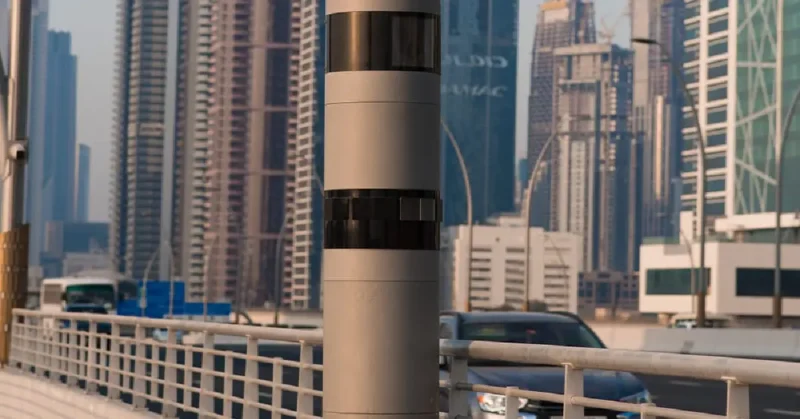
Dubai Police has shared the radar speed limits for major roads in the emirate. These numbers show when Dubai’s speed cameras will register a speeding violation. Drivers are reminded to follow the posted speed limits. Starting November 1, 2026, speed cameras on five roads with updated limits will be adjusted to match the new rules
Dubai speeding fines vary based on how much you go over the speed limit. Serious violations can also lead to black points. For more information, check our Dubai traffic fines list or find out how to check traffic fines in the UAE.
Key takeaways
- The road speeds in Dubai Police’s table run from 60 km/h on roads like Palm Jumeirah up to 120 km/h on sections of Sheikh Zayed Road, Al Yalayis, Dubai–Al Ain and Hatta Main roads. Lower limits can apply on smaller streets, so always follow the signs.
- On many major roads, radar control is set 21 km/h above the posted limit, and at 91 km/h on 60 km/h roads, but the gap varies by road.
- The road speed on the sign is the legal limit, not the radar figure.
- Many roads have different limits on different sections, so watch the signs.
- New limits apply on five streets from November 1, 2026: Al Asayel, Al Mustaqbal and Latifa bint Hamdan go up, while Al Rebat and Sheikh Sabah Al Ahmad Al Jaber Al Sabah come down.
FAQs
The Dubai speed limit varies by road. Major roads have limits ranging from 60 km/h on Palm Jumeirah to 120 km/h on sections of Sheikh Zayed Road and Dubai–Al Ain Road. Many city roads have limits of 70–80 km/h, while smaller streets may have lower limits. Always follow the posted speed signs.
Yes, in the sense that the radar control speed is higher than the road speed. On many major roads the gap is 21 km/h, so an 80 km/h road has a radar control threshold of 101 km/h, but it varies by road. The limit on the sign is still the legal maximum.
Sheikh Zayed Road has a speed limit of 120 km/h on some sections and 100 km/h on others, with radar control at 141 km/h and 121 km/h.
Dubai–Al Ain Road has speed limits of 100 km/h and 120 km/h, depending on the section. The corresponding radar control speeds are 121 km/h and 141 km/h, respectively.
The speed limit on Emirates Road in Dubai is 110 km/h, with radar control set at 131 km/h.
Al Wasl Road has a speed limit of 70 km/h, with radar control at 91 km/h.
It means speed cameras monitor that road. The radar control speed is the threshold where a camera records a speeding violation. It’s higher than the posted limit, but you should always drive within the limit on the sign.
Al Asayel Street, Al Mustaqbal Street and Latifa bint Hamdan Street get higher limits, while Al Rebat Street and Sheikh Sabah Al Ahmad Al Jaber Al Sabah Street get lower ones. Each change applies to a specific section of the road, in both directions.
These were the Dubai speed limits, which have a buffer. You can find these speed limits on signboards or remember the speed limit of your regular route. If you have driven too slowly or too fast, you can check the traffic fines in the UAE through different sources like Dubai Police or the Ministry of Interior websites.


