



When buying a home in the UAE, understanding the differences between carpet area, built-up area, and super built-up area can significantly impact how you evaluate property listings. These measurements define how much of your home is truly usable and how much is occupied by walls, balconies, or shared spaces.
For buyers in Dubai, Abu Dhabi, and Sharjah, the terminology can be confusing, especially for those relocating from markets like India or Europe, where “saleable” and “livable” areas are calculated differently. In the UAE, these measurements directly influence your price per square foot, interior planning, and long-term investment potential.
- Carpet Area
- Built-up Area Meaning and Breakdown
- Super Built-up Area
- Comparison Table: Carpet Area vs Built-up Area vs Super Built-up Area
- Why These Differences Matter for UAE Buyers and Investors
- Additional Terms for UAE Buyers
- How UAE Buyers Can Verify Area Details
- Key Takeaways
- FAQs
In Dubai, the Real Estate Regulatory Agency (RERA), which operates under the Dubai Land Department (DLD), requires developers to disclose the net usable area in all Sales and Purchase Agreements. In Abu Dhabi, property disclosure is governed by the Abu Dhabi Real Estate Centre (ADREC), a subsidiary of DMT, with updated obligations under Administrative Decision No. 25 of 2025. Yet developers may still advertise super-built-up areas to make homes appear larger. Knowing what each term means ensures you’re comparing properties fairly across different communities and developers.
The gap between carpet area and super built-up area can reach 25–30%, significantly affecting both upfront costs and future returns on investment.
If you are actively browsing, filter options by layout and price to find apartments for sale in Dubai.
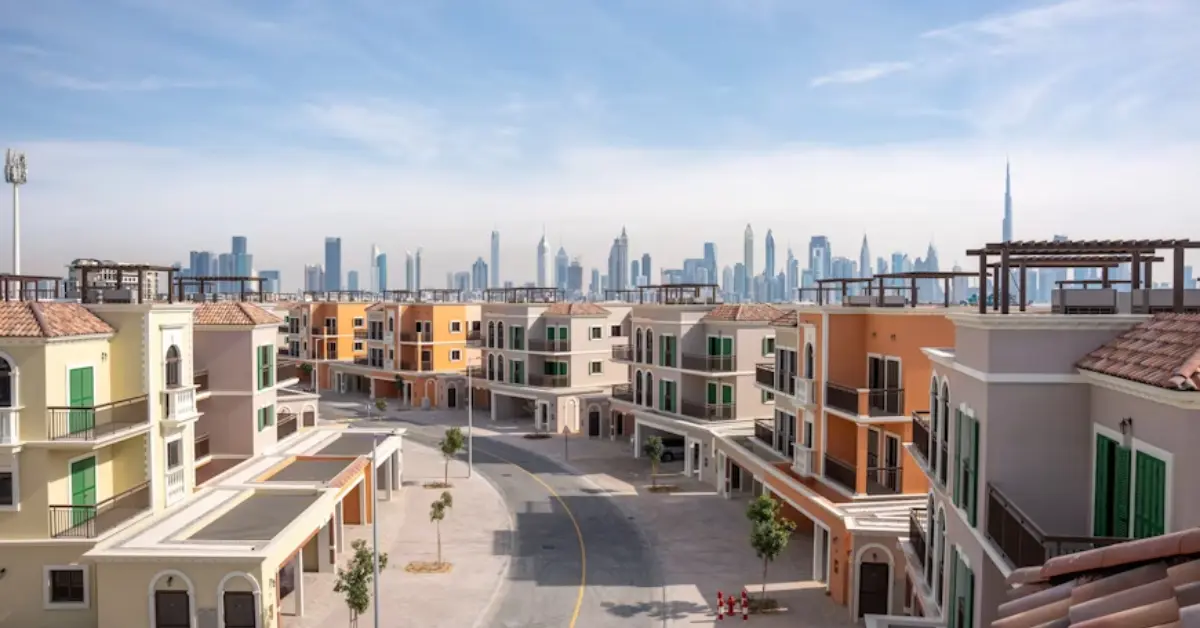
Carpet Area
In the UAE property market, the carpet area represents the net usable space within your walls —the space where you can actually place furniture or roll out a carpet. It defines the absolute comfort of your home and forms the baseline for comparing listings across Dubai, Abu Dhabi, and Sharjah.
Under RERA (Dubai) guidelines, the carpet area includes internal partition walls but excludes balconies, terraces, and common corridors. This ensures transparency, so you pay only for the space you genuinely occupy.
- Included: Living room, bedrooms, kitchen, bathrooms, and internal walls.
- Excluded: External structural walls, balconies, terraces, lobbies, and shared areas.
For example, an apartment listed as 1,200 sq ft in Business Bay may offer only 950 sq ft of carpet area once walls and balconies are removed from the calculation. This 20% difference can significantly affect your price per square foot and interior planning.
Tip: To estimate livable efficiency, divide the carpet area by the total area shown in the listing. A ratio above 70% indicates a high-efficiency layout — a key factor for both end users and investors.
For UAE buyers, carpet area is the most accurate measure of livable space. When comparing listings on Property Finder’s apartments for sale in Dubai, always look at the carpet area to gauge the actual value and comfort of your investment.
Built-up Area Meaning and Breakdown
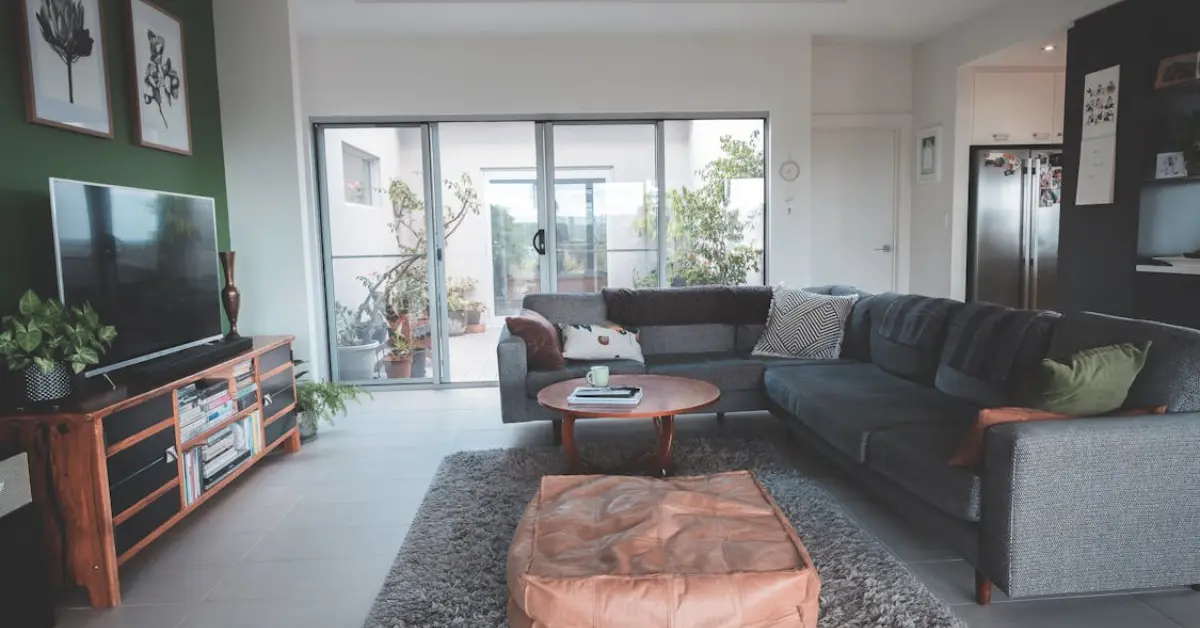
The built-up area of a UAE home is calculated by adding the thickness of internal and external walls, as well as attached balconies or terraces, to the carpet area. It reflects the unit’s total enclosed footprint, which architects often refer to as the “gross built area.”
The built-up area is typically 10–20% larger than the net usable area, depending on wall construction and the size of attached balconies or terraces. In the UAE, this difference is especially noticeable in villas and townhouses, where outdoor terraces, shaded balconies, and semi-covered parking bays are integral to the lifestyle.
- Included: Carpet area + wall thickness + attached balconies and private terraces.
- Excluded: Common amenities such as lobbies, corridors, and lift shafts.
For instance, a 2,000 sq ft villa in Arabian Ranches 2 may have about 1,700 sq ft of carpet area but a built-up area of 2,100 sq ft once the external walls and terraces are included. Similarly, in Abu Dhabi’s Saadiyat Lagoons, wide façade walls can further increase the built-up proportion.
For buyers, understanding built-up area clarifies how much space is livable versus structural. It also helps estimate construction costs and evaluate the architectural efficiency of a floor plan.
Tip: If a unit’s built-up area exceeds its carpet area by more than 25 %, review the layout carefully; thick structural walls or over-scaled terraces may be reducing usable space.
Super Built-up Area

In the UAE, the marketed total is the Built-Up Area (BUA), the total constructed area including walls, balconies, and a proportionate share of shared spaces, and is the figure used in developer brochures and Title Deeds. such as lift lobbies, corridors, staircases, gyms, and clubhouses. This figure is typically the one developers highlight when marketing residential projects in the UAE.
In many master communities in Dubai and Abu Dhabi, including Dubai Hills Estate, Jumeirah Village Circle (JVC), and Al Reem Island, the super built-up area determines the property’s listed size and selling price. However, while this number makes homes appear larger, it doesn’t increase your usable indoor space.
For instance, a 1,500 sq ft apartment in Dubai Hills may have a carpet area of only 1,100 sq ft, yet the price is calculated on the full 1,500 sq ft. This gap, often around 25–30%, is due to the inclusion of shared spaces and amenities.
Tip: If the loading factor exceeds 35%, request RERA-approved net area, as you may be paying more for shared amenities than for livable space. When comparing communities and yields, check Insights Hub for price-per-sq-ft context.
Handy Formulas:
- Carpet Area: Length × Width (of usable spaces)
This measures the actual livable floor space inside your home — covering rooms, kitchen, and bathrooms. Simply multiply the length and width of each usable room and add them together.
- Built-up Area: Carpet Area + Area of walls + Area of attached balconies/terraces
This adds the thickness of walls and attached outdoor spaces, such as balconies or private terraces, to give the total enclosed footprint of your property.
- Super Built-up Area: Built-up Area + (Common Area proportion × Built-up Area) [or] Carpet Area × (1 + Loading Factor)
Also called the saleable area, this includes your share of common spaces — such as lift lobbies, corridors, gyms, and staircases, proportionally distributed among all units in the building.
In the UAE, the loading factor, the percentage increase from carpet to super built-up area, generally ranges from 20–35%, depending on the project type and available amenities.
Because property prices in Dubai are quoted based on super built-up area, always request a RERA-approved floor plan that specifies the carpet area. Buyers can also use Property Finder’s Home Valuation Estimator to benchmark their property’s price per usable square foot.
Comparison Table: Carpet Area vs Built-up Area vs Super Built-up Area

Understanding how these three measurements relate helps UAE buyers and investors compare properties accurately across communities and developers. The table below outlines their main distinctions in size, inclusions, and pricing.
| Aspect | Carpet Area | Built-up Area | Super Built-up Area |
| Definition | Usable space inside the unit | Carpet area + walls + balcony/terrace | Built-up area + share of common spaces |
| Includes | Rooms, kitchen, bathrooms, internal walls | Carpet area + wall thickness + balconies | Built-up area + lobbies, lifts, amenities |
| Excludes | Walls, balconies, common areas | Shared amenities, corridors | None (used for sale pricing) |
| Typical Size | Smallest | Carpet + 10–20% | Carpet + 25–30% |
| Use in Pricing | Usable living space | Total enclosed footprint | Developer pricing and marketing |
Why These Differences Matter for UAE Buyers and Investors
Pricing Transparency
In the UAE, most developers quote prices based on the super built-up area, which includes shared facilities such as corridors and lift lobbies. This can make a home appear larger than it really is. Comparing properties by carpet area helps buyers evaluate true value and livability. You can filter listings by price per sq. ft on Property Finder to see which communities offer better usable space ratios.
Tenants evaluate and negotiate rent based on the livable space they use. In Dubai, there is no DLD or RERA regulation that formally ties rent calculation to carpet area — rental pricing is market-driven per square foot. Therefore, a property with a lower carpet-to-super-built-up ratio may generate less rental yield than expected. For end-users, this ratio also determines the flexibility and comfort of furnishings. For example, two 1,200 sq. ft listings can vary by as much as 200 sq. ft in carpet area, which could mean losing an entire bedroom or storage zone.
Buyers can use Property Finder’s Market Insights to see per-square-foot pricing across communities and identify which areas offer the most usable space for the price.
Legal Protection Under RERA
Under Dubai’s RERA and the Dubai Land Department (DLD), developers must clearly state the net usable area in contracts and marketing materials. This protects buyers from paying for unlivable space.
Before signing a Sales and Purchase Agreement (SPA), verify that the RERA-approved floor plan matches the area registered in your Title Deed. This ensures compliance with the UAE real estate disclosure laws.
Planning and Usability
The carpet area directly determines how comfortably a property can be furnished and lived in. For off-plan units, some developers highlight expansive built-up figures to enhance marketing visuals. Confirming the carpet area allows you to set accurate expectations for interior layout, storage, and furniture placement.
Investment and Rental Returns
For investors, the carpet-to-super-built-up ratio influences both rental yield and resale potential. Tenants pay rent based on livable square footage — not shared lobbies.
A property with a higher carpet efficiency (≥75%) offers better ROI.
Use Property Finder Market Insights to compare average yields across Dubai, Abu Dhabi, and Sharjah communities and identify where usable area converts to stronger rental performance.
Additional Terms for UAE Buyers
Covered Area vs Carpet Area
The covered area includes all enclosed or roofed-over spaces such as rooms, balconies, verandas, and internal corridors, while carpet area refers only to the net usable interior space.
For UAE buyers, this difference clarifies how much of your property you can actively live in versus simply own. In premium Dubai developments, terraces and verandas often count toward covered area but not carpet area, which can make villas appear larger than their actual indoor footprint.
Loading Factor

The loading factor indicates the amount of shared space added to the saleable area.
It’s the percentage markup from carpet area to super built-up area to account for shared facilities.
In Dubai, luxury communities such as Downtown Dubai, Bluewaters Island, and Palm Jumeirah typically show a 30–35% loading factor due to extensive amenities.
Mid-range areas like Jumeirah Village Circle (JVC) or Dubai Silicon Oasis usually fall between 20% and 25%.
You can verify these ratios using Market Insights to see how different master plans balance shared versus livable space.
How UAE Buyers Can Verify Area Details
Request RERA-Approved Floor Plans: Always ask the developer for area breakdowns (carpet, built-up, and super built-up).
- Review Your Title Deed: The Dubai Land Department record reflects the legally registered net area.
- Inspect Show Units: Walk through model apartments or villas to visualise the actual livable area.
- Compare Market Benchmarks: Use Property Finder’s property valuation tools to compare your purchase cost against similar listings.
Key Takeaways
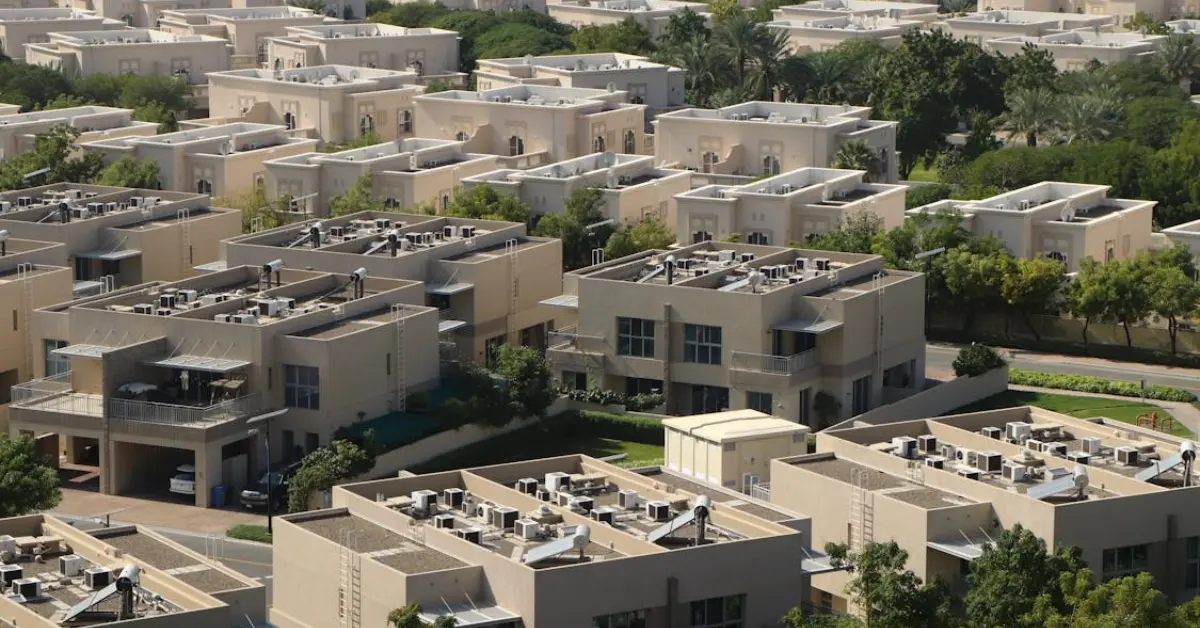
Understanding the difference between carpet area, built-up area, and super built-up area is crucial for every UAE homebuyer and investor. The carpet area represents your actual usable living space, while the built-up area includes walls and attached outdoor zones such as balconies or terraces. The super built-up area, often called the saleable area, adds your proportionate share of communal spaces like lobbies, corridors, and gyms, which is usually the basis for pricing.
Since developers in the UAE often market homes using the super built-up figure, buyers should always verify the carpet area to know what portion of the total space is truly livable. Homes with higher carpet efficiency deliver stronger rental yields and long-term value.
UAE regulations under RERA and the Dubai Land Department (DLD) require developers to disclose the net usable area, ensuring transparency for buyers. Whether you’re exploring apartments in Dubai or villas in Abu Dhabi, always request a RERA-approved floor plan, check your Title Deed, and compare price per usable square foot using Property Finder tools.
FAQs
It includes bedrooms, living spaces, a kitchen, bathrooms, and internal walls, but excludes balconies and shared corridors.
It’s the sum of the carpet area, the thickness of internal and external walls, and any attached balconies or terraces.
Because it includes shared facilities like corridors, lifts, and gyms —collectively known as the saleable area —used to calculate the overall cost.
It’s the percentage added to the carpet area to include common spaces, usually 20–35% depending on the project.
Check the RERA-approved floor plan, verify the net area in your DLD Title Deed, and use Property Finder’s Market Trends to compare community pricing and usable space ratios.
Ask for a RERA-compliant Sale and Purchase Agreement (SPA) that lists the carpet and built-up areas separately. The final registered area must match the developer’s handover plan.
Rental rates are based on carpet area, the actual space tenants use. A higher carpet-to-super-built-up ratio means better value for both landlords and tenants.