



Plenty of people choose to live in Dubai and work in Abu Dhabi, and make the trip between the two cities part of their week. Some want Dubai’s lifestyle and social life, while others already have a home, school places or a partner’s job in Dubai. Whatever the reason, the community you pick will shape your daily commute more than anything else.
The short answer: if you live in Dubai and work in Abu Dhabi, look at southern and western communities with quick access to Sheikh Zayed Road (E11), such as Dubai South, Dubai Investments Park, Jumeirah Golf Estates, Al Barsha, and Dubai Marina or JLT. The best choice for you depends on where your office is in Abu Dhabi and whether you drive or take public transport.
- How the Dubai to Abu Dhabi commute works
- Where you work in Abu Dhabi matters
- Live in Dubai, work in Abu Dhabi: where to live in Dubai
- Quick comparison of the communities
- Cost of living in Dubai for commuters
- Tips before you sign a lease
How the Dubai to Abu Dhabi commute works
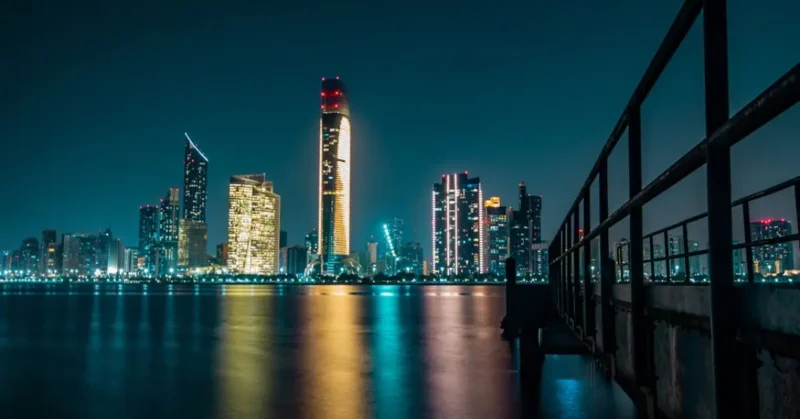
There’s no official government ranking of the best Dubai communities for people who work in Abu Dhabi. What the official transport authorities do give you is a clear picture of how to get between the two emirates, and that’s the best place to start.
By car
Driving is the most flexible option for many commuters. The main corridor between the two cities is Sheikh Zayed Road (E11), so communities with fast access to it, or to Sheikh Mohammed Bin Zayed Road (E311), save you time every morning. Traffic at peak hours can add a lot to the trip, so test your route at the time you’ll actually travel.
By intercity bus
According to the UAE Government portal, public buses connect areas within and between the emirates. These are scheduled services run by Dubai’s Roads and Transport Authority (RTA) and Abu Dhabi’s Integrated Transport Centre (AD Mobility), and each authority publishes its own schedules and fares. Route E101 runs from Ibn Battuta Bus Station and route E100 from Al Ghubaiba Bus Station to Abu Dhabi Central Bus Station, with a one-way fare of AED 25.
By train
Since 30 September 2026, Etihad Rail passenger trains have linked Al Yalayis Station in Jumeirah Golf Estates with Mohamed Bin Zayed City Station in Abu Dhabi in about an hour. Fares start from AED 39 in Comfort Class and AED 109 in Premium Class. Parking at Al Yalayis is free for the first 15 minutes, then AED 5 per hour, with a full-day rate of AED 30 for stays of five hours or more. Trains run at set times, so check the timetable on the Etihad Rail website or app against your working hours.
Both emirates are also investing in public transport. Abu Dhabi’s mobility strategy aims to improve access to public transport, reduce congestion and build an efficient network that links different modes of travel, while Dubai’s Comprehensive Flexible Mobility Plan sets targets for more people to commute by public transport. For more route options, read our guide on how to go to Abu Dhabi from Dubai.
Choosing Where to Live Based on Your Work Location in Abu Dhabi
A commute to central Abu Dhabi is very different from one to Khalifa City, Masdar City, Al Reem Island or the industrial zones, so start your search from your office, not from the map of Dubai.
Abu Dhabi city and Al Reem Island
Intercity buses E100 and E101 finish at Abu Dhabi Central Bus Station, on the island. Train commuters arrive at Mohamed Bin Zayed City Station, then take Abu Dhabi Mobility routes MR1 or MR2 to the Main Bus Station or Al Zahiyah Bus Station, so allow time for that extra leg.
Khalifa City and Masdar City
These areas sit away from both the bus terminal and the train station, so most commuters find driving the most practical option. A Dubai community close to the E11 or E311 keeps the drive as short as possible.
Mussafah and the industrial zones
Mohamed Bin Zayed City Station is next to Mussafah Bus Station, which makes the train a strong option if you work in or near Mussafah. Etihad Rail also runs shuttle buses from the station to selected areas for AED 10 per trip.
Live in Dubai, work in Abu Dhabi: where to live in Dubai
Below are five of the best communities to live in Dubai for anyone working in Abu Dhabi, grouped by how close they are to the capital. Each one includes the main commute links, the types of homes available and the median asking price for homes for sale, based on Property Finder’s Area Insights.
Communities closest to the Abu Dhabi border
Dubai South
Dubai South is a large, master-planned district built around Al Maktoum International Airport and Expo City Dubai. It sits further south than most Dubai communities, so your drive to Abu Dhabi starts closer to the border. It also usually offers newer homes at lower prices than central Dubai.
- Location: Southern Dubai, near Al Maktoum International Airport and Expo City Dubai
- Getting to Abu Dhabi: By car via the E311 or E11. Expo 2020 Metro Station is under 10 minutes away by car and two stops from Jumeirah Golf Estates for the train
- Property types: Studios to three-bedroom apartments, plus two- to seven-bedroom villas and townhouses
- Median asking price: AED 1.57 million
- Best for: Drivers and buyers looking for newer, more affordable homes
Find out more on Dubai South Area Insights.
Dubai Investments Park
Dubai Investments Park (DIP) is a mixed-use community of residential, commercial and industrial zones, split into DIP 1 and DIP 2. It has wide roads and low-density blocks, and it includes Green Community, one of Dubai’s more established gated neighbourhoods.
- Location: South-west Dubai, off Sheikh Mohammed Bin Zayed Road (E311), Emirates Road (E611) and Expo Road
- Getting to Abu Dhabi: By car via the E311. Dubai Investment Park Metro Station on Route 2020 is one stop from Jumeirah Golf Estates, where you can walk to the Etihad Rail station
- Property types: Mid-rise apartments, plus townhouses and villas in Green Community and other gated projects
- Median asking price: AED 2.1 million
- Best for: Families who want space and quick highway access
Learn more on Dubai Investments Park Area Insights.
Jumeirah Golf Estates
Jumeirah Golf Estates is home to Al Yalayis Station, Dubai’s Etihad Rail station. It’s a gated, green community built around two championship golf courses, and it suits people who want villa living and a train ride to work.
- Location: Off Sheikh Mohammed Bin Zayed Road (E311)
- Getting to Abu Dhabi: Al Yalayis Station is inside the community, and a pedestrian bridge links it to Jumeirah Golf Estates Metro Station on Route 2020
- Property types: Villas and townhouses, plus apartments in the Al Andalus cluster
- Median asking price: AED 10.06 million
- Best for: Train commuters and families looking for a villa
Browse properties for rent in Jumeirah Golf Estates or read more on Jumeirah Golf Estates Area Insights.
Communities along Sheikh Zayed Road
Dubai Marina and JLT
Dubai Marina and Jumeirah Lake Towers (JLT) sit on either side of Sheikh Zayed Road, which makes them two of the best areas to live in Dubai if you want city life and a direct run onto the E11. Dubai Marina is built around a 3 km canal with a waterfront promenade, while JLT is a freehold, mixed-use district set around man-made lakes.
- Location: New Dubai, along Sheikh Zayed Road (E11)
- Getting to Abu Dhabi: Straight onto the E11 by car. DMCC and Sobha Realty metro stations on the Red Line serve both areas, and the Dubai Tram runs through Dubai Marina
- Property types: Mostly high-rise apartments from studios to four bedrooms, plus penthouses
- Median asking price: AED 2.51 million in Dubai Marina and AED 1.76 million in JLT
- Best for: Singles and couples who want restaurants, the beach and nightlife close to home
Compare Dubai Marina Area Insights and JLT Area Insights.
Al Barsha
Al Barsha is a central, established community next to Mall of the Emirates. It mixes mid-rise apartment buildings in Al Barsha 1 with villas in Al Barsha 2, Al Barsha 3 and Al Barsha South, and its schools and shops make everyday life easy for families.
- Location: Between Sheikh Zayed Road (E11) and Sheikh Mohammed Bin Zayed Road (E311)
- Getting to Abu Dhabi: By car via the E11 or E311. Mall of the Emirates and InsuranceMarket metro stations on the Red Line are close by
- Property types: Mid-rise apartments, hotel apartments along Sheikh Zayed Road and villas
- Median asking price: AED 3.35 million
- Best for: Families who want a central base with schools such as GEMS World Academy nearby
Explore Al Barsha Area Insights.
If you’re also open to living in Abu Dhabi, or somewhere right on the border, see our guide to the best place to live between Dubai and Abu Dhabi.
Quick comparison of the communities
| Community | Main commute link | Main home types | Best for |
| Dubai South | Car via E311 or E11 | Apartments, villas, townhouses | Newer, affordable homes |
| Dubai Investments Park | Car via E311, Route 2020 metro | Apartments, townhouses, villas | Families who want space |
| Jumeirah Golf Estates | Etihad Rail station on site | Villas, townhouses, some apartments | Train commuters |
| Dubai Marina and JLT | Car via E11, Red Line metro | Apartments, penthouses | City lifestyle |
| Al Barsha | Car via E11 or E311, Red Line metro | Apartments, villas | Central family living |
Cost of living in Dubai for commuters
Rent is the biggest monthly cost of living in Dubai, and prices can vary a lot from one community to the next. According to Property Finder’s cost of living in Dubai guide, average annual rents range from about AED 45,000 to AED 70,000 for a studio, AED 70,000 to AED 110,000 for a one-bedroom and AED 115,000 to AED 170,000 for a two-bedroom apartment. Basic utilities for an 85 sq m apartment add around AED 500 to AED 1,200 a month.
On top of that, budget for the commute itself:
- Train: From AED 39 in Comfort Class, plus parking at Al Yalayis (AED 30 for a full day) if you drive to the station
- Bus: AED 25 one way on the E100 or E101
- Car: Fuel, plus any road tolls on your route
Living in Dubai while you work in Abu Dhabi often means a cheaper home is worth less than it looks if it adds hours to your week, so weigh rent and travel time together.
Tips before you sign a lease
- Do a test run: Make the trip at your real start and finish times before you commit
- Check the timetable: If you plan to take the train or bus, confirm current times with Etihad Rail, the RTA or AD Mobility
- Think about the last leg: Plan how you’ll get from the station or bus terminal to your office
- Consider the whole household: Schools, supermarkets and healthcare matter as much as the commute
Key Takeaways
- To live in Dubai and work in Abu Dhabi comfortably, choose a community with fast access to the E11 or E311, or close to the Route 2020 metro and Etihad Rail
- Dubai South, Dubai Investments Park and Jumeirah Golf Estates are the closest options to Abu Dhabi
- Dubai Marina, JLT and Al Barsha suit people who want a more central lifestyle and a direct route onto Sheikh Zayed Road
- Etihad Rail links Al Yalayis in Jumeirah Golf Estates with Mohamed Bin Zayed City in about an hour, and intercity buses E100 and E101 cost AED 25 one way
- Where you work in Abu Dhabi should guide where you live in Dubai
Frequently Asked Questions
Yes. Many residents do this by car, intercity bus or Etihad Rail. The trip is easiest from southern and western Dubai communities with quick access to the E11 or E311.
Jumeirah Golf Estates is the top pick for train commuters, as Etihad Rail’s Al Yalayis Station is inside the community. Dubai South and Dubai Investments Park suit drivers, while Dubai Marina, JLT and Al Barsha suit people who want a central lifestyle.
Dubai Investments Park, Jumeirah Golf Estates and Al Barsha are popular with families because they offer villas or townhouses, schools nearby and good road access towards Abu Dhabi.
The Etihad Rail journey from Al Yalayis to Mohamed Bin Zayed City takes about an hour, not counting the trip to and from the stations. By car or bus, the time depends on your route and traffic.
A one-way ticket on routes E100 and E101 to Abu Dhabi Central Bus Station costs AED 25.
Rent is the largest cost. Average annual rents run from about AED 45,000 for a studio to AED 170,000 for a two-bedroom apartment, and basic utilities for an 85 sq m apartment cost around AED 500 to AED 1,200 a month.