



A weekend escape to Muscat ranks among the most popular road trips for UAE residents, and it is easy to see why. Travelling from Dubai to Muscat by road takes you through the Hajar Mountains, across an international border, and into one of the Gulf’s most remarkable capital cities, all within five to six hours.
This guide covers everything you need: the best route, border crossing steps, required documents, visa requirements, driving rules, and bus options.
- How far is Dubai to Muscat by road?
- The best route from Dubai to Muscat
- Dubai to Muscat border crossing: What to expect at Hatta
- Documents and insurance you need before you go
- Oman visa requirements for UAE residents
- Driving rules and road tips for the Muscat highway
- Stops worth making along the way
- Dubai to Muscat by bus
- Driving vs. taking the bus: A quick comparison
- Best time to travel from Dubai to Muscat
- Key takeaways
- FAQs
How far is Dubai to Muscat by road?
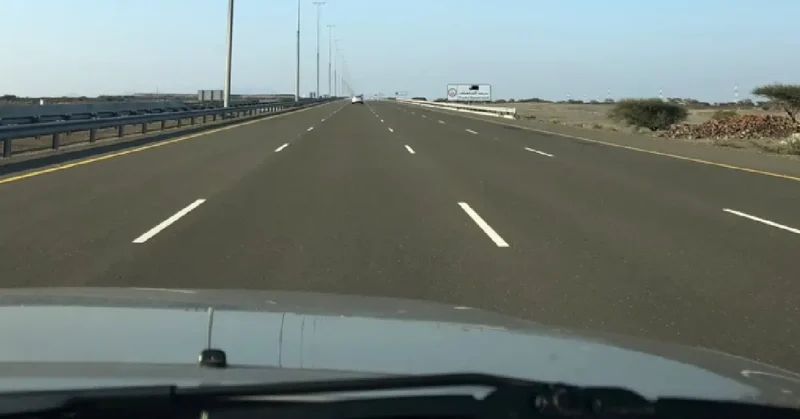
The distance from Dubai to Muscat by road is approximately 450 kilometres via the most popular route through Hatta. Expect the full journey, including the border crossing at Al Wajajah, to take between 5 and 6 hours under normal traffic conditions. During UAE public holidays or peak travel periods such as Eid, that figure can stretch to seven hours or more due to queues at the border.
The Dubai to Muscat distance feels shorter than it sounds once you are on the road. After Hatta, the Omani highway opens into a wide, well-maintained dual carriageway with very little traffic. The distance between Dubai and Muscat by road is comparable in feel to a long emirate-to-emirate drive within the UAE, though the border crossing adds a procedural stop to the journey.
Explore the Available Apartments & Flats for Rent in Dubai
-


Apartment
Listed 5 days ago
200,000 AED/year
Elegant home | Skyline views | 2-months free
City Tower 1, City Towers, Sheikh Zayed Road, Dubai
2
4
1,701 sqft
-


Apartment
Listed 5 days ago
153,000 AED/year
2-months free | Metro nearby | Luxury living
City Tower 1, City Towers, Sheikh Zayed Road, Dubai
1
2
1,173 sqft
-


Apartment
Listed 2 weeks ago
280,000 AED/year
Skyline View |High Floor |Furnished or Unfurnished
Jumeirah Living Marina Gate, Marina Gate, Dubai Marina, Dubai
2
3
1,426 sqft
-
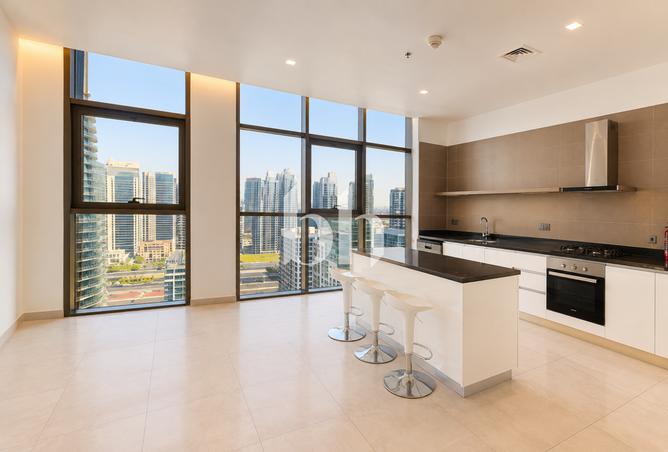

Apartment
Listed 2 weeks ago
242,000 AED/year
High Floor | Marina View | Modern | Spacious
No.9, Dubai Marina, Dubai
3
4
1,767 sqft
-
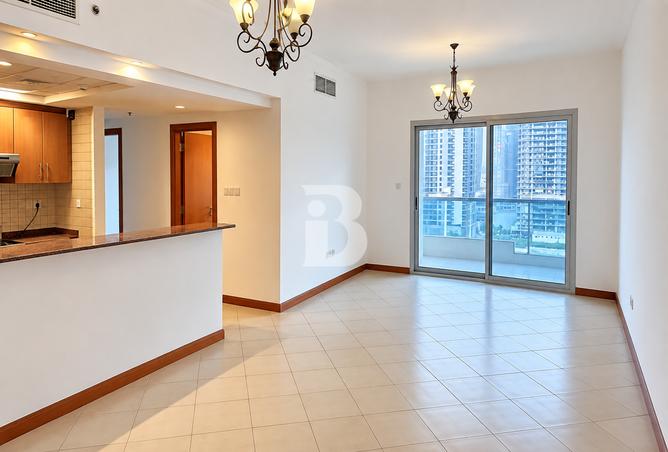

Apartment
Listed 2 weeks ago
91,999 AED/year
Spacious and Stunning 2BR I Unfurnished I Vacant
Marina Diamond 1, Marina Diamonds, Dubai Marina, Dubai
2
2
983 sqft
-


Apartment
Listed 6 days ago
320,000 AED/year
Luxury furnished 3 BR + Maid Ap with Skyline view
Marina Vista Tower 2, Marina Vista, Emaar Beachfront, Dubai Harbour, Dubai
3
3
1,755 sqft
-


Apartment
Listed 5 days ago
130,000 AED/year
Ellington | Brand New | Big Layout
Ellington House 3, Ellington House, Dubai Hills Estate, Dubai
1
2
817 sqft
-

Apartment
Listed 5 days ago
55,000 AED/year
Ready to Move In | Spacious Studio | Premium
Oxford 212, District 10, Jumeirah Village Circle, Dubai
studio
1
390 sqft
-


Apartment
Listed 3 days ago
220,000 AED/year
Spacious | 2BR Apartment | Modern Amenities
Lamtara 3, Madinat Jumeirah Living, Umm Suqeim 3, Umm Suqeim, Dubai
2
2
1,362 sqft
-


Apartment
Listed 2 days ago
900,000 AED/year
Ground Floor Gem | Massive Private Garden | Availa
Seventh Heaven, Al Barari, Dubai
3
4
9,169 sqft
The best route from Dubai to Muscat
The best route from Dubai to Muscat follows the E44 highway from Dubai towards Hatta. From Hatta, the road continues to the Al Wajajah border crossing, where you exit the UAE and enter Oman. After clearing the border, the journey continues south along the Muscat Expressway through Sohar and Barka before reaching the capital.
For anyone planning the Dubai-to-Muscat drive for the first time, this is the recommended option. It is straightforward, well-signposted, and passes through scenic mountain terrain near Hatta before opening onto the coastal highway into Oman.
A Dubai to Muscat by road route map on Google Maps will show the E44 highway as the primary option from most Dubai locations. Entering ‘Al Wajajah Border Crossing’ as a waypoint gives you turn-by-turn directions right to the crossing point. Downloading an offline map before you leave is also a sensible step, as mobile coverage can be patchy in the mountain sections.
An alternative route runs south through Abu Dhabi before heading east into Oman, but this adds considerable distance for drivers starting from Dubai. The Hatta route remains the faster and more direct choice for most UAE residents.
Dubai to Muscat border crossing: What to expect at Hatta
The Dubai to Muscat by road border crossing at Al Wajajah, accessed via Hatta on the E44, is open 24 hours a day, seven days a week. Under normal conditions, the crossing takes between 45 minutes and two hours. During UAE public holidays and long weekends, expect significantly longer waits.
The process involves two separate facilities: a UAE exit checkpoint and an Oman entry checkpoint. Vehicles are inspected and passengers are processed individually at each stage.
What happens at the border
- Present your passport and Emirates ID at the UAE exit counter
- Pay the UAE exit fee of approximately AED 35 per person
- Drive across to the Oman entry facility and present your passport and visa
- Your vehicle may be inspected at either checkpoint
- Collect your Oman entry stamp and proceed towards Sohar
Departing early in the morning, between 6 and 8 am, typically results in shorter queues. Late-night crossings after 11 pm also tend to be quicker. If you have flexibility, avoid travelling on the first day of a public holiday.
Documents and insurance you need before you go
Getting your paperwork in order before you travel from Dubai to Muscat is one of the most important steps. Missing documents are the most common cause of delays or refusals at the Al Wajajah border crossing.
What to bring
- Passport with at least six months’ validity
- Valid UAE driving licence
- Emirates ID with at least six months’ remaining validity
- Original vehicle registration card (Mulkiya)
- No Objection Certificate (NOC) if the vehicle is financed or rented
- Proof of insurance covering Oman, or cash to purchase an Orange Card at the border
Insurance: The Orange Card
Standard UAE vehicle insurance does not cover Oman. You will need an Orange Card, a regional motor insurance certificate valid across GCC countries. Most UAE insurance providers sell it before departure, and counters at the border also offer it. The cost is typically AED 100 to 115 for a five-day policy. If you are staying longer, check available durations with your provider before you leave.
Oman visa requirements for UAE residents
Visa requirements depend on your nationality and residency status.
GCC nationals do not require a visa and can enter Oman on their national identity card.
For non-GCC residents holding a valid UAE residence visa, Oman offers a visa on arrival at Al Wajajah for most nationalities. A 14-day single-entry visa costs five Omani Rials, equivalent to approximately AED 47 to 50.
Alternatively, you can apply for an Oman eVisa online before your trip through the Royal Oman Police portal. Applying 48 to 72 hours in advance is recommended to avoid any delays at the crossing. This option also tends to speed up processing at the border itself.
Note: Visa eligibility and fees can change. Always confirm the latest requirements before you travel from Dubai to Muscat by road.
Driving rules and road tips for the Muscat highway

The Omani highway is a pleasure to drive, but the rules differ from the UAE in a few important ways that are worth knowing before you set off on the Dubai to Muscat drive.
Speed limits in Oman
- 40 to 80 km/h in urban areas
- 90 km/h on rural roads
- 120 km/h on open highways
Oman uses average speed cameras on its main highways, measuring your average speed across a stretch of road rather than at a single point. Fines are issued automatically, so maintain a consistent pace within the limit throughout the journey.
Seatbelts are compulsory for all passengers. Mobile phone use while driving is strictly prohibited. Traffic rules are enforced consistently and penalties are applied quickly.
Fuel tips
Fill your tank in the UAE before crossing the border. Petrol stations are available on both sides, but they become less frequent in the stretch between Hatta and Sohar. Budget approximately AED 95 to 115 for a 50-litre fill for the journey. Most stations in Oman accept credit cards, but carrying some Omani Rials is useful in smaller towns along the route.
Stops worth making along the way
The Dubai to Muscat drive is not just about the destination. The route passes through some memorable spots that are well worth a stop, particularly if you are travelling with family or turning the trip into a full weekend away.
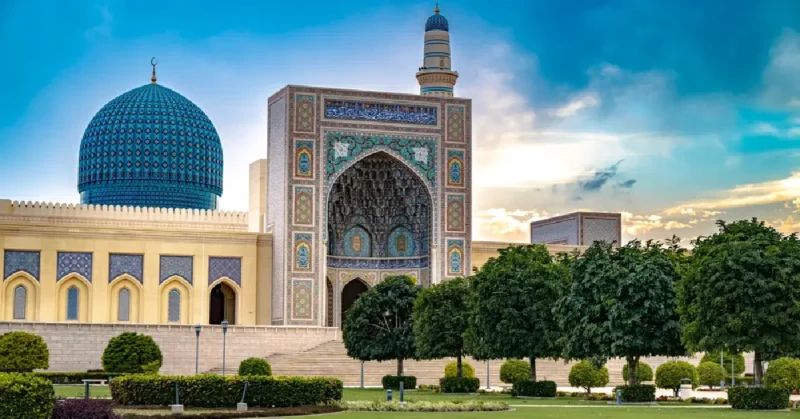
Hatta
Before crossing into Oman, Hatta is a natural pause point. The Hatta Dam is a striking reservoir set against the Hajar Mountains, popular for kayaking and mountain biking. The Hatta Heritage Village offers a glimpse into traditional Emirati mountain life. Departing Dubai early enough to stop here adds around an hour to the journey without significantly disrupting your schedule. Check our full guide on things to do in Hatta.
Sohar
Around 50 kilometres past the border, Sohar is a significant Omani city with deep historical roots. The Sohar Fort is worth a brief visit, and the waterfront area has cafes and rest facilities. It is a practical point to refuel, stretch, and grab a meal before the final leg to Muscat.
Barka
Roughly an hour’s drive from Sohar and about 80 kilometres from Muscat, Barka is a quieter coastal town with a traditional souq and the historic Barka Fort. It makes for a pleasant final stop before arriving in the capital.
Dubai to Muscat by bus
If you prefer not to drive, the Dubai to Muscat bus is a practical and affordable alternative. The service operates on RTA Route 201 and is run by Mwasalat, Oman’s national transport company.
Buses depart three times daily from three locations in Dubai: Dubai International Airport Terminal 2, Al Rashidiya Bus Station, and Abu Hail (Salahuddin Road) Station. The journey takes approximately six hours, including the border crossing.
The Dubai to Muscat bus ticket price is AED 55 for a single journey and AED 90 for a return. Buses are air-conditioned and equipped with Wi-Fi. Note that the AED 35 UAE exit fee per person is paid separately at the border and is not included in the ticket price. A valid Oman visa is also required before boarding.
Driving vs. taking the bus: A quick comparison
| Point to consider | Driving yourself | Dubai to Muscat bus |
Journey time | 5 to 6 hours | Approx. 6 hours |
Approx. cost (one way) | AED 200 to 350 (fuel, insurance, visa, fees) | AED 55 + AED 35 exit fee |
| Flexibility | Full, depart any time | Fixed departure times |
| Luggage | Unlimited | Coach allowance applies |
Door-to-door | Yes | No, departs from bus stations |
Best for | Families, groups, road trip enthusiasts | Solo and budget-conscious travellers |
Best time to travel from Dubai to Muscat
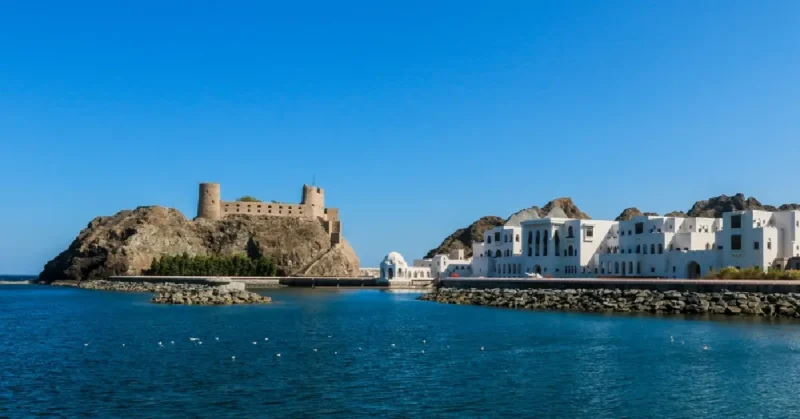
The most comfortable months for the travel from Dubai to Muscat by road are November to February, when temperatures are mild across both countries. The mountain road near Hatta and the Omani coastline are particularly pleasant during this period.
March to May is manageable if you depart early in the morning before temperatures climb. June to September brings intense heat, particularly along the interior sections of the route. Travelling in summer requires a well-functioning vehicle air conditioner, extra water, and short stops in shaded rest areas rather than roadsides.
Regardless of season, book your Muscat accommodation well in advance during UAE public holidays, when demand rises sharply and room rates follow.
Key takeaways
- The distance from Dubai to Muscat by road is approximately 450 km via the Hatta route, with a total journey time of five to six hours including the Al Wajajah border crossing.
- The border crossing is open 24/7. Early morning departures between 6 and 8 am typically mean the shortest wait times, while public holidays can add two or more hours to the crossing.
- Essential preparations include an Orange Card for Oman insurance cover, a valid Oman visa, and at least six months’ remaining validity on your passport and Emirates ID.
- The Dubai to Muscat bus is a budget-friendly alternative at AED 55 one-way, with three daily departures from Dubai Airport Terminal 2, Al Rashidiya, and Abu Hail stations.
Frequently Asked Questions
The drive takes approximately five to six hours under normal conditions, including the border crossing at Al Wajajah near Hatta. During UAE public holidays, travel time can extend to seven hours or more due to border queues.
The Dubai to Muscat distance by road via the Hatta route is approximately 450 kilometres. The full journey time, including the border crossing, is five to six hours.
The main Dubai to Muscat by road border crossing is at Al Wajajah, accessed from Dubai via the E44 highway through Hatta. It is open 24 hours a day, seven days a week and is the most direct crossing for drivers starting from Dubai.
Non-GCC residents need a valid Oman visa to cross the border. You can apply for an Oman eVisa online before your trip or obtain a visa on arrival at Al Wajajah, subject to your nationality. GCC nationals can enter on their national identity card without a separate visa.
The Dubai to Muscat bus ticket price is AED 55 for a single journey and AED 90 for a return. This does not include the UAE exit fee of approximately AED 35, which is paid separately at the border. The service is operated by Mwasalat via RTA Route 201.
Yes, but you will need a No Objection Certificate (NOC) from the rental company confirming the vehicle can cross into Oman, as well as an Orange Card for insurance cover. Not all rental companies permit cross-border travel, so confirm this before collecting the vehicle.