



The Louvre Abu Dhabi is one of the UAE’s most significant cultural landmarks—an architectural masterpiece, a global art hub, and the first universal museum in the Arab world. Located on Saadiyat Island, it bridges Eastern and Western cultures through a world-class collection, immersive exhibitions, and an iconic design that has made it one of the region’s most visited attractions.
This guide covers everything you need to know before your visit—including the museum’s history, highlights, ticket prices, timings, how to get there, and the best things to do inside.
- Overview & Significance
- Museum Scale & Physical Layout
- Iconic Architecture & Design
- Collection & Exhibitions
- Saadiyat Cultural District Context
- Institutional Partnership & Management
- Key Takeaways
- Frequently Asked Questions (FAQs)
Overview & Significance
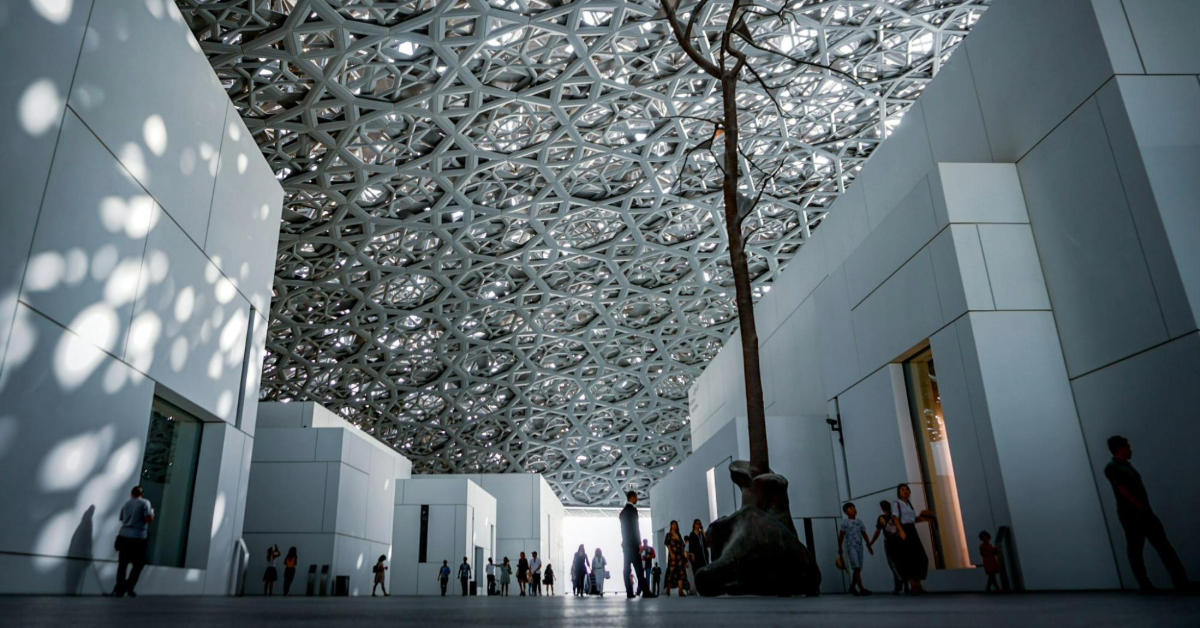
Opened in 2017, the Louvre Abu Dhabi is the largest art museum in the Arabian Peninsula and France’s biggest cultural project outside Europe. The landmark collaboration between the UAE and France (valid until 2047) combines French museum expertise with the UAE’s vision for global cultural dialogue.
The museum quickly became the most visited in the Arab world, welcoming more than 2 million visitors by 2019. Its mission: to tell “the story of humanity” – showcasing artworks, artefacts, and ideas shared across time, geography, and civilisation.
Location
It is located in Saadiyat, Abu Dhabi
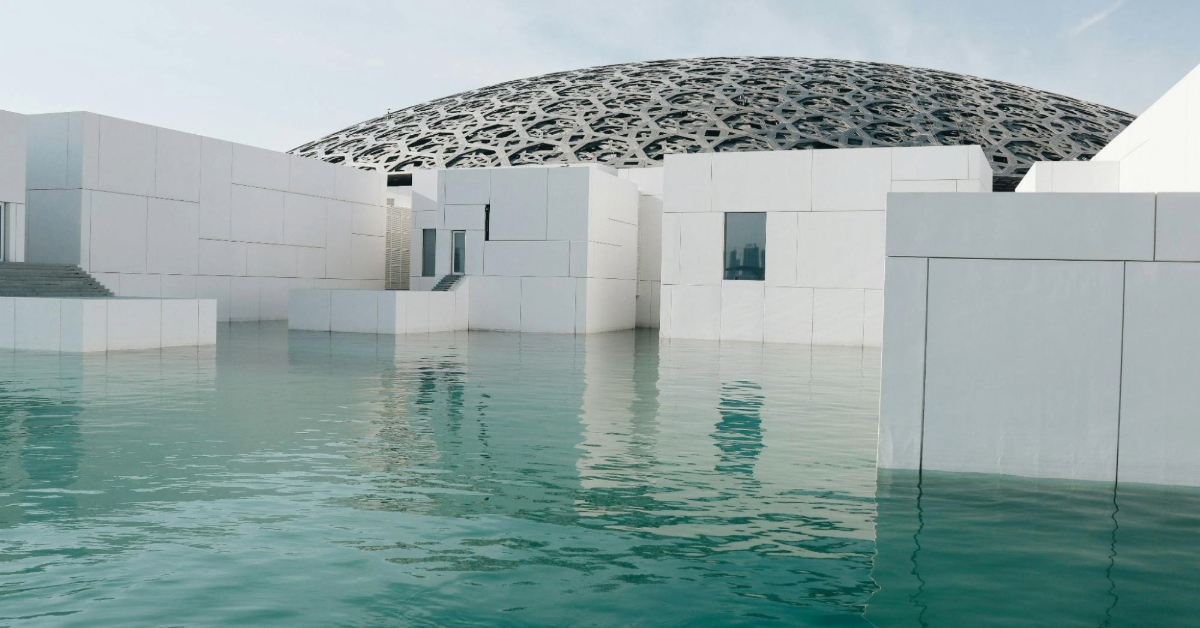
The museum’s low-rise buildings and spectacular dome appear to float above the water, making it the crown jewel of the Saadiyat Cultural District.
Nearby Communities & Attractions:
- Mamsha Al Saadiyat – 4 minutes
- Manarat Al Saadiyat – 6 minutes
- Saadiyat Beach – 9 minutes
- Al Mina – 9 minutes
- Saadiyat Private Villas – 9 minutes
- Al Reem Island – 17 minutes
Explore the Available Properties for Sale in Abu Dhabi
-
Apartment
Listed 1 day ago
1,965,240 AED
Off-Plan Investment | High Yield|Profitable Choice
Vista Del Mar, Yas Island, Abu Dhabi
1
2
979 sqft
-

Villa
Listed 2 days ago
8,450,000 AED
Hot Deal | Wilds Phase 2 | High-End Finishing
Saadiyat Lagoons, Saadiyat Island, Abu Dhabi
4
6
7,749 sqft
-
Apartment
Listed 3 days ago
2,699,999 AED
Luxury Design | Stunning View | High ROI | Terrace
Saadiyat Grove, Saadiyat Cultural District, Saadiyat Island, Abu Dhabi
1
2
753 sqft
-

Villa
Listed 1 week ago
11,500,000 AED
Type V4 Executive | Premium Amenities | Prime Home
Souk Al Jubail, Al Jubail Island, Abu Dhabi
4
5
7,820 sqft
-
Villa
Listed 2 days ago
7,900,000 AED
Single Row | Type 5 Homes | Private Pool
Nawayef West, Al Hudayriat Island, Abu Dhabi
4
6
4,942 sqft
-
Apartment
Listed 2 days ago
2,518,130 AED
Highest Floor | Corner Unit | Muheira B
Muheira, Al Reem Island, Abu Dhabi
2
3
1,215 sqft
-
Villa
Listed 9 hours ago
15,760,000 AED
Type 1 Select Plus I Prime Location I Sea View
Nawayef West, Al Hudayriat Island, Abu Dhabi
5
7
4,648 sqft
-
Villa
Listed 3 days ago
14,236,000 AED
Prime Location I Type 3 Villa I Nawayef West Hill
Nawayef West, Al Hudayriat Island, Abu Dhabi
5
7
5,034 sqft
-
Apartment
Listed 2 weeks ago
3,350,000 AED
Near The Parking | 3BR+Maid Apt | Ready Soon
The Sustainable City - Yas Island, Yas Island, Abu Dhabi
3
5
1,555 sqft
-
Villa
Listed 1 day ago
5,000,000 AED
Single Row | Corner Unit | Modern Arabic
Fay Alreeman, Al Shamkha, Abu Dhabi
5
6
5,468 sqft






Museum Scale & Physical Layout
Standing as a cultural landmark on Saadiyat Island, the Louvre Abu Dhabi is designed on an extraordinary scale that reflects both its global ambition and regional identity. Its layout combines expansive gallery spaces, striking architectural elements, and open-air walkways that create a seamless flow between art, light, and the surrounding sea.
- Size and Capacity
Louvre Abu Dhabi covers an impressive 24,000 square metres (260,000 sq ft), making it the largest art museum in the Arabian Peninsula. Within this vast area, 8,000 square metres are dedicated specifically to galleries, giving visitors plenty of room to explore and enjoy the collection at an easy, unhurried pace.
- Architectural Configuration
The museum is composed of 55 separate buildings, including 23 galleries, all designed to evoke the look and feel of the region’s traditional low-rise homes. This unique “museum city” concept offers a one-of-a-kind experience that blends modern architectural innovation with deep-rooted cultural heritage.
Iconic Architecture & Design
Blending artistic vision with engineering brilliance, the architectural design of Louvre Abu Dhabi stands as a masterpiece in itself. The museum’s structure reflects a harmonious dialogue between tradition and modernity, where contemporary innovation meets the cultural and environmental heritage of the region. Every detail, from its monumental dome to the refined materials used throughout the complex, contributes to an atmosphere that is both serene and awe-inspiring.
- The Visionary Designer
Jean Nouvel, the renowned Pritzker Prize-winning architect, conceptualised the Louvre Abu Dhabi during the initial design phase in 2006 – 2007. Nouvel’s approach was deeply contextual, drawing inspiration from traditional Arabic architectural elements while employing cutting-edge modern construction techniques.
- The Signature Dome
The museum’s most striking feature is its spectacular double dome, measuring an impressive 180 metres in diameter. This architectural marvel consists of eight layers: four outer layers clad in stainless steel and four inner layers clad in aluminium, separated by a steel frame five metres high.
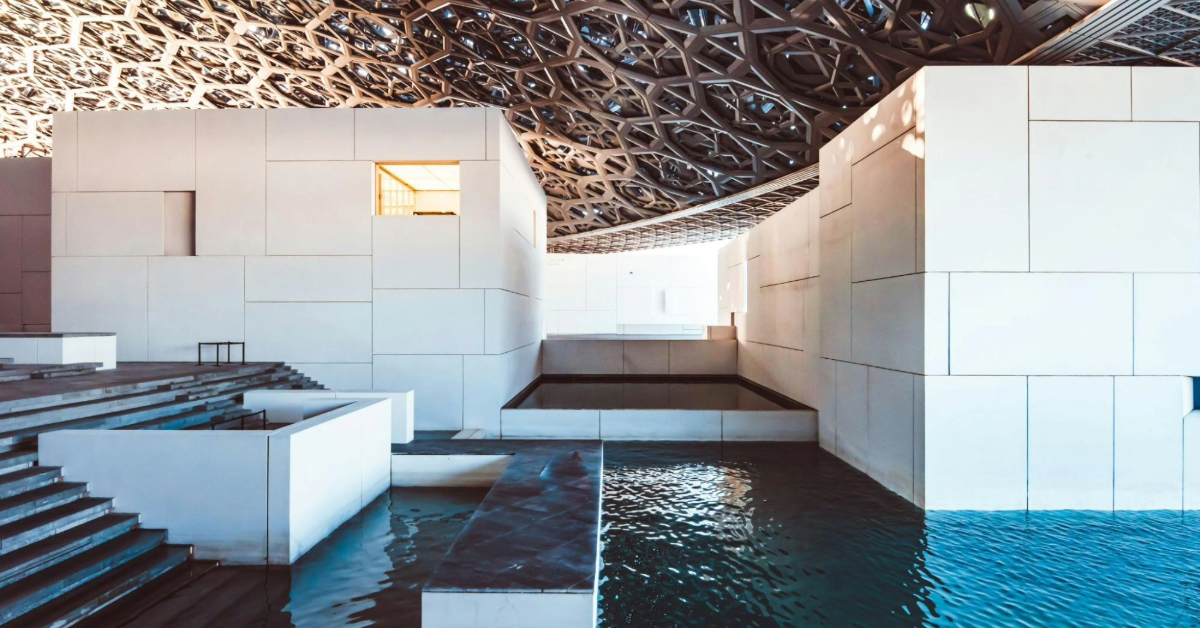
The dome’s innovative design creates a poetic visual effect, using its perforated woven structure to filter sunlight into a pattern reminiscent of rays of sunlight passing through date palm fronds in an oasis. Engineering this feature required 10,000 structural components, pre-assembled into 85 massive elements – each weighing up to 50 tonnes – constructed by Austrian specialists Waagner Biro.
By day, the dome casts an intricate play of shadow and light; by night, it becomes a glowing sanctuary beneath the stars. This ever-shifting interaction between sun, dome, and sea delivers a constantly evolving architectural experience.
- Material Innovation
The museum’s 55 white buildings feature 3,900 panels of ultra-high-performance fibre concrete (UHPC), a material chosen for its strength, longevity, and refined aesthetic. This combination of traditional design sensibilities with cutting-edge construction methods makes the Louvre Abu Dhabi one of the most complex and forward-thinking museum projects ever built.
Collection & Exhibitions
At the heart of Louvre Abu Dhabi lies its remarkable collection – an ambitious assembly of artworks and artefacts that tell the shared story of global human creativity. Carefully curated to transcend borders, eras, and cultures, the museum’s exhibitions celebrate universal themes that connect civilisations across time. The result is an experience that feels both intimate and expansive, inviting visitors to discover humanity’s artistic evolution through a fresh and inclusive lens.
Permanent Collection
The museum’s permanent collection comprises approximately 700 artworks spanning every period and civilisation, from prehistoric times to the present day. Additionally, around 300 works are loans from partner institutions, with the Louvre in Paris lending 100 different masterpieces annually.
Notable Works in the Collection
The Louvre Abu Dhabi houses an extraordinary range of masterpieces. Featured works include:
- Leonardo da Vinci’s La Belle Ferronnière
- Vincent van Gogh’s self-portrait
- Claude Monet’s Gare Saint-Lazare
- Works by Henri Matisse
- Jacques-Louis David’s Napoleon Crossing the Alps
- Paul Gauguin’s Young Boys Fighting
- Previously unseen works by Pablo Picasso
- Édouard Manet’s Le Bohémien (1861–62) and Still Life with Tote Bag and Garlic
- Jean-Auguste-Dominique Ingres’ Don Pedro de Toledo Kissing the Sword of Henry IV (1820)
- Abel Grimmer’s The Tower of Babel (1595)
- A 14th-century Mamluk Quran
- A 5th-century Fibula from Domagnano (San Marino)
Exhibition Philosophy: “Twelve Chapters”
Rather than organising galleries by geography, the Louvre Abu Dhabi employs a unique curatorial approach. The galleries are arranged chronologically and thematically, presenting “the story of humanity in twelve chapters.” Each chapter highlights shared themes and ideas, revealing unexpected connections across cultures and time periods.
This universal museum philosophy emphasises what unites humanity – its creativity. From ancient artefacts to contemporary works, every piece encourages curiosity, reflection, and a deeper appreciation of our collective heritage.
Exhibition Spaces
The museum dedicates specific spaces to different exhibition types:
- Permanent Collection: 6,000 square metres
- Temporary Exhibitions: 2,000 square metres
Saadiyat Cultural District Context
Louvre Abu Dhabi is not just a standalone landmark – it is a central pillar in Abu Dhabi’s long-term cultural vision. Situated within the Saadiyat Cultural District, the museum plays a defining role in shaping a global hub where arts, heritage, and innovation come together. The district reflects the emirate’s commitment to creating a space that fosters dialogue between cultures and elevates the region as a world leader in creativity and knowledge.
Part of a Larger Vision
The Louvre Abu Dhabi is the first completed project of the ambitious Saadiyat Cultural District, which Abu Dhabi aims to develop into “a leading destination for art, history and culture.
Future Cultural Institutions
The district will eventually include several major cultural landmarks, designed by some of the world’s most influential architects:
- Zayed National Museum – designed by Foster and Partners
- Guggenheim Abu Dhabi – by Frank Gehry, projected to become the largest Guggenheim in the world
- Performing Arts Centre – envisioned by Dame Zaha Hadid
- Maritime Museum – concept by Tadao Ando
- Arts Pavilions – additional creative and exhibition spaces
- Abrahamic Family House – a landmark interfaith complex expected to join the cultural cluster
Institutional Partnership & Management
Beyond its architectural and curatorial brilliance, Louvre Abu Dhabi stands as a symbol of international collaboration and cultural diplomacy. Its operations are anchored in a unique partnership that combines local vision with global expertise, ensuring the museum meets world-class standards while fostering meaningful cultural exchange.
- Franco-Emirati Collaboration
Louvre Abu Dhabi functions under an unprecedented framework of cooperation between the UAE and France. Agence France-Muséums, which oversees 17 of France’s most prestigious cultural institutions, manages artwork loans and provides essential operational guidance. This partnership allows the museum to draw on decades of French museological experience while adapting to the local context.
- Strategic Significance
The museum is more than a showcase for art – it is a cultural and geopolitical landmark. By bringing the Louvre name to the Arab world, it establishes a bridge between Eastern and Western civilizations, highlighting the UAE’s commitment to global cultural dialogue and mutual respect between diverse societies.
Key Takeaways
Louvre Abu Dhabi, inaugurated in 2017, is the first universal museum in the Arab world and France’s largest cultural project abroad. Located on Saadiyat Island, the museum spans 24,000 square metres across 55 buildings, including 23 art galleries, making it the largest art museum in the Arabian Peninsula.
The museum’s permanent collection comprises approximately 700 artworks from every period and civilisation, supplemented by 100 masterpieces loaned annually from French museums, including works by Leonardo da Vinci, Vincent van Gogh, Claude Monet, and Pablo Picasso.
Galleries are organised chronologically and thematically into “twelve chapters” that explore shared human experiences rather than geography, allowing visitors to discover unexpected cultural connections.
By 2019, the Louvre Abu Dhabi had welcomed 2 million visitors, becoming the most visited museum in the Arab world. Managed by Agence France-Muséums, representing 17 French cultural institutions, the museum exemplifies an unprecedented UAE–France partnership under an agreement valid until 2047.
Frequently Asked Questions (FAQs)
The Louvre Abu Dhabi is a separate institution from the Louvre in Paris, though it operates under a partnership agreement allowing it to use the Louvre name until 2047. While the Louvre in Paris is one of the world’s oldest and largest museums, focusing primarily on Western art, the Abu Dhabi museum is designed as a “universal museum” that bridges Eastern and Western art, showcasing works from civilisations around the world.
The museum’s signature double dome, designed by Jean Nouvel, spans 180 metres in diameter and features a randomly perforated woven structure that filters sunlight, creating a dynamic interplay of light and shadow. Inspired by “rays of sunlight passing through date palm fronds in an oasis,” the dome reflects traditional Arabic architectural heritage. Its sophisticated eight-layer construction combines advanced engineering with poetic symbolism, producing an ever-changing visual experience throughout the day and transforming into an oasis of light under the stars at night.
Rather than arranging artworks by geography or artistic movement, the museum presents “the story of humanity in twelve chapters,” with galleries organised chronologically and thematically to highlight shared human experiences across civilisations.
The museum is situated on Saadiyat Island and is the first completed project of the ambitious Saadiyat Cultural District. The district will eventually include the Zayed National Museum, Guggenheim Abu Dhabi, a performing arts centre by Zaha Hadid, a maritime museum by Tadao Ando, and the Abrahamic Family House.
The Louvre Abu Dhabi houses masterpieces such as Leonardo da Vinci’s La Belle Ferronnière, Vincent van Gogh’s self-portrait, Claude Monet’s Gare Saint-Lazare, Jacques-Louis David’s Napoleon Crossing the Alps, previously unseen works by Pablo Picasso, and creations by Henri Matisse. Its permanent collection also includes a 14th-century Mamluk Quran, Byzantine artefacts, Bronze Age pieces from Cyprus, and contemporary artworks representing diverse global cultures.