



Handling a Power of Attorney attestation in Dubai can feel complicated, especially when multiple authorities, steps, and fees are involved. Whether you are managing a property transaction, authorising someone to act on your behalf, or dealing with legal or business matters, ensuring your POA is properly attested is essential.
This guide breaks down the full process in a clear, step-by-step way, including requirements, timelines, and costs, so you know exactly what to expect in 2026.
- What is power of attorney (POA) and why attestation matters
- Step-by-step process for power of attorney attestation in Dubai
- Documents required for POA attestation in Dubai
- Key authorities involved
- Timeframes and validity
- Fees breakdown: What you’ll pay
- Common mistakes and tips to avoid delays
- When is POA attestation required
- Key takeaways
- FAQs
What is power of attorney (POA) and why attestation matters
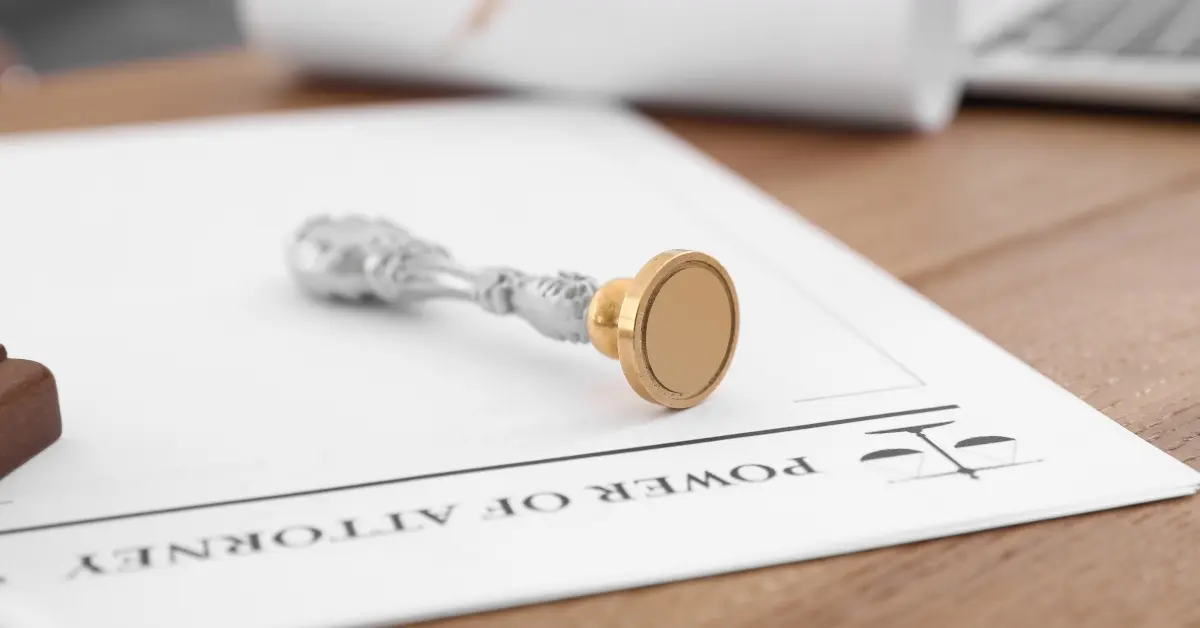
A Power of Attorney is a legally binding document that allows one person (the principal) to authorise another person (the agent) to act on their behalf. This can cover a wide range of responsibilities, depending on the type of POA issued.
Common types include:
- General POA: Broad authority across financial and legal matters
- Special POA: Limited to specific tasks such as property transactions
- Commercial POA: Used for business and corporate activities
- Personal POA: Covers non-commercial matters such as healthcare or personal affairs
Attestation is what gives the document legal recognition. Without proper notarisation and attestation, a POA is often rejected by banks, courts, government entities, and real estate authorities.
This is why following the correct process from the start is critical.
Step-by-step process for power of attorney attestation in Dubai

Attesting a POA involves several stages. Missing or skipping a step can delay the process or result in rejection.
Step 1: Prepare the POA document
The first step is drafting the document correctly. This includes clearly defining the scope of authority, identifying all parties involved, and ensuring the format meets UAE requirements.
In most cases, the POA should be prepared in both English and Arabic, or translated into Arabic by a certified translator if originally drafted in another language.
If the document is issued outside the UAE, it must go through notarisation and legalisation in the country of origin before being used in Dubai.
Step 2: Notarisation in the UAE
Once the document is ready, it must be notarised by a recognised authority, such as Dubai Courts or a licensed private notary.
During this step, identities are verified, and signatures are officially witnessed. In many cases, notarisation can be completed on the same day, and some services now offer remote or digital notarisation options.
Step 3: Attestation by the UAE Ministry of Foreign Affairs
After notarisation, the document is submitted to the Ministry of Foreign Affairs for final attestation. This step confirms that all previous legalisations are valid and that the document can be officially recognised within the UAE or abroad.
Once approved, the POA will receive an official stamp or digital certificate, allowing it to be used for its intended purpose.
Documents required for POA attestation in Dubai
Before starting the attestation process, it’s important to have all required documents prepared. Missing paperwork is one of the most common reasons for delays, especially during notarisation or MoFA submission.
While requirements may vary slightly depending on the type of POA and its purpose, most cases will require the following:
- A passport copy of the principal and agent
- Emirates ID copy (for UAE residents)
- Draft Power of Attorney document (clearly stating scope and authority)
- Supporting documents (if applicable, such as property details or company documents)
- Certified Arabic translation if the original document is not in Arabic
Having these documents ready in advance helps ensure a smoother process and reduces the chances of rejection or resubmission.
Key authorities involved
Understanding which authority handles each step can help avoid confusion and delays. The attestation process involves multiple entities, each playing a specific role in validating the document at different stages.
Knowing who is responsible for what makes the process more straightforward, especially when dealing with documents issued abroad or requiring multiple approvals. It also helps ensure that steps are completed in the correct order, which is essential for the POA to be legally recognised.
| Authority | Role | When Involved |
|---|---|---|
| Notary Public (Dubai Courts / Private) | Verifies identity and notarises the document | After drafting |
| UAE Embassy (if issued abroad) | Legalises a document in the country of origin | Before the UAE submission |
| Certified Translator | Provides Arabic translation if required | Before or after notarisation |
| MoFA | Final attestation for legal use | Final step |
Timeframes and validity
The timeline for power of attorney attestation in Dubai depends on whether the document is issued locally or abroad, as well as the number of authorities involved in the process. While some steps can be completed quickly, others may take longer, especially if international legalisation is required.
For documents prepared within the UAE, the process is generally straightforward and can be completed within a few working days. However, POAs issued outside the UAE usually require additional steps such as embassy attestation, which can extend the overall timeline.
Typical timelines include:
- Notarisation: Same day or within 1–2 working days
- MoFA attestation: Around 1–3 working days (faster with express service)
- Foreign-issued POA: Around 7–12 working days, depending on the embassy and legalisation steps
In terms of validity, a POA issued and notarised in the UAE is typically valid for up to three years, unless a duration is specified in the document. Some authorities may also require the POA to be recent, particularly for financial or property-related transactions.
Fees breakdown: What you’ll pay

Costs for attesting a power of attorney in Dubai can vary depending on the type of document, its purpose, and whether additional services such as translation or legal drafting are required. While some fees are fixed by government authorities, others depend on the complexity of the POA and the service provider you choose.
Understanding the typical cost structure can help you plan ahead and avoid unexpected expenses during the process.
Government and official fees
These are the standard fees charged by government authorities and are usually mandatory as part of the attestation process.
| Service | Estimated Fee |
|---|---|
| MoFA Attestation (Personal POA) | ~ AED 150 |
| MoFA Attestation (Commercial POA) | Up to AED 2,000–2,300 |
| Notary Public (basic signature) | ~ AED 100 per signature |
| Special or property POA | ~ AED 200–300+ |
Additional costs to consider
Beyond official fees, additional costs may apply depending on your situation and how you choose to handle the process. These are not always mandatory, but they are common, especially if you require assistance, faster processing, or documents issued from outside the UAE.
Being aware of these potential extras can help you budget more accurately and avoid surprises along the way.
| Service | An Estimated Cost |
|---|---|
| Drafting / legal consultation | ~ AED 200–600+ |
| Translation (per page) | ~ AED 50–300+ |
| Courier or service fees | ~ AED 50–500+ |
| Private notary services | ~ AED 1,000–1,900+ |
| Express processing | ~ AED 200–500+ |
Common mistakes and tips to avoid delays
Delays in the POA attestation process are often caused by small but avoidable issues. In many cases, documents are rejected not because of major errors, but due to missing details or incorrect formatting. Taking a few extra steps early on can save time and prevent unnecessary back-and-forth.
Common issues to watch out for include:
- Incorrect POA format: Using a generic template that does not meet the requirements of the receiving authority (e.g., banks or real estate entities)
- Missing or incomplete details: Errors in names, passport numbers, Emirates ID, or scope of authority
- Signature inconsistencies: Signatures that do not match official documents
- Lack of certified translation: Submitting documents in a language other than Arabic without an approved legal translation
- Altered or damaged documents: Laminated, edited, or unclear copies that cannot be verified
To avoid delays, it is important to confirm the exact requirements with the relevant authority before drafting the POA, double-check all personal and legal details, and ensure that translations and notarisation are completed through authorised channels.
When is POA attestation required

A properly attested power of attorney is required in a wide range of situations where one person is authorised to act on behalf of another. In Dubai, most government entities, banks, and legal institutions will only recognise a POA once it has completed the required notarisation and, where applicable, attestation process.
Common scenarios where attestation is required include:
- Property transactions: Buying, selling, or managing real estate on someone else’s behalf
- Legal representation: Acting in court or handling legal matters through an authorised representative
- Business and corporate matters: Company formation, signing contracts, or managing business operations
- Banking and financial transactions: Managing accounts, loans, or financial authorisations
- International use: Using the POA outside the UAE or for foreign authorities
In most cases, submitting an unattested or incomplete POA will result in rejection, so completing the full process is essential before using the document.
Key takeaways
Power of attorney attestation in Dubai is a structured process that requires careful attention to detail. While personal POAs are relatively affordable, commercial documents can be significantly more expensive.
Getting the format right from the beginning can save time and avoid rejections. For documents issued abroad, additional steps, such as embassy legalisation, are required, which can extend timelines and increase costs.
Overall, understanding the process and planning ahead makes the experience much smoother.
FAQs
Yes, some notarisation services offer remote options, and MoFA submissions can be handled digitally or via courier.
Typically up to three years, unless a specific duration is specified.
In most cases, yes. Many authorities require MoFA attestation even for local use.
Commercial POAs involve business matters and usually have higher fees and stricter requirements.
Yes, but additional attestation or legalisation may be required depending on the destination country.