


The ruling families of the UAE form the backbone of a unique governance system that blends tradition with modern statecraft. Each emirate is led by a hereditary ruler, yet together they operate within a federal framework that has shaped the country’s rapid growth and global influence.
In this guide, learn about:
- UAE’s political and governance system
- Federal leadership, as per the ruling families of the UAE
- Emirate-by-emirate ruling families and rulers
- Federal Supreme Council and legislative bodies, according to the ruling families of the UAE
- Recent trends and governance dynamics
- Key takeaways
- FAQs
UAE’s political and governance system
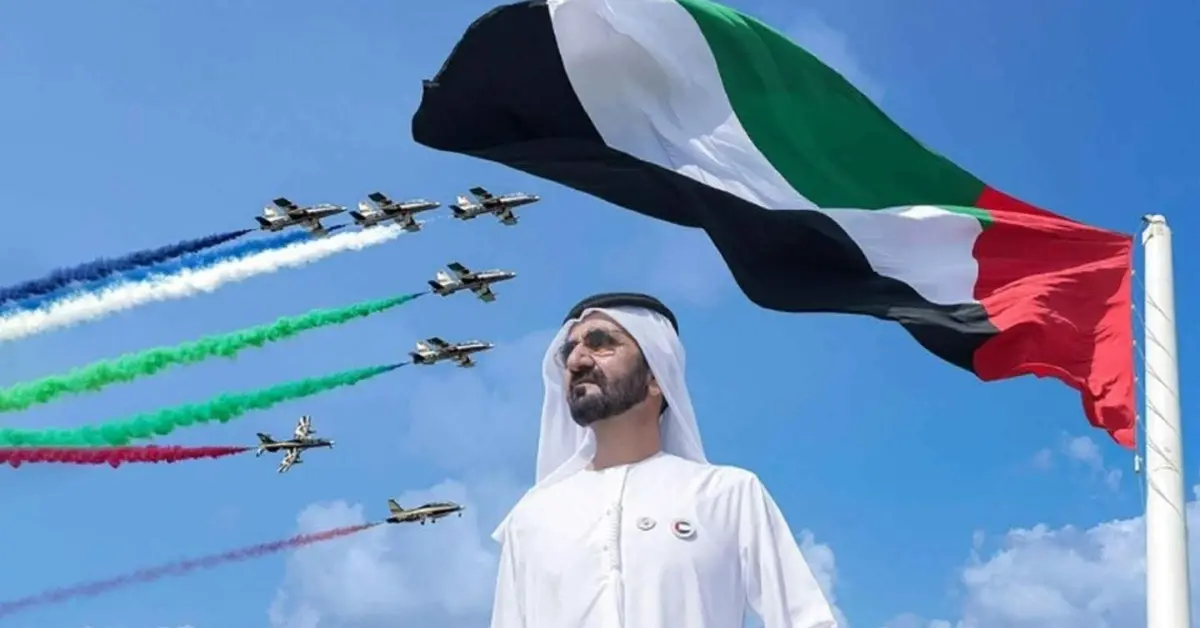
The United Arab Emirates follows a federal structure comprising seven hereditary emirates, each governed by its own ruling family while contributing to a unified national system.
Federal structure and dual sovereignty
Each emirate retains control over local governance, including land, economic planning, and infrastructure, while participating in federal institutions. This dual system ensures that local priorities remain intact while national policies guide broader development. The Supreme Council of Rulers acts as the highest authority, reinforcing this balance of power.
In practice, this structure also influences how communities develop across the country. For instance, lifestyle hubs like the Dubai Marina community reflect Dubai’s autonomous urban planning approach, while broader governance principles remain aligned with federal principles.
Main federal bodies and roles
The UAE’s federal system includes several key institutions:
- The President, who also serves as the Supreme Commander of the Armed Forces
- The Vice President and Prime Minister, who lead the Cabinet
- The Federal National Council, which provides advisory and legislative oversight
- The Federal Judiciary, which interprets and applies laws
These institutions work together to maintain stability while enabling each emirate to pursue its own development priorities.
Recent changes and power shifts
In recent years, governance has seen a gradual evolution, particularly in Abu Dhabi, where economic assets and sovereign wealth structures have become more centralised under leadership frameworks tied to the Crown Prince. These changes reflect a broader shift toward strategic, long-term economic management.
At the same time, national direction continues to be shaped through initiatives such as the UAE’s thematic annual agendas, including the broader vision outlined under the UAE themes of the year, which align governance priorities with social and economic goals.
Federal leadership, as per the ruling families of the UAE
The UAE’s federal leadership is defined by two central figures who hold both national and emirate-level authority.
Mohamed bin Zayed Al Nahyan
His Highness Sheikh Mohamed bin Zayed Al Nahyan has served as President of the UAE since 14 May 2022 and is the Ruler of Abu Dhabi. He also acts as Supreme Commander of the Armed Forces. His leadership focuses on economic diversification, foreign policy engagement, and national stability.
Mohammed bin Rashid Al Maktoum
Sheikh Mohammed bin Rashid Al Maktoum is the Vice President and Prime Minister of the UAE and the Ruler of Dubai. Since 2006, he has overseen Dubai’s transformation into a global hub for trade, tourism, and innovation.
Together, these leaders represent the balance between Abu Dhabi’s political and economic influence and Dubai’s global commercial outlook.
Emirate-by-emirate ruling families and rulers
Each emirate is governed by a ruling family, with leadership typically passed through hereditary succession.
| Emirate | Ruling Family | Current Ruler (2026) | Year Began Rule / Succession | Key Powers and Heir Apparent |
| Abu Dhabi | Al Nahyan | Mohamed bin Zayed Al Nahyan | 2022 | Crown Prince Khaled bin Mohamed bin Zayed; controls sovereign wealth and national economic strategy |
| Dubai | Al Maktoum | Mohammed bin Rashid Al Maktoum | 2006 | Crown Prince Hamdan bin Mohammed; oversees real estate, trade zones, and infrastructure |
| Sharjah | Al Qasimi | Dr. Sultan bin Muhammad Al Qasimi | 1972 | Crown Prince Sultan bin Mohammed; focus on culture and education |
| Ajman | Al Nuaimi | Humaid bin Rashid Al Nuaimi III | 1981 | Crown Prince Ammar bin Humaid; active in governance and development |
| Umm Al Quwain | Al Mualla | Saud bin Rashid Al Mualla | 2009 | Deputy Ruler Ahmed bin Saud; focus on tourism and infrastructure |
| Ras Al Khaimah | Al Qasimi | Saud bin Saqr Al Qasimi | 2010 | Crown Prince Mohammed bin Saud; industrial and tourism growth |
| Fujairah | Al Sharqi | Hamad bin Mohammed Al Sharqi | 1974 | Crown Prince Mohammed bin Hamad; maritime economy focus |
This structure explains why development patterns vary across emirates. For example, Abu Dhabi’s planning priorities are reflected across residential and economic zones, particularly in Abu Dhabi.
Federal Supreme Council and legislative bodies, according to the ruling families of the UAE

The UAE’s governance system is anchored by federal institutions that ensure coordination among the emirates.
Federal Supreme Council
The Federal Supreme Council consists of the seven rulers and serves as the country’s highest authority. It elects the President and Vice President every five years, with Abu Dhabi and Dubai holding significant influence in decision-making.
Federal National Council
The Federal National Council is a 40-member advisory body. Half of its members are elected through an electoral college, while the other half are appointed. Although it does not function as a full legislative parliament, it plays an important consultative role.
Federal judiciary
The UAE’s judicial system includes a Federal Supreme Court based in Abu Dhabi, as well as local courts in each emirate. The legal framework combines civil law principles with elements of Sharia law, depending on the case.
Recent trends and governance dynamics
Governance in the UAE continues to evolve while maintaining its core structure.
Centralisation of economic power
Recent developments have seen increased consolidation of major economic assets under Abu Dhabi’s leadership, particularly through sovereign wealth structures. This reflects a shift toward coordinated national investment strategies.
National strategies and policy direction
In 2026, the UAE declared the Year of the Family, alongside launching long-term initiatives focused on social cohesion and population growth. Policies around residency and talent attraction also continue to evolve, as seen in the blue visa vs golden visa in the UAE, which reflect leadership priorities in attracting global talent.
Incremental liberalisation
The UAE has gradually expanded participation in governance through the Federal National Council, while continuing to emphasise innovation, technology, and human capital development. However, executive power remains firmly in the hands of the ruling families.
Key takeaways

The UAE remains a federation of seven emirates governed by hereditary rulers who collectively shape federal decision-making through the Supreme Council. Abu Dhabi and Dubai continue to lead both politically and economically, with governance increasingly influenced by strategic asset management and long-term national planning. While succession remains dynastic, the growing role of crown princes signals generational transition. Overall, governance in 2026 reflects a balance between tradition, modernisation, and controlled institutional evolution.
FAQs
The President is elected by the Federal Supreme Council, which consists of the rulers of all seven emirates. The selection typically reflects consensus among these leaders.
No, rulers are hereditary. Citizens participate only in the election of some members of the Federal National Council.
Each emirate maintains authority over local matters such as land use, infrastructure, education, and economic development, while contributing to federal governance.
Crown Princes and Deputy Rulers serve as heirs apparent and often assume significant executive responsibilities, including leading economic and development initiatives.
Yes, recent changes include the consolidation of economic assets under Abu Dhabi’s leadership, new deputy ruler appointments in some emirates, and national strategies such as the Year of the Family, reflecting evolving governance priorities.