


Dubai is a magnet for real estate investment due to its vibrant lifestyle, modern infrastructure, and abundance of opportunities, highlighting the pros and cons of investing in property for both newbies and experienced investors.
As the saying goes, all that glitters is not gold, so it is best to evaluate Dubai and the UAE more upfront, rather than simply being enamoured by its flamboyance. Before investing your money in property, you must be well-acquainted with the pros and cons of investing in property. This is true for any investment and will help you make an informed choice.
- Advantages of property investment in Dubai and the UAE
- Challenges of property investment in Dubai and the UAE
- Key takeaways
- Frequently asked questions
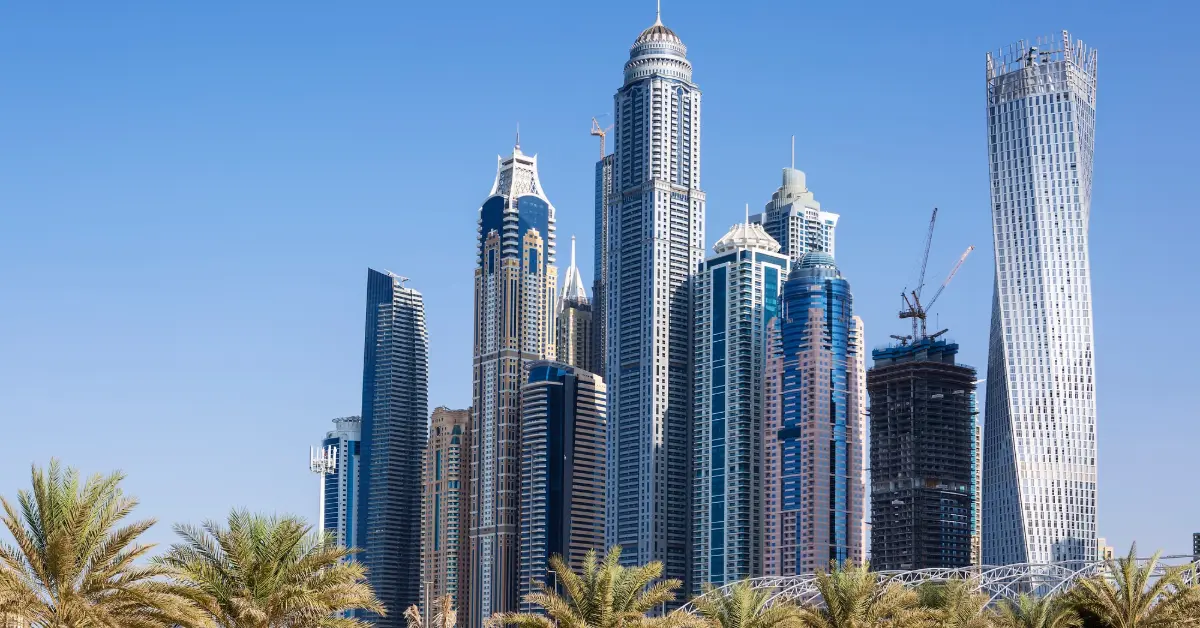
Advantages of property investment in Dubai and the UAE
1. High rental yields with solid returns
When it comes to rentals, what glitters is gold. Rental yields in Dubai outperform most other global cities. On average, you can expect a return between 5% and 9% per year.
Places such as Jumeirah Lake Towers consistently offer returns of more than 9%. No wonder they attract people who are looking to make money from substantial rental income.
Additionally, established neighbourhoods like Dubai Marina and Downtown continue to be the top choices for tenants thanks to their premium location and iconic views.
2. Tax-free incomes and lesser expenses
As an investor in the UAE, you will benefit from:
- No property taxes
- No capital gains tax
- No income tax
Rental income is also 100% tax-free. This boosts the net profits.
However, in Dubai, you will have to bear a one-time registration fee of 4% to the Dubai Land Department. This fee replaces all the ongoing ownership taxes, resulting in greater long-term savings. Besides, most residential properties do not attract VAT either. This further protects your returns and is another reason that makes the UAE real estate market so appealing.

3. Residency through real estate
As an investor, you can qualify for Dubai’s Golden Visa program. For this, you will have to buy a property worth 2 million AED in Dubai. On doing so, you will receive a renewable 10-year residence.
This scheme extends long-term settlement benefits to spouses, children, and dependants.
In addition, with a Golden visa, you get access to world-class health services, international schools and superior banking facilities. Moreover, frequent travellers can come and go as they like, without repeated visa renewals.
4. Expanding luxury market
Dubai’s premium property sector continues to thrive. By the end of 2024, Dubai saw a sale of more than 15 million AED in luxury properties.
Wealthy buyers look for branded residences and bespoke villas. So, if you are a high-net-worth individual, consider putting your money in localities like:
- Uptown Dubai
- Palm Jumeirah
- Emirates Hills
This growing demand is an endorsement of the city’s reputation as a global luxury real estate market.
5. Stable and resilient economy
There is a diverse range of thriving sectors that positively impact the economy in Dubai. These include:
- Tourism
- Technology
- Trade
- Real estate
This economic diversification reduces reliance on a single industry, enhancing overall stability and resilience.
In addition, the emirate’s foreign direct investment (FDI) policies have created an attractive environment for international investors. Key incentives include:
- 100% foreign ownership
- Long-term residency visas
- Transparent regulatory frameworks
These measures foster investor confidence and promote sustained economic growth.
Furthermore, ongoing infrastructure investment and the presence of numerous free zones continue to strengthen Dubai’s real estate market and broader economic landscape.
6. Visa options for property owners
Beyond the well-known Golden Visa, Dubai also offers residency benefits to smaller-scale property investors. While the duration of these visas is shorter, they still provide meaningful advantages.
For example:
- A property investment of AED 750,000 qualifies the investor for a 2-year residency visa.
- An investment of AED 5 million grants a 5-year residency visa.
These residency-by-investment programs offer several key benefits, including:
- Family sponsorship
- Access to banking services
- Improved long-term planning opportunities
Such initiatives reflect Dubai’s commitment to attracting and retaining foreign investment across different levels of the property market.

7. Wide property choices
The kind of property options to choose from in the UAE is unmatched. You can find several beachfront apartments and villas. Freehold areas allow foreign nationals full ownership. So, you have the freedom to sell, lease, or live in them.
Famous freehold communities include:
- Dubailand
- Palm Jumeirah
- JVC
- Arabian Ranches
Off-plan projects also attract buyers seeking the best property investment in Abu Dhabi or Dubai. Using this scheme, you can invest in unfinished projects with attractive down-payment schemes.
8. High living standards and infrastructure
Residents enjoy a high standard of living in the UAE. Say goodbye to potholes, dilapidated buildings and daily struggles. In the UAE, you will have access to superior healthcare, education and recreational facilities, just by being a part of the Emirates.
Projects like the Al Maktoum International Airport expansion and the Etihad Rail system will further improve connectivity. Meanwhile, further upgrades in the Dubai Metro and Smart City initiatives continue to improve efficiencies. These developments guarantee demand for property, especially in well-connected locales.
9. Transparent market regulation
Regulation has remarkably improved in the past few years. The Real Estate Regulatory Agency ensures fairness, while escrow accounts shield the interests of the off-plan buyers.
The Land Department of Dubai exercises transparent rules on ownership and transactions. Such regulations diminish risks and build trust in investors, protecting buyers both locally and internationally.
10. Environmental and sustainability considerations
Dubai’s sustainability agenda is evolving rapidly, making it an important factor to consider when evaluating properties. Developments that prioritise environmental impact, such as green communities, appeal to buyers seeking long-term value and align with global trends.
Challenges of property investment in Dubai and the UAE
While investing in property has a whole host of positives, there are a number of things that you should expect to face during the process.
1. Ongoing service and maintenance costs
Your investment has certain recurring costs associated with it. For instance, property service charges between 10 AED and 80 AED per square foot are levied every year. The exact fee depends on the amenities and location.
Moreover, higher-end properties demand substantial upkeep, especially if you have amenities like pools and security systems. International owners might require assistance from a third-party management company to ensure upkeep and maintenance are in order. While you can find reliable solutions, these fees reduce yields and should be factored into the budgets.
2. Market maturity and location gaps
Not all neighbourhoods have a similar growth trajectory and market status. Up-and-coming districts may lack certain superior amenities and infrastructure that other high-end areas boast of.
Properties in such locations can take longer to appreciate. Established areas like Downtown or Uptown Dubai will ensure speedier returns because of ready infrastructure. Evaluating districts carefully helps you make confident investment decisions and maximise your potential for growth.
3. Market cycles influence Dubai
Despite ongoing growth, Dubai is not entirely immune to oil-linked slowdowns or global market fluctuations. Oversupply can influence prices, so it’s wise to be prepared for short-term volatility. Focusing on medium- to long-term perspectives allows you to benefit as market prices generally rebound over time.
4. Limited financing facilities for non-residents
Mortgages for non-residents are available but are restrictive. The majority of banks limit the maximum loan to 50% of the property value.
To avail this loan, you will have to provide:
- Your passport
- Income proof
- Bank statements
Some lenders may ask for larger deposits. Additionally, a loan fee applies. It is equal to 1% arrangement fee plus VAT. This adds to the upfront costs and should be factored in when calculating the return on investment.
5. Legal and ownership issues
Foreigners can buy only in freehold zones. Other streets remain restricted to Emiratis and a limited number of Arab nationals.
To avoid issues, it is best to:
- Review the sales agreement carefully.
- Consider seeking legal advice.
- Engage only with RERA-approved brokers.
6. Construction delays and off-plan risks
Off-plan projects offer attractive payment schedules. However, these are incomplete projects. So, sometimes, delays may happen.
Some developers face setbacks despite fines for late handovers. However, this is also a loss for you as a buyer. You lose out on the potential rent. Additionally, you may have to incur extra costs if the projects stall. Thus, before investing in any off-plan property, always check the developer’s track record and escrow accounts. This can help avoid risks.
Hidden and unexpected costs
Beyond the advertised purchase price, there are several additional costs to consider, such as:
- 4% transfer fee
- 500 AED title deed fee
- Agent commissions
- Insurance costs
Obtaining a no-objection certificate may cost up to 5,000 AED. You should also factor in:
- Utilities
- Maintenance
- Potential renovation expenses
Planning for these charges in advance helps ensure your budget stays on track and avoids any financial surprises.
7. Resale liquidity constraints
Property is generally less liquid than stocks, meaning it can take weeks or months to sell. Transaction costs, including agency and registration fees, also add to the process. Market timing can influence resale profits, so it’s best to view your property as a medium- to long-term investment rather than a quick-flip opportunity.
Explore the Available Off-plan projects in Dubai
-

Virella at The Valley
Dubai,The Valley
3 and 4 bedrooms
Valia Tower
Dubai,Dubai Creek Harbour (The Lagoons),Valia Tower
1, 2, 3 and 4 bedrooms
From: AED 2,060,000 Down payment: 20%
Palm Central Private Residences Phase 2
Dubai,Palm Jebel Ali
1, 2, 3, 4 and 5 bedrooms
From: AED 2,700,000 Down payment: 20%
Sobha Sanctuary Apartments
Dubai,Sobha Sanctuary
1 and 2 bedrooms
From: AED 999,000 Down payment: 20%
The Meriva Collection
Dubai,Dubai Islands,The Meriva Collection
1, 2 and 3 bedrooms
From: AED 2,700,000
Damac Islands
Dubai,Damac Islands
4, 5, 6 and 7 bedrooms
From: AED 2,490,000 Down payment: 20%
Le Chateau Piétrus
Dubai,Dubai Islands
2, 3 and 4 bedrooms
From: AED 3,940,000
Virella 2
Dubai,The Valley,Virella 2
3 and 4 bedrooms
From: AED 4,370,000 Down payment: 10%
Avarra by Palace
Dubai,Business Bay,Avarra by Palace
1, 2, 3, 4 and 6 bedrooms
From: AED 2,824,888 Down payment: 10%
Arancia Yards 2
Dubai,City of Arabia,Arancia Yards 2 By Beyond
1, 2 and 3 bedrooms
From: AED 1,200,000 Down payment: 10%
Key takeaways
There are both pros and cons of investing in property in Dubai and the UAE. The advantages include high rental yields, tax-free income, and residency options through programs like the Golden Visa. The market benefits from a stable and diversified economy, strong infrastructure, transparent regulations, and a growing luxury segment, all of which support long-term value appreciation. Green and sustainable developments are increasingly attracting buyers seeking alignment with global trends, further enhancing the appeal of the UAE real estate market.
However, there are challenges to consider. Investors may face ongoing service and maintenance costs, legal complexities, market fluctuations, financing restrictions for non-residents, off-plan project delays, and hidden or unexpected fees. Property is also less liquid than other investments, meaning sales can take time.
With informed planning, careful district evaluation, and a medium- to long-term perspective, these challenges can be managed effectively, allowing investors to balance risks and capitalise on long-term gains.
FAQs
Can foreigners own property in Dubai?Yes, foreigners can buy property in certain freehold zones such as Palm Jumeirah, Downtown Dubai, JVC, and Dubailand.
How much investment is required to apply for a Golden Visa?Investors must purchase a property valued at 2 million AED or more to obtain the 10-year renewable Golden Visa.
What hidden fees apply in the course of buying property?Anticipate a:
– 4% Dubai Land Development transfer fee
– Title deed charges
– Agent commissions
– NOC fees
– Insurance costsAre mortgages available for non-residents?Yes, it is available. Certain banks provide a loan-to-value ratio of up to 50%. Typically, to qualify for a mortgage, you will need to make a larger down payment.
Is it profitable to invest in real estate in Dubai?Historically, Dubai has offered solid yields and incredible capital appreciation. Of course, market cycles are inevitable, but long-term prospects are positive.
Share

Suresh Raman
Property Finder
Real Estate Professionals