



Two names come up again and again when people talk about prime Dubai living: Emirates Hills and Palm Jumeirah. Both sit at the top end of the market, both are globally recognisable, and both attract buyers who want more than just square footage. Still, they offer very different day-to-day realities in the emirates hills vs palm jumeirah debate. One is private, green, and villa-only. The other is beachfront, social, and layered with hotels, promenades, and apartment towers.
This guide compares Emirates Hills and Palm Jumeirah through a practical lens, focusing on lifestyle fit, liveability, ownership costs, and what each destination tends to suit best, whether you are buying as an end user, a second-home owner, or an investor.
- Emirates Hills vs Palm Jumeirah in one simple difference
- Where each community sits in Dubai
- Lifestyle and community atmosphere
- Property types, layouts, and architectural feel
- Views, greenery, and the outdoor environment
- Amenities, schools, and daily conveniences
- Privacy, security, and the “public interface”
- Family-friendliness and routines
- Prices, rents, yields, and what “value” means here
- Ownership costs and maintenance realities
- Emirates Hills vs Palm Jumeirah comparison table
- How to decide with a simple framework
- Key takeaways
- FAQs
Emirates Hills vs Palm Jumeirah in one simple difference
If you remember only one thing, make it this: Emirates Hills is designed for privacy and space, while Palm Jumeirah is designed for a waterfront lifestyle and energy. That difference shapes nearly everything else, from how you commute to how much public life you share with the broader city.
Some buyers want quiet streets and low density in a gated setting. Others wish to be near the sea, the boardwalk, and the convenience of living close to hotels, restaurants, and beach venues. The best choice depends on how you want your home to feel during the week, not just at peak social moments.
Where each community sits in Dubai
Emirates Hills is an inland, gated villa community located near Dubai’s main arterial corridors. It is widely associated with the Montgomerie Golf Club and established residential neighbourhoods around it.
Location
It’s located in Al Thanya Fourth, Dubai
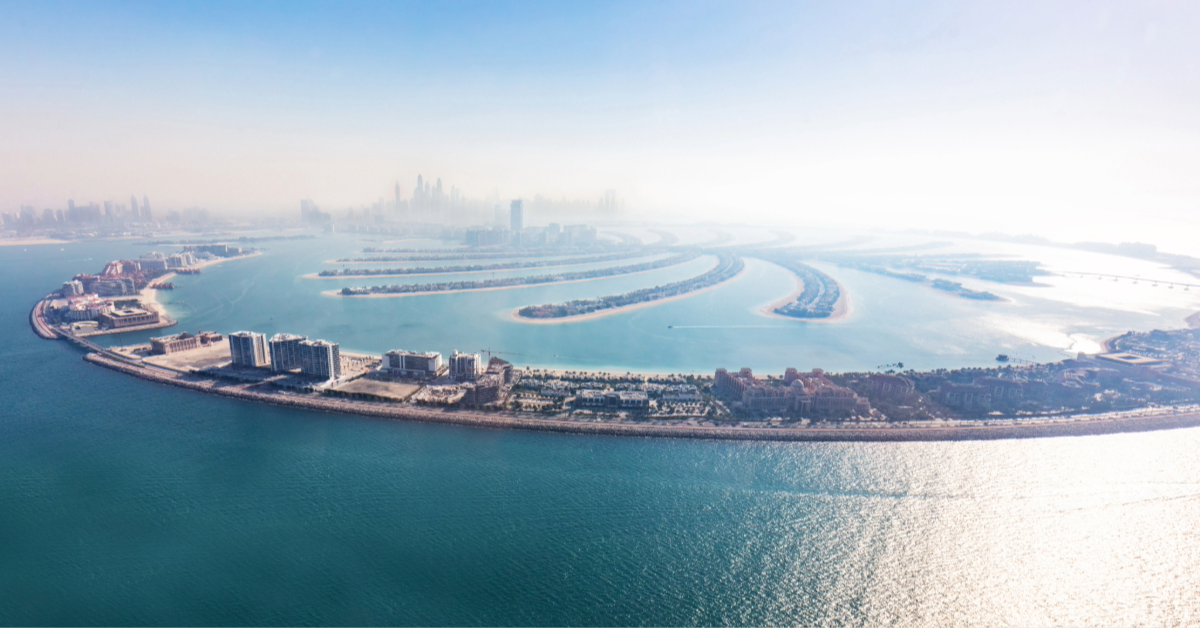
Palm Jumeirah is a man-made offshore island on the Arabian Gulf, connected to the mainland via the trunk, with the crescent forming a protective arc around the fronds.
Location
It’s located in The Palm Jumeirah, Dubai
Location matters because it defines convenience. Emirates Hills tends to suit those who value fast car access to business districts and a low-profile residential setting. Palm suits those who want coastal routines and proximity to leisure along the wider beachfront corridor.
Commutes and transport in everyday life
Emirates Hills is typically more car-dependent. For many residents, that aligns with villa living at this tier, where private parking and flexible daily logistics are the norm. Still, it means school runs, errands, and day-to-day movement are largely car-based.
Palm Jumeirah offers more transport variety. Many residents rely on taxis and ride-hailing, and the Palm Monorail supports movement along the trunk. Connectivity improves once you leave the island, but weekends can bring heavier traffic linked to leisure venues.
A practical way to compare is to focus on routine: Emirates Hills often feels straightforward for daily commuting, while Palm tends to suit people whose routine is built around the sea, walking routes, and dining.
Lifestyle and community atmosphere
Emirates Hills is often described as “low-key luxury”. It is gated, low-density, and oriented around private homes rather than public destinations. The atmosphere tends to suit residents who want discretion, a neighbourhood feel, and minimal tourist presence.
On the other hand, Palm Jumeirah blends residential life with hospitality and tourism. Even if your building is quiet, the island itself has energy, supported by hotels, beach clubs, and seasonal events.
To make the difference easier to scan, think of it like this:
- Emirates Hills: private, residential, understated, and space-driven
- Palm Jumeirah: waterfront, social, convenience-driven, and experience-led
Property types, layouts, and architectural feel
Emirates Hills is villa-only, which affects density, parking norms, and overall privacy. Many homes are custom-built so that you will see architectural variety, larger plots, and layouts shaped by individual preferences rather than standard developer templates.
Properties for sale in Palm Jumeirah offer a broader spectrum: villas, townhouses, apartments, and branded residences on the trunk and crescent. That range creates more entry points and suits different use cases, from full-time living to lock-up-and-leave ownership. If you are seeking a vibrant waterfront lifestyle, you can easily find a perfect Palm Jumeirah home for sale that matches your specific preferences and budget.
Views, greenery, and the outdoor environment
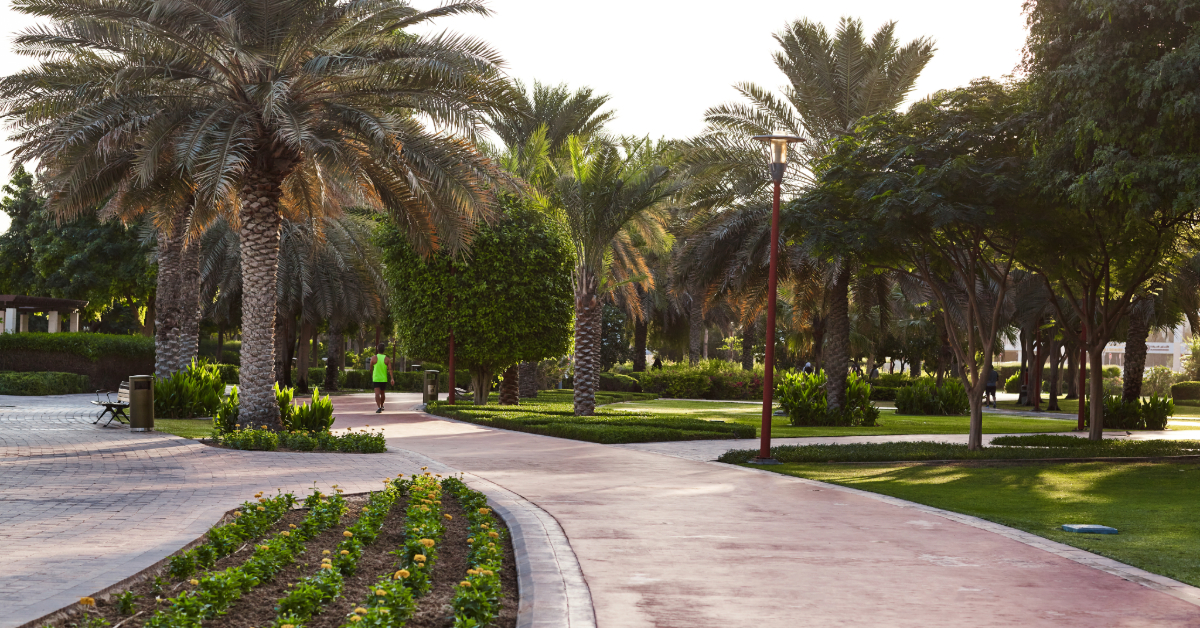
Emirates Hills is defined by greenery and open space. Views often include golf fairways, lakes, parks, and wider skyline angles. Many owners value the “green and blue” balance, lakes and landscaping, rather than direct sea frontage.
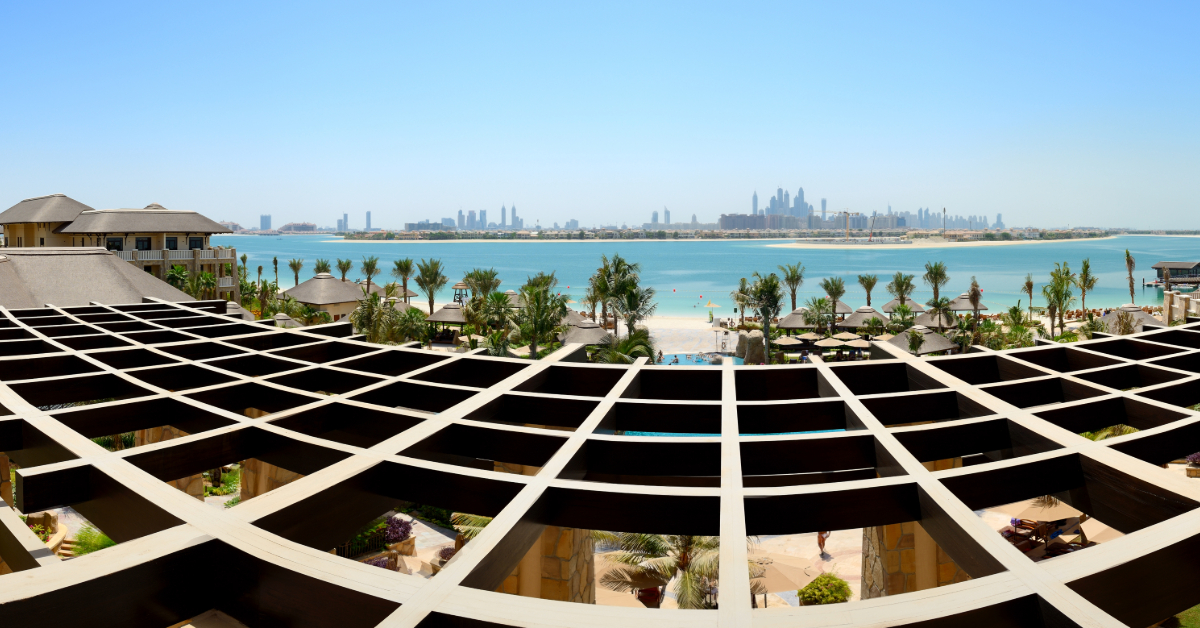
Whereas, Palm Jumeirah offers sea and marina views, beaches, and a stronger waterfront identity. Outdoor life is often built around promenades, water sports, and shoreline routines. Coastal living also brings practical considerations such as salt exposure, humidity, and different exterior maintenance rhythms.
Amenities, schools, and daily conveniences
In Emirates Hills, amenities lean towards private living: golf and fitness, landscaped parks, and low-key community facilities. Shopping, dining, and entertainment are usually accessed through nearby established lifestyle districts.
Hotels, waterfront dining, spas, gyms, retail nodes, and promenades shape Palm Jumeirah’s everyday convenience. For many residents, that integrated lifestyle is the main appeal.
Privacy, security, and the “public interface”
Both communities offer strong security, but their public interfaces differ.
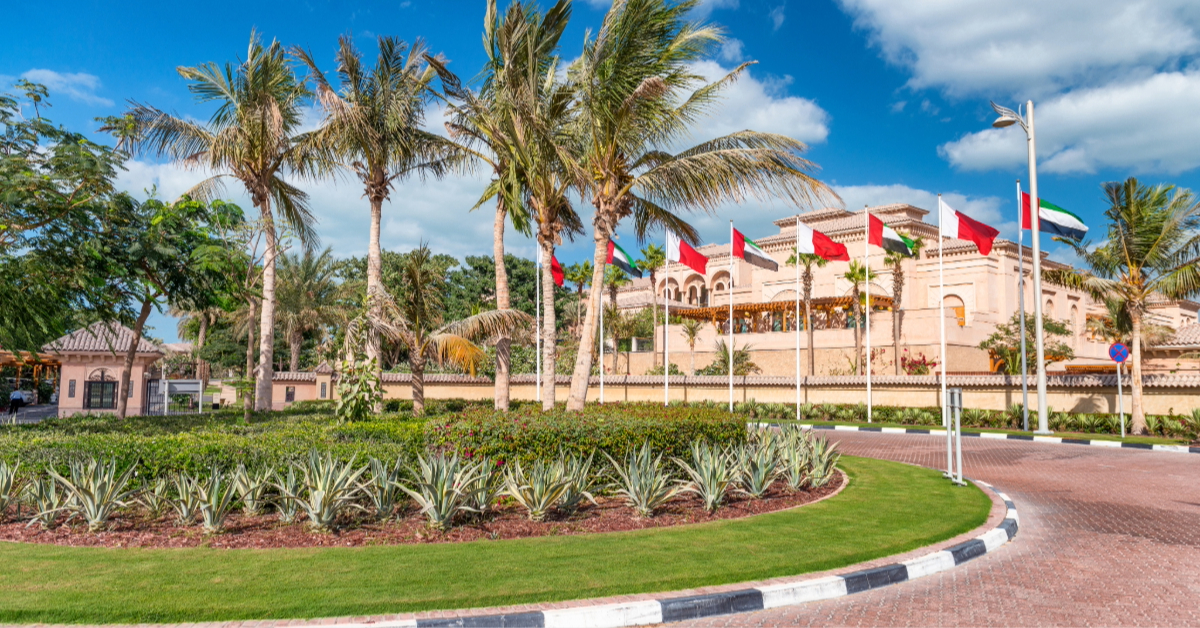
Emirates Hills has controlled entry and low public foot traffic. It suits residents who do not want their neighbourhood to function as a visitor destination.
Palm Jumeirah includes residential zones alongside hotels, public access points, and high-traffic venues. Privacy is often strongest in certain villa areas, while apartment living varies by building location and proximity to hospitality hotspots.
If privacy is non-negotiable, Emirates Hills is usually the simpler choice. If you want beachfront living and can accept a more public-facing destination, Palm may still be the better fit.
Family-friendliness and routines
Emirates Hills often suits families seeking stable routines. The environment is low-traffic and villa-oriented, and larger homes can accommodate practical needs such as multi-generational living, domestic staff accommodation, and flexible home office space.
Palm Jumeirah can also work for families, especially those prioritising the beach and water activities. The routine can shift by location and season, with weekends and peak periods bringing more visitor activity.
A simple weekly check helps:
- Quiet streets and predictable rhythms: Emirates Hills
- Beach access and lifestyle convenience: Palm
Prices, rents, yields, and what “value” means here
Both Emirates Hills and Palm Jumeirah sit in Dubai’s premium tier, but value is not only about price per square foot. It is also about what the home is designed to deliver: privacy and space versus a waterfront lifestyle and variety.
Emirates Hills is often associated with ultra-prime pricing due to its low supply, exclusive positioning, and trophy-asset characteristics. The neighborhood is completely dedicated to custom-built homes, which ensures lower density and an elevated level of privacy. For investors and end-users looking to buy a villa in Emirates Hills, the community offers an exceptional opportunity to secure a spacious, bespoke property that caters to a quiet, family-oriented routine surrounded by golf courses and greenery.
If you are assessing the “rent versus own” question in a high-value market, the Rent vs Buy Calculator can help you compare scenarios based on your timeline and expected housing costs. For instance, testing the waterfront lifestyle by choosing a Palm Jumeirah rent villa might be the perfect step before committing to a long-term purchase.
Ownership costs and maintenance realities
Ownership realities differ by setting. On Palm, sea-facing homes typically have higher exposure to salt and humidity, which can mean more frequent exterior maintenance and a different approach to materials and finishes.
In Emirates Hills, costs are often scale-driven. Larger plots can mean more landscaping and pool upkeep, plus ongoing maintenance to keep a villa at top presentation standards. Underestimating these costs is a common mistake in both communities.
This does not make either option “better” or “worse,” but it does affect long-term budgeting. Buyers who underestimate ownership costs are often disappointed later, regardless of which community they choose.
Specialist guidance via SuperAgent can help compare the right sub-markets, because both communities contain meaningful internal differences.
Emirates Hills vs Palm Jumeirah
The table below summarises the practical differences that matter most in real-life decision-making. Treat it as a starting point, then refine based on the exact property type you are considering.
| Factor | Emirates Hills | Palm Jumeirah |
|---|---|---|
| Lifestyle | Ultra-private, residential, golf and greenery | Resort-style, beachfront, vibrant and social |
| Property types | Villas and mansions only | Villas, townhouses, apartments, branded residences |
| Views | Golf course, lakes, parks, skyline | Sea, beach, marina, skyline |
| Best for | Buyers prioritising privacy, space, and discretion | Lifestyle buyers and yield-oriented investors |
| Transport | Car-dependent | Road + monorail; more ride-hailing options |
| Public interface | Minimal tourism presence | Mix of residential and hospitality zones |
| Ownership realities | Scale-driven upkeep (gardens, pools, large plots) | Coastal wear considerations (salt and humidity exposure) |
How to decide with a simple framework
A decision becomes easier when you stop trying to pick “the best” and focus on fit.
First, clarify your primary goal. Are you buying a primary residence, a second home, or an investment asset? Then rank your non-negotiables. Privacy versus social energy is often the real divider. After that, match your lifestyle profile to the destination: a family prioritising quiet routines usually leans towards Emirates Hills. In contrast, a buyer who wants beachfront living and convenience often leans toward Palm.
Finally, ground your shortlist with reality checks. The most straightforward approach is to compare current inventory side by side, properties for sale in Emirates Hills and properties for sale in Palm Jumeirah, and then evaluate how each unit fits your weekly routine, not just your long-term plan.
Key takeaways
Emirates Hills is the stronger fit for buyers who prioritise privacy, space, and a quiet, green environment where villa living is central and public foot traffic is minimal. Palm Jumeirah is the stronger fit for buyers who want beachfront living, a resort-style atmosphere, and more variety in property types, supported by a destination lifestyle that includes hotels, promenades, and dining.
Both sit at the top end of Dubai’s market. Still, they represent different definitions of luxury: Emirates Hills leans towards discretion and long-term home value, while Palm leans towards experience, convenience, and waterfront routines.
FAQs
Emirates Hills is typically more private because it is gated, low-density, and not a tourist destination.
Palm Jumeirah offers more variety, including apartments and branded residences, while Emirates Hills is villa-only.
Emirates Hills often suits families seeking quiet routines and space, while Palm can suit families who prioritise the beach and outdoor activities.
Palm Jumeirah can be more liquid in specific segments because it attracts broader demand and offers more comparable inventory.
Comparing scenarios helps: ownership versus renting, financing affordability, and expected upkeep budgets often provide a clearer view than headline pricing.