



Fuel prices in the UAE are revised monthly, and as of February 2026, petrol and diesel remain important considerations for residents managing household budgets. Minor changes in driving habits can have a measurable financial impact over time. Understanding your vehicle’s fuel consumption is no longer just about monitoring how often you refill the tank.
It directly affects long-term running costs, environmental impact and even engine longevity. In cities where daily commutes vary significantly – from high-rise districts such as Dubai Marina to suburban villa communities, driving patterns play a central role in determining how efficiently your car operates.
Tracking and improving fuel efficiency, therefore, becomes both a financial and practical necessity in 2026.
- How to Calculate Fuel Consumption
- Factors That Affect Fuel Consumption in the UAE
- Effective Strategies to Reduce Fuel Consumption
- Best Vehicles & Technology Choices in 2026 UAE
- Fuel Pricing & Budgeting in 2026 UAE
- Step-by-Step Plan to Reduce Your Fuel Consumption
- Key Takeaways
- FAQs
How to Calculate Fuel Consumption
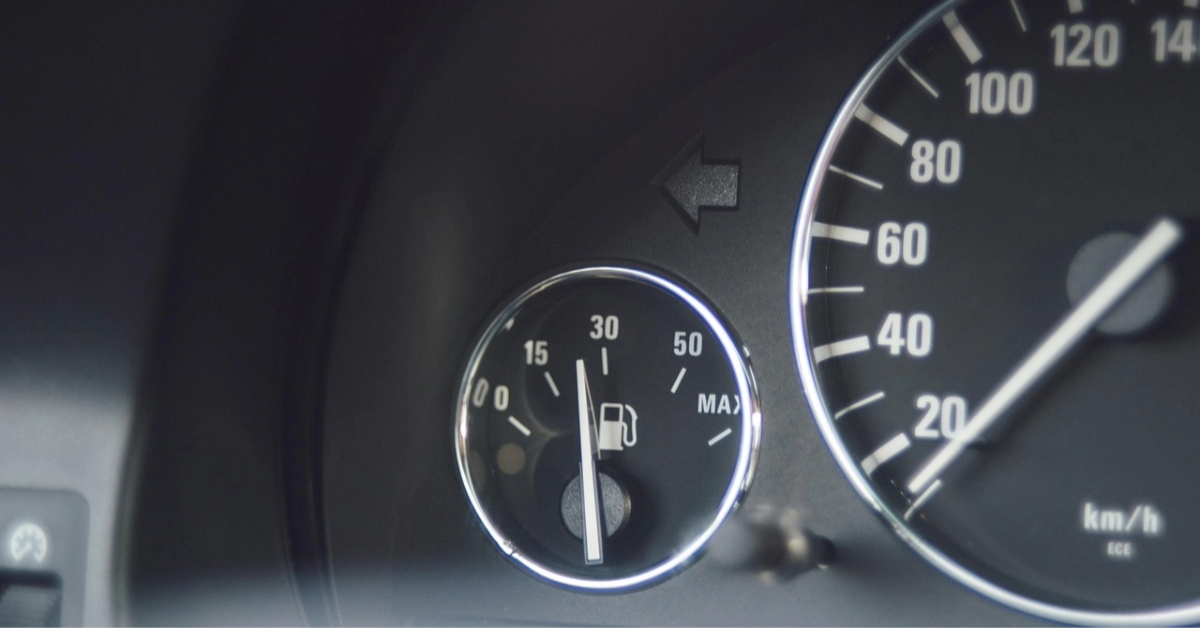
Before reducing fuel usage, it is essential to accurately measure it. Many drivers rely solely on dashboard estimates, yet calculating fuel consumption manually provides a more reliable benchmark and helps identify inefficiencies early.
Key Metrics and Units
In the UAE and across the GCC, fuel efficiency is typically measured in litres per 100 kilometres (L/100 km) or kilometres per litre (km/L). The first indicates how many litres your car requires to travel 100 kilometres – the lower the number, the better the efficiency. The second shows how far you can travel on one litre of fuel; here, a higher figure reflects stronger performance.
Alongside these metrics, understanding the price per litre in dirhams allows drivers to convert fuel usage into real financial terms. This is particularly useful for residents who commute between central districts such as Business Bay and surrounding residential areas, where daily travel distances can quickly accumulate.
Formula for Calculating Consumption
The most accurate way to calculate fuel consumption is to track it across a full refill cycle.
- Fill the tank completely and reset your trip meter (or record the odometer reading).
- Drive normally for at least 100–300 kilometres.
- Refill the tank fully and record the number of litres added.
- Note the updated odometer reading.
You can then calculate:
- L/100 km = (Litres used ÷ Kilometres driven) × 100
- km/L = Kilometres driven ÷ Litres used
Repeating this every few weeks provides a dependable baseline and allows you to monitor changes over time.
Estimating Fuel Costs for Your Travels
Once you understand how much fuel your vehicle consumes per 100 km, estimating trip costs becomes straightforward. Multiply the litres used by the current price per litre, then project that figure across weekly, monthly and annual driving distances.
Online tools such as UAE fuel cost calculators simplify this process further by automatically factoring in updated pricing. For drivers commuting daily from areas such as Al Nahda in Sharjah to employment hubs in Dubai, this calculation can reveal significant yearly differences in expenditure.
Factors That Affect Fuel Consumption in the UAE Context
Several region-specific factors influence fuel consumption, particularly in the UAE’s climate and urban layout. Understanding these influences allows drivers to make targeted improvements rather than guessing where inefficiencies occur.
Climate and Environment
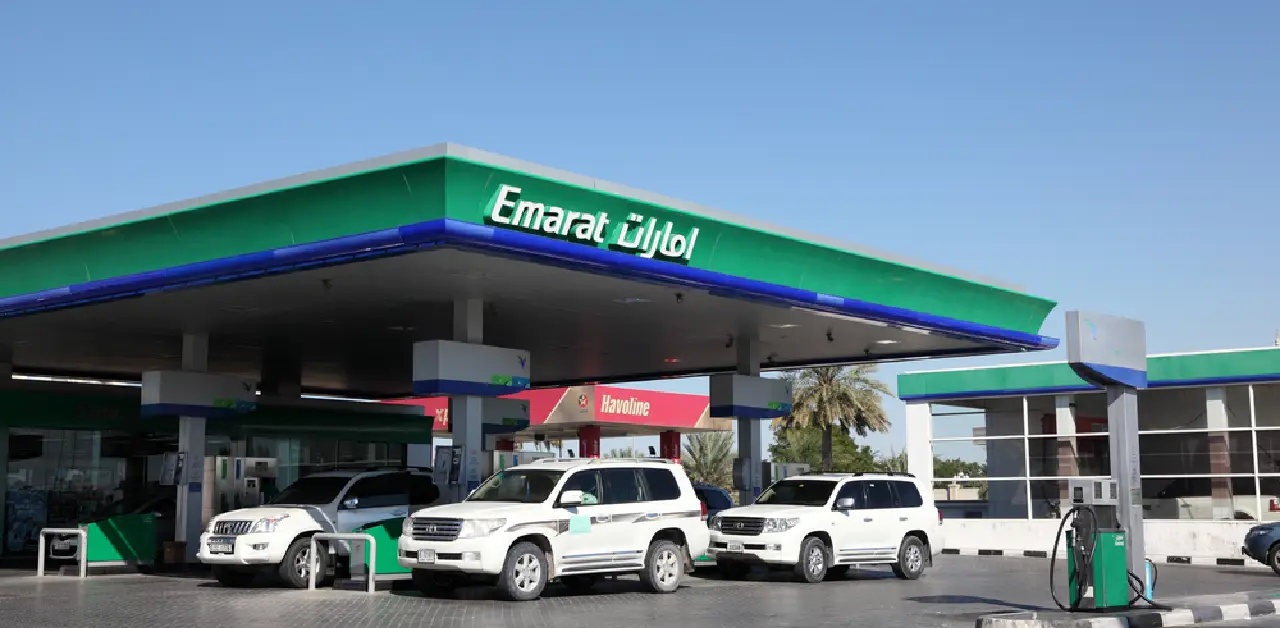
The UAE’s extreme heat directly affects vehicle efficiency. Air conditioning places additional strain on the engine, and studies indicate that heavy AC use can increase fuel usage by 10–25 per cent, especially during initial cabin cooling. Dust and sand also accumulate quickly in air filters, reducing airflow to the engine and diminishing performance if maintenance is delayed.
Residents in villa communities such as Arabian Ranches, where journeys often involve longer stretches of road, may notice seasonal fluctuations in efficiency due to sustained cooling demands during the summer months.
Driving Patterns & Road Conditions
Urban driving typically consumes more fuel than highway travel. Stop-start traffic, frequent braking and acceleration, congestion, and extended idling all raise overall usage. Speeds above 80–90 km/h also significantly increase aerodynamic drag, causing engines to work harder and burn more fuel.
Living closer to employment hubs such as Downtown Dubai can therefore reduce the cumulative effect of daily congestion and repeated short-distance drives.
Vehicle Condition, Load & Maintenance
Mechanical condition plays an equally important role. Properly inflated tyres can improve efficiency by 3–5 per cent, while correct wheel alignment reduces rolling resistance. Clean air filters and quality engine oil help maintain optimal combustion. Even external additions, such as roof racks, increase aerodynamic drag and lead to higher petrol usage over time.
In communities like Jumeirah Village Circle, where service centres are easily accessible, regular vehicle checks can be incorporated into routine schedules, helping maintain stable fuel consumption levels.
Explore the Available Properties for Sale in Jumeirah Village Circle
-


Apartment
Listed 3 months ago
1,297,800 AED
Contemporary | Spacious Family Apartment
Trevino, District 15, Jumeirah Village Circle, Dubai
1
2
682 sqft
-


Apartment
Listed 1 week ago
1,015,000 AED
Investor Deal | Close to Handover | Spacious
Violet Tower, District 14, Jumeirah Village Circle, Dubai
1
1
822 sqft
-


Apartment
Listed 1 month ago
719,999 AED
Luxury Living | Elegant Design I High Floor
Binghatti Apex, District 10, Jumeirah Village Circle, Dubai
studio
1
433 sqft
-

Apartment
Listed 2 weeks ago
1,300,000 AED
Smart Home | Spacious 1BR | Premium Amenities
Riviera Chalet, District 10, Jumeirah Village Circle, Dubai
1
2
931 sqft
-


Apartment
Listed 4 days ago
1,100,000 AED
Top Quality | 25/75 Payment Plan | Handover Soon
Belle Reve by Zimaya, District 15, Jumeirah Village Circle, Dubai
1
2
757 sqft
-

Apartment
Listed 1 week ago
725,000 AED
Pool View Studio | Versace Ceramics | Cash Deal
One Sky Park, District 15, Jumeirah Village Circle, Dubai
studio
1
443 sqft
-


Apartment
Listed 4 days ago
910,000 AED
Smart Home | Modern Unit | Best Deal
Binghatti Nova, District 12, Jumeirah Village Circle, Dubai
1
2
682 sqft
-

Apartment
Listed 4 days ago
1,390,000 AED
Vacant | Corner Unit | Unobstructed View
Binghatti Heights, District 10, Jumeirah Village Circle, Dubai
2
3
1,173 sqft
-

Apartment
Listed 4 days ago
975,000 AED
Smart Home | Modern Unit | Best Location
Binghatti Heights, District 10, Jumeirah Village Circle, Dubai
1
2
634 sqft
-

Apartment
Listed 6 days ago
1,080,000 AED
Best Deal in the Building | Quality Dev | Below OP
Binghatti Phoenix, District 13, Jumeirah Village Circle, Dubai
1
2
797 sqft
Effective Strategies to Reduce Fuel Consumption
Improving efficiency does not require drastic lifestyle changes. Instead, consistent behavioural and mechanical adjustments gradually reduce overall usage.
1. Driving Techniques
Smoother acceleration and gentle braking reduce unnecessary fuel burn. Anticipating traffic conditions and easing off the accelerator earlier rather than braking sharply at the last moment can make a noticeable difference. Cruise control on highways helps maintain steady speeds, while avoiding prolonged idling prevents waste. Combining errands into a single trip also reduces the number of cold engine starts, which typically consume more fuel.
Over time, these techniques can improve your car’s fuel consumption without requiring a financial investment.
2. Optimise Vehicle Setup & Features
Using the fuel grade recommended by your manufacturer ensures the engine operates efficiently without unnecessary expenditure on higher-octane petrol. Activating Eco mode, where available, adjusts throttle response and climate control settings to prioritise efficiency. Parking in shaded areas reduces the demand placed on air conditioning during start-up, and removing unused roof boxes minimises drag.
Individually, these adjustments appear minor. Collectively, however, they generate measurable annual savings.
Best Vehicles & Technology Choices in 2026 UAE
Choosing a more efficient vehicle can significantly reduce long-term running costs. In 2026, hybrid technology continues to dominate the list of fuel-efficient models available in the UAE market, particularly for drivers who split time between city traffic and highway travel. Compared to conventional petrol engines, hybrids perform especially well in stop-start urban environments where regenerative braking improves overall efficiency.
Fuel-Efficient Vehicles You Might Choose
Below is a comparison of popular hybrid models currently recognised for strong efficiency figures in mixed UAE driving conditions:
| Model | Type | Typical Efficiency (km/L) | Best for |
| Toyota Camry Hybrid | Sedan / Hybrid | ≈ 27–28 km/L | Daily commuters & long highway drives |
| Toyota Prius | Hatchback / Hybrid | ≈ 28.5 km/L | City-focused drivers |
| Hyundai Elantra Hybrid | Sedan / Hybrid | ≈ 23–26 km/L | Balanced urban & suburban use |
Vehicles in this range can significantly reduce average fuel consumption, particularly for residents driving daily in high-density districts, especially for those living in Downtown Dubai or commuting between emirates.
Hybrid systems are particularly beneficial in traffic-heavy corridors, where traditional engines consume more petrol due to repeated acceleration and braking.
Emerging Technologies & Incentives
Beyond hybrids, fully electric vehicles (EVs) are gaining traction across the UAE. While initial purchase costs remain higher than standard petrol vehicles, operating expenses are considerably lower because they eliminate petrol dependency altogether. Government-backed initiatives, including selected registration incentives and parking benefits, further improve long-term value.
Additionally, the continued expansion of EV charging infrastructure, including ultra-fast charging networks supporting taxi fleets, is making electric mobility more practical for everyday residents. Over several years of ownership, reduced reliance on petrol has substantially decreased overall fuel consumption expenditure.
Fuel Pricing & Budgeting in 2026 UAE
Understanding vehicle efficiency becomes meaningful only when paired with current fuel prices. Since the UAE adjusts petrol and diesel rates monthly, budgeting requires up-to-date cost awareness.
Current Fuel Prices (February 2026)
The table below reflects approximate fuel prices in February 2026:
| Fuel Grade | Price (AED per litre) | Suitable for |
| Super 98 | ≈ 2.70 AED | High-performance engines |
| Special 95 | ≈ 2.58 AED | Most standard vehicles |
| Diesel | ≈ 2.85 AED | Diesel SUVs & commercial vehicles |
Because price differences between grades can affect long-term expenditure, it is important to use only the fuel recommended by your vehicle manufacturer. Choosing a higher-octane grade unnecessarily rarely improves efficiency enough to offset the additional cost.
Estimating Monthly & Annual Fuel Costs
To better understand the financial impact of your car’s fuel consumption, you can estimate yearly expenses by combining efficiency data with pricing figures. Start by identifying your average litres per 100 km. Then estimate your monthly driving distance, multiply the litres required by the applicable fuel price, and project that total across twelve months.
For example, a driver covering 2,000 km per month at 8 L/100 km using Special 95 would consume approximately 160 litres monthly. At AED 2.58 per litre, this equals roughly AED 412.80 per month, or nearly AED 4,950 annually.
This comparison highlights how even small improvements in efficiency, such as reducing fuel consumption from 8 L/100 km to 7 L/100 km, can yield noticeable yearly savings.
Step-by-Step Plan to Reduce Your Fuel Consumption
Improving efficiency works best when approached methodically:
- Measure your current usage to establish a baseline.
- Service tyres, filters, and engine oil, and remove unnecessary weight.
- Adjust driving style to prioritise smoother acceleration and braking.
- Plan routes strategically and avoid peak congestion where possible.
- Consider upgrading to hybrid technology or using Eco features.
- Track progress every few months and reassess results.
Consistency ensures improvements are sustained rather than temporary.
Key Takeaways
Fuel in the UAE is priced monthly, with February 2026 rates ranging between approximately AED 2.58 and AED 2.85 per litre. Measuring fuel consumption in L/100 km or km/L helps drivers understand the true cost of mobility. Climate conditions, driving behaviour and vehicle maintenance significantly influence efficiency, while hybrid and electric vehicles offer compelling long-term alternatives. Small, consistent adjustments can yield meaningful financial savings over the course of a year.
FAQs
Fill the tank fully, reset the trip meter, drive a measured distance, refill, and divide litres used by kilometres driven to calculate L/100 km or km/L.
Air conditioning can increase fuel use by approximately 10–25 per cent, particularly during heavy cooling periods. Parking in the shade and using the air recirculation mode can reduce the impact.
If your vehicle is designed for Special 95, using Super 98 generally does not provide sufficient efficiency improvement to justify the additional cost. Follow manufacturer guidance.
Yes. Hybrids and EVs significantly reduce reliance on petrol, and incentives, combined with expanding infrastructure, improve long-term value.
Air filters are typically replaced every 15,000 km, oil every 5,000–10,000 km depending on manufacturer recommendations, and wheel alignment around every 20,000 km. Dusty UAE conditions may require more frequent checks.