


Villa compounds in Dubai are gated groups of villas that share facilities such as a swimming pool, a gym, play areas and landscaped gardens, with a controlled entrance and on-site security. You get the space and privacy of your own home, plus amenities you’d normally only find in a resort or a large apartment building.
Compound villas in Dubai come in two main forms. There are smaller private compounds tucked into older neighbourhoods such as Jumeirah, Umm Suqeim, Al Safa, and Al Barsha, and there are large master-planned communities like Arabian Ranches, The Meadows, and Dubai Hills Estate. This guide explains how they differ, where to look, what renting one costs, and the rules every tenant and buyer should know.
- What is a villa compound in Dubai?
- Pros of living in a villa compound
- Cons of living in a villa compound
- Popular villa compounds in Dubai
- Master-planned communities with compound-style living
- How much does it cost to rent a villa in a compound?
- How to negotiate rent on a compound villa
- Rules to know before renting a compound villa
- Buying a villa in a compound
- How to choose the right villa compound
What is a villa compound in Dubai?
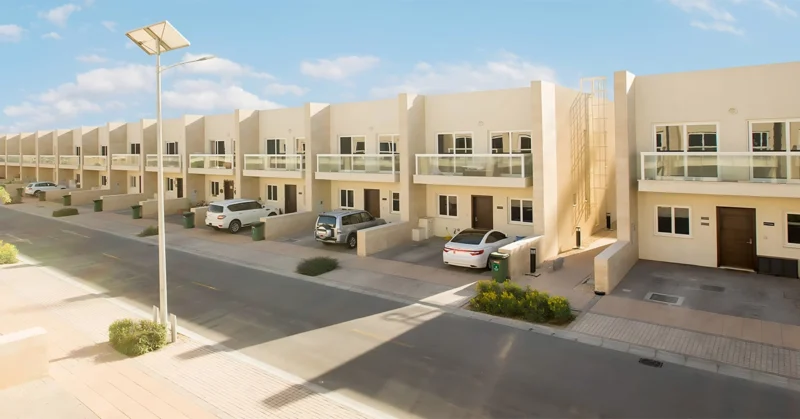
A villa compound is a walled or fenced group of homes with one or two gated entrances and facilities that all residents share. Each family has its own villa, usually with a private garden or courtyard, parking and often a maid’s room, while the pool, gym, and children’s play area are located in shared spaces.
Compounds vs master-planned gated communities
People often use the two terms for the same thing, but there’s a practical difference. A traditional compound is small and self-contained, usually rented out by a single landlord or management company. A master-planned community is a whole district built by a developer, split into sub-communities, with its own retail centre, schools, parks, and sometimes a golf course. Most of the larger gated communities in Dubai fall into this second group.
Villa compound vs apartment vs standalone villa
Here’s how compound villas compare with the other main options for families:
| Feature | Compound villa | Standalone villa | Apartment |
| Living space | Large, with a private garden | Large, with a private garden | Smaller, often with a balcony |
| Shared pool and gym | Yes, inside the compound | Usually no, unless private | Yes, in most buildings |
| Gated security | Yes | Not always | Building security and access control |
| Parking | Private or allocated spaces | Private driveway or garage | Allocated basement or podium parking |
| Metro access | Limited in most compounds | Depends on the area | Better in central districts |
| Rent level | Higher (see figures below) | Higher (see figures below) | Lower |
To put numbers on it, here are Property Finder’s median advertised yearly rents for Q3 2026 in two communities that offer both villas and apartments (all sizes):
| Community | Villas (AED/year) | Apartments (AED/year) |
| Jumeirah Village Circle | 200,000 | 71,999 |
| Dubai Hills Estate | 525,000 | 130,000 |
Pros of living in a villa compound
Families choose compounds for a mix of space, safety and convenience. These are the main benefits.
More space indoors and out
Compound villas tend to be generous. Across Property Finder’s villa compound listings in Dubai, homes average about 4,500 sq ft, and many include a study, a maid’s room, and a private garden.
Shared amenities on your doorstep
A pool, gym, and play area inside the gate mean you don’t need a club membership or a drive to the park for everyday exercise. In the larger communities, you’ll also find tennis and basketball courts, cycling tracks, and neighbourhood retail centres.
Security for families
Gated entrances and on-site security make compounds popular with parents who want children to cycle and play outside with friends from nearby villas.
Privacy with a sense of community
You share fewer walls than in an apartment block, yet you still meet neighbours at the pool or on the school run. For many expat families who have just moved to Dubai, that’s how they build their first local network.
Easy parking
Most compound villas come with their own driveway, carport, or allocated parking spaces, so residents don’t have to search for parking after work.
Cons of living in a villa compound
Higher Rental and Maintenance Costs
Villas generally cost more to rent than apartments, especially when they offer larger living spaces and private outdoor areas. A garden or private pool can also add to maintenance costs. However, the additional space and shared amenities may make the higher costs worthwhile for families.
On top of the rent, budget for a security deposit, agency commission, Ejari registration and a refundable DEWA deposit when you move in. Registering your contract with Ejari costs AED 177.75 through the Dubai REST app or the Dubai Land Department website, or AED 220 at a Real Estate Services Trustee Centre, and the DEWA deposit for a villa is AED 4,000. Our DEWA FAQs cover the rest of the move-in process.
Limited Public Transport Options
Most villa compounds and communities sit away from the Dubai Metro, so commuting to Downtown, Business Bay or Dubai Marina usually means driving or using a taxi. Choosing a community with good road connections can make daily travel easier.
Further from Central Dubai
Newer communities such as Arabian Ranches, Al Barari and The Sustainable City are further from central Dubai. In return, residents can enjoy quieter surroundings, more green space and a relaxed residential atmosphere.
Popular villa compounds in Dubai
If you want a true compound, with a small group of villas sharing a pool behind one gate, these are the names and neighbourhoods to start with. For bigger developer-built communities, see the next section or our guide to the best villa communities in Dubai.
Named villa compounds to know
Here’s a quick look at some well-known compounds and compound-style clusters across Dubai:
| Compound | Area | Homes | Good to know |
| AGH Villas | Al Rashidiya | 3 to 6-bedroom villas with private gardens and maid’s rooms | Shared swimming pools |
| Al Fareej Courtyard | Al Rashidiya | 4-bedroom compound villas | Close to Al Rashidiya, on the eastern side of Dubai |
| Mushrif Village | Mirdif | Villas and townhouses | Around two minutes from Mushrif Park |
| Cedre Villas | Dubai Silicon Oasis | 3 to 6-bedroom villas | Gated, with community pools, tennis and basketball courts and children’s play areas |
| Semmer Villas | Dubai Silicon Oasis | 4-bedroom villas, many with a maid’s room | Next to Cedre Villas, with homes close to pools and parks |
| Green Community | Dubai Investment Park 1 | 3- to 6-bedroom villas across East and West sub-areas | Leafy layout, with many villas backing onto parks |
Browse AGH Villas, Al Fareej Courtyard, Cedre Villas, Semmer Villas and Green Community on Property Finder to see what’s available now.
Jumeirah, Umm Suqeim and Al Safa

These established coastal neighbourhoods are where many of Dubai’s traditional compounds are found. You’re close to the beach, independent cafés and Sheikh Zayed Road, and compounds here range from a few villas sharing a pool to larger developments with gyms and play areas.
- Nearby: Kite Beach and Green Planet in Jumeirah; Burj Al Arab and Wild Wadi in Umm Suqeim
- Typical homes: 3 to 5-bedroom villas
- Explore villas for rent in Jumeirah, Umm Suqeim, and Al Safa
Al Barsha
Al Barsha 1 and 2 offer compound living in a central location, a short drive from Mall of the Emirates. Villas here are often large, which suits bigger families.
- Nearby: Mall of the Emirates and Dubai Butterfly Garden
- Explore: villas for rent in Al Barsha
Mirdif and Mushrif Village
Mirdif is a family-focused, pet-friendly neighbourhood near Mushrif Park and Dubai International Airport. Inside it, Mushrif Village is a compound of villas and townhouses next to Al Khawaneej Street, around two minutes from Mushrif Park.
- Nearby: Mushrif Park, City Centre Mirdif, and Uptown Mirdif
- Typical homes: 3 and 4-bedroom villas
- Explore villas for rent in Mirdif
Master-planned communities with compound-style living
These developer-built communities aren’t compounds in the traditional sense, but many of their villa clusters share pools, parks and gated entrances, so they’re often on the same shortlist.
Arabian Ranches
Developed by Emaar, Arabian Ranches is one of Dubai’s best-known family communities, with 15 sub-communities and more than 4,000 villas, townhouses and mansions.
- Homes: 2 to 7-bedroom villas and townhouses
- Amenities: 18-hole golf course, Dubai Polo & Equestrian Club, lakes, tennis courts, pools and The Ranches Souk
- Explore more: The Arabian Ranches area or browse villas for rent in Arabian Ranches
The Meadows and The Springs
These two neighbouring Emaar communities are part of the Emirates Living project and are known for their lakes, landscaped streets and in-community schools. Both are freehold and pet-friendly.
- The Meadows: nine sub-communities with 3- to 6-bedroom villas, The Meadows Souk and Meadows Town Centre
- The Springs: 15 sub-communities with 2- to 5-bedroom villas, The Springs Souk and Springs Town Centre
- explore more: The Meadows vs The Springs, or browse villas in The Meadows and The Springs
Jumeirah Park
Built by Nakheel, Jumeirah Park is a gated community of more than 3,000 villas behind Jumeirah Lake Towers, bordering Jumeirah Islands and The Meadows. Its districts are made up of villa clusters with 3 to 5 bedrooms.
- Amenities: The Pavilion retail strip, Dubai British School Jumeirah Park and green spaces
- Explore Jumeirah Park: Discover more about living in the area with our Jumeirah Park guide, or browse villas for rent in Jumeirah Park to find your next home.
Dubai Hills Estate
Emaar’s Dubai Hills Estate sits between Al Khail Road and Mohammed Bin Zayed Road. It mixes apartments with more than 2,000 villas, all built around parks and a championship golf course.
- Homes: 3 to 7-bedroom villas and 3 to 5-bedroom townhouses
- Amenities: 18-hole golf course, Dubai Hills Park, Dubai Hills Mall, a 54 km cycling route and King’s College Hospital London – Dubai
- Explore Dubai Hills Estate: Discover what it’s like living in Dubai Hills Estate, or explore villas for rent in Dubai Hills Estate to find your next home.
Al Barari
Al Barari is one of the greenest addresses in Dubai, with around 60% of the community given over to nature, including streams, lakes and gardens. It’s gated, freehold, and reached via Sheikh Mohammed Bin Zayed Road.
- Homes: 2 to 5-bedroom villas and townhouses, plus apartments
- Explore Al Barari: Discover the benefits and challenges of living in the area with our pros and cons of living in Al Barari guide, or explore villas for rent in Al Barari to find your home.
The Sustainable City
On Al Qudra Road, The Sustainable City by Diamond Developers has around 500 villas in five residential clusters. It’s designed for walking and cycling, with car access limited to designated areas, solar panels over parking and water and waste recycling.
- Amenities: Equestrian centre, farm, Sustainable Plaza, mosque and Fairgreen International School
- Explore The Sustainable City: Discover what it’s like to live in this eco-friendly community with our The Sustainable City Dubai, or explore villas for rent in The Sustainable City to find your next home.
How much does it cost to rent a villa in a compound?

Rents depend on the area, size and whether the villa has a private pool. According to Property Finder, yearly rents for compound villas in Dubai generally start at around AED 169,000. Here are median advertised villa rents in Q3 2026 for some of the communities in this guide:
| Community | Q3 2025 (AED/year) | Q3 2026 (AED/year) | Change |
| Arabian Ranches 3 | 370,000 | 300,000 | -18.9% |
| Al Barsha | 490,000 | 450,000 | -8.2% |
| Jumeirah Park | 395,000 | 380,000 | -3.8% |
| The Springs | 230,000 | 225,000 | -2.2% |
| Dubai Hills Estate | 520,000 | 525,000 | +1.0% |
Source: Property Finder, median advertised villa rents, Q3 2025 vs Q3 2026. These are asking rents, and the rent you finally sign can be lower, so compare them with recent rental transactions in the same community before you agree on a price.
Prices move with the market, so check the latest listings when you start your search. You can explore villa compound for rent in Dubai on Property Finder and filter by area, budget and number of bedrooms.
How to negotiate rent on a compound villa
Asking rents for villas fell in eight of the ten communities Property Finder tracked between Q3 2025 and Q3 2026, so tenants have more room to negotiate than they did a year earlier. Here’s how to use it:
- Check the numbers first: Look up the villa on the DLD Rental Index and compare recent rents in the same compound. A well-researched offer is harder to turn down.
- Ask for more cheques: Moving from one or two cheques to four or more makes the rent far easier to manage.
- Ask about a rent-free period: Some landlords offer a free month, especially on longer leases or homes that have been on the market for a while.
- Agree maintenance in writing: Ask the landlord to cover major maintenance, such as air conditioning, pool and garden upkeep, and name it in the contract.
- Think about renewal: Ask how the rent will be handled at renewal, and remember that any increase must follow the Rental Index rules below.
Rules to know before renting a compound villa
Renting a villa in a compound follows the same Dubai tenancy laws as any other home. These are the points that matter most.
Register your contract with Ejari

Every tenancy contract in Dubai must be registered with Ejari, the Dubai Land Department’s system. You’ll need the registered contract to connect DEWA and for residence-related services, so make sure it’s done as soon as you sign. Registration costs AED 177.75 online or AED 220 at a trustee centre.
Know the rent increase limits
At renewal, your landlord can only raise the rent if your current rent is below the average for similar homes in the Dubai Land Department’s Rental Index. The maximum increase depends on the gap:
| Your rent compared with the Rental Index average | Maximum increase |
| Up to 10% below | No increase |
| 11% to 20% below | 5% |
| 21% to 30% below | 10% |
| 31% to 40% below | 15% |
| More than 40% below | 20% |
You can check your villa on the DLD Rental Index by entering the area, property type and number of bedrooms. Our guide to the RERA rental index walks you through it.
Watch the notice periods
- 90 days: Either side must give at least 90 days’ notice before the contract ends to change its terms, including the rent, unless both agree otherwise.
- 12 months: To evict a tenant when the contract ends, the landlord must give 12 months’ notice through a notary public or registered post, and only for reasons set out in the law, such as selling the property or moving in themselves or a first-degree relative.
Maintenance and deposits
The landlord is responsible for maintaining the villa during the lease unless the contract says otherwise, and the contract should name who handles maintenance. The landlord can take a security deposit and must refund it, or what’s left of it, at the end of the tenancy.
Subletting and shared housing
You can’t sublet your villa, or part of it, without the landlord’s written consent. Dubai also regulates shared housing under Law No. (4) of 2026, which took effect on 8 September 2026: a unit can only be used for shared housing with a Dubai Municipality permit, and tenants may not sublease any part of a shared housing unit. Both buildings and villas can be designated for shared housing once that permit is issued. Breaking the law can lead to fines of AED 500 to AED 500,000, doubled for a repeat violation within one year, up to AED 1 million.
Buying a villa in a compound
If you’re planning to buy rather than rent, a few extra points apply.
- Foreign ownership areas: Non-UAE nationals can buy freehold property only in areas designated for foreign ownership. Many master-planned communities, including The Meadows, The Springs and Al Barari, are freehold. Before you commit, check the property’s status with the Dubai Land Department.
- Service charges: In jointly owned communities, the owner pays service charges for the shared areas under Law No. (6) of 2019, unless the lease says otherwise. The DLD publishes approved rates in its Service Charge Index, so compare these before you buy.
- Market data: The Dubai REST app and the DLD’s Residential Sales Price Index help you see recent prices before you make an offer.
- Entry prices: Based on Property Finder listings from the last three months, villa prices start from around AED 2.7 million in Arabian Ranches 3, AED 3.2 million in Jumeirah Golf Estates, AED 3.35 million in Arabian Ranches and AED 8.5 million in The Meadows.
- Financing: If you need a home loan, get mortgage pre-approval before you start viewing so you know your budget. Our guide to getting a mortgage in Dubai explains the steps.
Ready to start? Browse villas for sale in Dubai on Property Finder, or compare prices across affordable villa communities.
How to choose the right villa compound
Before you sign, walk through this checklist:
- Commute: Test the drive to work and school at rush hour, not at the weekend.
- Facilities: Check what’s shared and what’s private. Is the pool shaded or heated? Is the gym staffed?
- Schools: Shortlist schools first, then look for compounds nearby to cut the school run.
- Pets: Ask the landlord or management whether pets are allowed in your villa and in shared areas.
- Maintenance: Confirm in the contract who handles garden, pool and air-conditioning maintenance.
- Rent check: Compare the asking rent with the DLD Rental Index and similar listings before you negotiate.
Key Takeaways
- Villa compounds in Dubai are gated groups of villas with shared facilities such as pools, gyms and play areas.
- Traditional compounds sit in older areas like Jumeirah, Umm Suqeim, Al Safa, Al Barsha and Mirdif, while communities such as Arabian Ranches and Dubai Hills Estate offer compound living on a larger scale.
- According to Property Finder, yearly rents for compound villas generally start at around AED 169,000.
- Advertised villa rents fell in eight of ten tracked communities in Q3 2026, so it’s worth negotiating on cheques, rent-free periods and maintenance.
- Register your contract with Ejari and check the DLD Rental Index before agreeing to any rent increase.
- Non-UAE nationals can buy only in designated freehold areas, and owners pay service charges for shared areas.
Frequently Asked Questions
A villa compound is a gated group of private villas that share facilities such as a swimming pool, gym, play areas and gardens, with controlled access and on-site security.
A standalone villa sits on its own plot with its own entrance. A compound villa is one of several homes inside a gated compound, so residents share the pool, gym and other facilities.
Yearly rents for compound villas in Dubai generally start at around AED 169,000. Villas in coastal areas such as Jumeirah and Umm Suqeim usually cost more.
It depends on your priorities. A compound villa gives you more space, a garden and shared family facilities, while an apartment usually costs less and is closer to the metro and central business districts.
Yes. Advertised villa rents fell in most communities Property Finder tracked in Q3 2026, so you can ask for a lower rent, more cheques, a rent-free period or landlord-covered maintenance.
Yes, expats can buy villas in compounds located in designated freehold areas in Dubai. Check the property’s ownership status with the Dubai Land Department before buying.
The owner pays service charges for the shared areas, unless the lease agreement says otherwise.
Up to 20%, depending on how far your current rent is below the DLD Rental Index average. If it’s within 10% of the average, the rent can’t go up.
Most aren’t. Many villa compounds and communities sit away from metro stations, so a car or taxi is usually needed for daily commuting.


