



Are you planning a trip from the UAE to Bangkok, Phuket or Chiang Mai and wondering whether you need a Thailand visa for UAE residents, or how to get a Thailand visa from Dubai? This guide covers what you need to know before you book. Whether you’re an Emirati citizen or an expat living in the UAE, you’ll find the latest rules on visa-free entry, the Thai e-Visa, required documents, processing times, fees and the contact details of Thai missions in the UAE.
Here’s the short answer. Since 15 September 2026, citizens of 60 countries and territories, including the UAE and India, can visit Thailand without a visa for up to 30 days. If your passport isn’t on that list, you’ll need to apply for a Thai visa online through the official e-Visa website. Applications are no longer accepted in person at the Royal Thai Embassy in Abu Dhabi or the Royal Thai Consulate-General in Dubai.
Entry rules can change, so confirm the latest requirements on the e-Visa website or with the Royal Thai Embassy before you book or pay.
- Why visit Thailand?
- Do I need a visa for Thailand?
- Thailand Digital Arrival Card (TDAC)
- Thailand e-Visa for UAE residents
- Thailand visa requirements for UAE residents
- How to apply for a Thailand visa from Dubai
- Thailand visa processing time
- Thailand visa fees
- Thailand embassy Abu Dhabi: location and contact
- Thai consulate Dubai: location and contact
- Key takeaways
- Frequently Asked Questions
Why visit Thailand?
Thailand packs a lot into one trip. You get busy city breaks, island beaches, mountain towns and its famous street food, often within a week or two. It works for families, couples and solo travellers, and for both short breaks and longer stays.
Bangkok is usually the first stop, with its temples, river life and night markets. From there, many travellers fly south to the beaches or north to the cooler hills. Some of the most popular places to visit in Thailand are:
- Bangkok
- Phuket
- Krabi
- Chiang Mai
- Koh Samui
- Pattaya
Do I need a visa for Thailand?
The rules for a Thailand visa for UAE residents depend on the passport you hold, not on your UAE residence visa. Thailand’s Ministry of Foreign Affairs revised its visa exemption and visa on arrival schemes for ordinary passport holders, effective from 15 September 2026. Here’s how the new rules work for travellers from the UAE.
Visa exemption for UAE nationals
UAE citizens don’t need a visa for Thailand. Emirati ordinary passport holders are among the 60 countries and territories entitled to a 30-day visa exemption for tourism and short business trips. Other Gulf passports on the same list include Saudi Arabia, Qatar, Kuwait, Bahrain and Oman.
Thailand visa for Indians
Indian passport holders are also on the 30-day visa exemption list. So if you’re an Indian expat living in Dubai or anywhere else in the UAE, you can visit Thailand without a visa for stays of up to 30 days.
If you plan to stay longer than 30 days, or you’re travelling for a reason not covered by the exemption, you’ll need to apply for the right Thai visa for Indians through the e-Visa website before you fly.
Thailand visa on arrival
Under the revised scheme, visa on arrival (VoA) is now limited to three countries: Azerbaijan, Belarus and Serbia. It’s issued at designated immigration checkpoints, and the fee is 2,000 THB. Indian nationals no longer need a visa on arrival because they now fall under the visa exemption.
Who needs a Thai visa?
If your nationality isn’t on the visa exemption or VoA list, you’ll need a visa before you travel. UAE residents in this group apply online through the Thai e-Visa website, as explained below.
Note: “Visa free” means no visa is required, but immigration forms or arrival information may still be needed depending on your nationality. Check the latest entry conditions with the Royal Thai Embassy or Consulate-General before you travel.
Thailand Digital Arrival Card (TDAC)
Whether or not you need a visa, there’s one more step before you fly. Since 1 May 2025, all non-Thai nationals entering Thailand must complete the Thailand Digital Arrival Card (TDAC) online before arrival, at tdac.immigration.go.th. This applies to arrivals by air, land or sea.
- It’s free: There’s no charge to submit the TDAC.
- Timing: You can submit it within the three days before your travel date.
- Keep the email: After you submit, you’ll get an acknowledgement email. Show it with your travel documents at the immigration counter on arrival.
- It isn’t a visa: The TDAC doesn’t replace a visa. If you need a visa, apply for the e-Visa first, then complete the TDAC before you travel. Visa-exempt travellers, such as UAE passport holders, also need to complete it.
Thailand e-Visa for UAE residents
Since 1 January 2025, every foreign national living in the UAE who needs a visa for Thailand, whether for a short Thailand visit visa or a long stay, must apply through the official Thai e-Visa website, thaievisa.go.th. The embassy and consulate no longer accept paper applications, so there’s no need to book an appointment or visit in person.
A few rules apply to every Thai visa online application:
- Apply from the UAE: You must be in the UAE when you submit. Applications sent from Thailand or any other country are rejected.
- Use the official portal only: The Thai missions in the UAE haven’t authorised any agency or travel agent to apply on your behalf, and the visa fee is paid on the portal only.
- Check before you pay: Details can’t be changed after submission. If your application is rejected, you’ll need to apply again, and the fee isn’t refunded.
- Watch your inbox: The embassy or consulate may ask for extra documents or an in-person interview by email.
Under the current Thailand visa UAE process, the e-Visa website covers all visa categories, from the Thailand tourist visa to business, study, long-term resident visas and the Destination Thailand Visa (DTV).
Thailand visa requirements for UAE residents
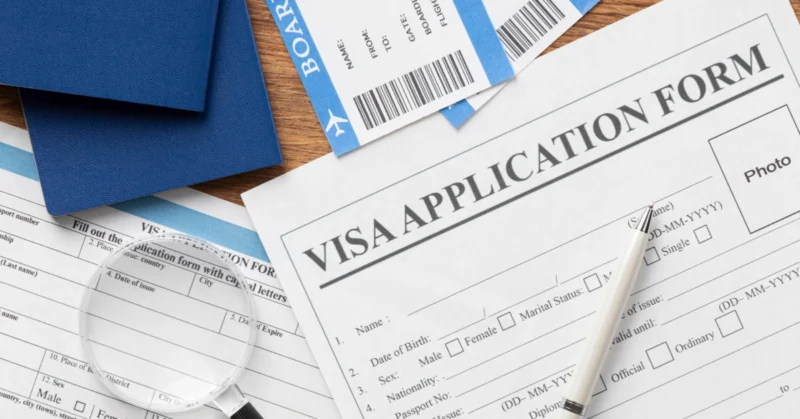
The Thailand visa requirements for UAE residents are the same whether you live in Dubai, Abu Dhabi or the Northern Emirates. You’ll upload everything as part of your online application.
General requirements
- Passport valid for at least six months from your date of entry to Thailand
- Recent passport-size photograph that meets the guidelines on the e-Visa website
- Proof that you’re currently in the UAE (the embassy calls this a document indicating your current location): a valid UAE residence visa or a valid Emirates ID
- Confirmed round-trip flight booking
- Proof of accommodation in Thailand, such as a hotel booking or an invitation letter, matching your travel dates
For a Thailand visa Dubai applicants should note one extra rule. If your application is handled by the Consulate-General in Dubai, your return ticket must start from the UAE and be issued by the airline.
Thailand tourist visa requirements
For a tourist visa, the e-Visa website lists these supporting documents:
- Biodata page of your passport or travel document
- Photograph taken within the last six months
- Document showing your current location, such as a valid UAE visa
- Travel booking confirmation
- Proof of accommodation in Thailand
- Financial evidence of at least 20,000 THB, such as bank statements for the last three months or a sponsorship letter
The tourist visa covers tourism and leisure, as well as visiting family in Thailand and medical treatment for stays of less than 60 days. It’s available as a single-entry or multiple-entry visa.
How to apply for a Thailand visa from Dubai
If you’re wondering how to apply for a Thailand visa, the whole process happens online. There’s no separate Thailand visa application form to download; you fill in the form on the e-Visa website. Here’s how to get a Thailand visa from Dubai or anywhere else in the UAE, following the official six steps:
- Create an account on thaievisa.go.th.
- Fill in the application form, choosing the visa category that matches your trip.
- Upload your supporting documents, including your passport, photo, UAE residence proof, flight and hotel bookings.
- Pay the visa fee online through the portal.
- Wait for your visa to be processed. Keep an eye on your email in case more documents are requested.
- Receive your e-Visa confirmation by email. Download it, print a copy and save a digital copy on your phone.
When you travel, show the printed e-Visa to the airline at departure and to Thai immigration on arrival. Carry your passport, proof of accommodation and return ticket too. If you want to stay longer, visit an immigration office in Thailand before your visa expires, as overstaying can lead to fines, detention or deportation.
The e-Visa website also has a user manual and video guides if you’d like to see each screen before you start.

Thailand visa processing time
Thailand visa processing times in the UAE vary depending on where your application is handled:
- Abu Dhabi: Allow around 3–10 working days, excluding the submission and payment date.
- Dubai: Processing can take around 5–20 days after a complete application and payment. Applicants are advised to apply 20–30 days before travelling.
These are estimated processing times and may vary depending on the application, additional document requests or public holidays.
Thailand visa fees
For a Thailand visa for UAE residents, the fees are set by the Royal Thai Embassy in Abu Dhabi and the Royal Thai Consulate-General in Dubai, and have applied since 15 July 2024. These same rates are the Thailand e-Visa fees you pay on the portal.
| Visa type | Fee (AED) |
| Transit visa | 200 per entry |
| Tourist visa (single entry) | 400 |
| Tourist visa (multiple entries within 6 months) | 1,000 |
| Non-immigrant visa (single entry) | 800 |
| Non-immigrant visa (multiple entries within 1 year) | 1,500 |
| Non-immigrant visa (multiple entries for 3 years, short-term business) | 5,000 |
| Non-immigrant visa (O-A long stay, 1 year) | 1,500 |
| Non-immigrant visa (O-X long stay, 10 years) | 3,000 |
| Destination Thailand Visa (multiple entries, 5 years) | 1,500 |
| SMART Visa (1 year) | 1,500 |
| SMART Visa (2 years) | 2,000 |
| SMART Visa (3 years) | 5,000 |
| SMART Visa (4 years) | 6,000 |
| Long-Term Resident Visa (10 years) | 8,000 |
So, the Thailand tourist visa fees are AED 400 for a single entry and AED 1,000 for multiple entries within six months. Visa fees are non-refundable, even if your application is rejected.
Thailand embassy Abu Dhabi: location and contact
The Thailand embassy Abu Dhabi office, officially the Royal Thai Embassy, no longer accepts visa applications in person, but you can still contact it with questions about your application.
| Detail | Information |
| Address | Villa No. 137, Saeed Bin Saif Al Falahi Street, Al Nahyan Area, Abu Dhabi |
| Phone | +971 2 557 6551 |
| thaiauh@emirates.net.ae | |
| Online e-Visa applications | 24 hours a day via thaievisa.go.th |
Check the embassy’s website before visiting, as working hours and public-holiday closures can change.
Thai consulate Dubai: location and contact
The Thai consulate Dubai office, officially the Royal Thai Consulate-General, is in Umm Suqeim 3, near Raffles International School West and opposite Jumeirah Beach Hotel. Like the embassy, it no longer takes visa applications in person, and it handles visa enquiries by email only.
| Detail | Information |
| Address | Villa 35, Al Jali Street, Community 366, Umm Suqeim 3, Dubai |
| Consular section phone | +971 4 348 9550 (Ext. 18, 31, 32) |
| Visa enquiries (email only) | thaidub@gmail.com |
| Consular section email | consular.dxb@mfa.go.th |
| Office days | Monday to Friday (closed Saturday, Sunday and official public holidays) |
The consulate’s phone line for the consular section runs from 2pm to 4pm.
Key takeaways
- From 15 September 2026, UAE and Indian passport holders, along with citizens of 58 other countries and territories, can visit Thailand visa-free for up to 30 days.
- Visa on arrival is now limited to Azerbaijan, Belarus and Serbia, at 2,000 THB.
- Everyone else applying for a Thailand visa for UAE residents does it online at thaievisa.go.th, while physically in the UAE. There are no in-person applications.
- You’ll need a passport valid for six months, a UAE residence visa or Emirates ID, return flights, a hotel booking and, for a tourist visa, proof of at least 20,000 THB.
- A single-entry tourist visa costs AED 400. Processing takes up to 3 to 10 working days in Abu Dhabi and up to 5 to 20 days in Dubai.
- Every non-Thai traveller, with or without a visa, must complete the free Thailand Digital Arrival Card (TDAC) online before arrival.
Planning more trips from the UAE? Property Finder’s blog has guides on the Turkey visa for UAE residents, the Saudi visa for UAE residents and the UK visa for UAE residents, plus a list of visa-free countries for UAE residents.
Frequently Asked Questions
It depends on your passport. Since 15 September 2026, citizens of 60 countries and territories, including the UAE, India, Saudi Arabia, the UK and the US, can enter Thailand visa-free for up to 30 days. Other nationalities need a visa, which UAE residents apply for online at thaievisa.go.th.
No, not for short stays. From 15 September 2026, Indian passport holders can visit Thailand visa-free for up to 30 days. For longer stays or other purposes, apply for the right India visa for Thailand, such as a tourist or non-immigrant visa, through the e-Visa website.
No. Visa on arrival is now only for nationals of Azerbaijan, Belarus and Serbia. Indian nationals don’t need it because they qualify for 30-day visa-free entry instead.
No. There’s no separate Bangkok visa. A Thai visa, or visa-free entry, covers your whole trip in Thailand, whether you’re visiting Bangkok, Phuket or Chiang Mai.
A single-entry tourist visa costs AED 400 and a multiple-entry tourist visa (within six months) costs AED 1,000. The fee is paid online and isn’t refundable.
No. Since 1 January 2025, the Royal Thai Embassy in Abu Dhabi and the Royal Thai Consulate-General in Dubai only accept applications through thaievisa.go.th. No travel agents are authorised to apply for you.
Up to 3 to 10 working days through the embassy in Abu Dhabi and up to 5 to 20 days through the consulate in Dubai. The consulate recommends applying at least 20 to 30 days before you fly.
Yes. The Thailand Digital Arrival Card is required for all non-Thai nationals, including visa-exempt travellers such as UAE passport holders. It’s free and can be submitted online within the three days before you travel.