



Dubai has rapidly progressed from testing autonomous vehicles to operating them on public roads. What began as limited pilot schemes has now evolved into structured, real-world deployment across key districts. Today, driverless car in Dubai are no longer futuristic concepts; they are part of an expanding transport ecosystem supported by regulation, infrastructure, and global technology partners.
- Current State of Operations
- How to Book a Driverless Taxi in Dubai
- What to Expect on Your First Ride
- How Much Does a Driverless Taxi Cost in Dubai?
- Planned Expansions and Future Projects
- Comparison: Key Players and Their Roles
- Opportunities & Challenges Ahead
- Future Outlook to 2030
- Key Takeaways
- FAQs
Current State of Operations
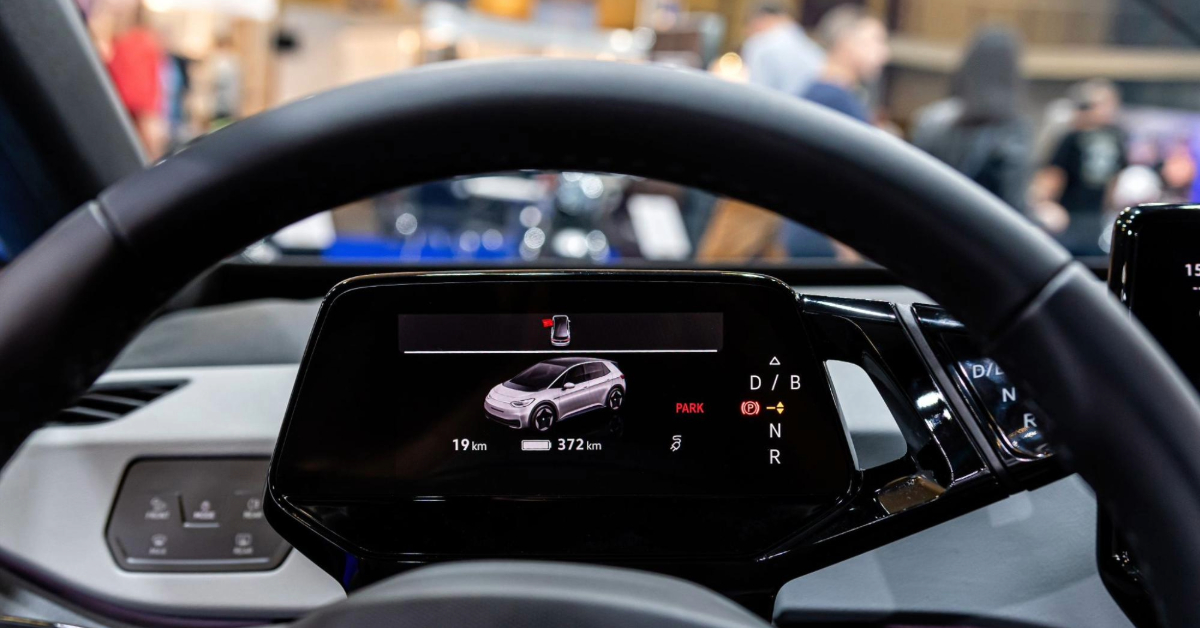
The current operational landscape reflects a carefully managed transition from supervised autonomy to fully driverless services. Rather than launching city-wide overnight, Dubai has adopted a district-by-district approach to test systems in real urban conditions.
Pilot Service Launch
In December 2025, the Roads and Transport Authority partnered with WeRide and Uber to introduce a public robotaxi pilot. Residents in Umm Suqeim and Jumeirah could book autonomous vehicles via the Uber app by selecting the “Autonomous” category.
During this initial stage, vehicles operated on public roads, with a trained safety specialist on board. This measure allowed the system to collect valuable real-time data while maintaining an added layer of reassurance for passengers. The presence of a human monitor also ensured compliance with regulatory standards during early deployment.
This pilot phase marked an important step in normalising autonomous mobility and familiarising residents with driverless cars in Dubai.
Fully Driverless RT6 Taxi Rollout
The next milestone arrived in early February 2026, when Dubai officially inaugurated fully autonomous operations of the RT6 robotaxi fleet operated by Baidu through its Apollo Go platform. Unlike the earlier pilot phase, these vehicles operate without a human driver inside, representing a genuine leap forward in urban automation.
The first public demonstration ride was taken by Sheikh Hamdan bin Mohammed bin Rashid Al Maktoum during the World Government Summit. This symbolic moment underscored the government’s confidence in the system’s safety and technical maturity.
With this launch, driverless cars in Dubai transitioned from supervised experimentation to fully operational transport services in designated zones.
Technical Specifications & Operational Zones
| Feature | Details |
| Sensor Suite | ~40 sensors, including LiDAR, multi-band radar, and advanced cameras for 360° environment perception and real-time decision-making |
| Vehicle Platform | Baidu’s RT6 robotaxi operated under Apollo Go; WeRide GXR platform in collaboration with Uber for autonomous rides |
| Service Zones | Initially active in Umm Suqeim and Jumeirah; planned expansion to Sheikh Zayed Road, Downtown, Business Bay |
| Regulatory Status | Phased approvals allowed trials with safety drivers; fully autonomous operations began early 2026 |
| Strategic Goal | 25% of all journeys in Dubai to be autonomous by 2030 |
How to Book a Driverless Taxi in Dubai
Booking a self driving car in Dubai works through a ride-hailing app on your smartphone (like Apollo or Uber). The process is similar to booking any standard taxi, with the key difference being that you select an autonomous or driverless ride option.
- Open your preferred ride-hailing app (Apollo Go or Uber’s Autonomous option) on your smartphone.
- Enter your pick-up location and destination. The service currently covers Jumeirah and Umm Suqeim.
- Select the autonomous or driverless ride option from the available ride types.
- Confirm your booking.
- When the vehicle arrives, follow the in-app instructions to unlock and board the car.
- Sit back and enjoy the ride.
Note: A safety specialist may occasionally be present in the vehicle during this phase of the rollout, though the car itself is fully autonomous.
What to Expect on Your First Ride
Riding a self driving car for the first time is a noticeably different experience from a standard cab, though the booking process and comfort level are comparable.
Once inside, the car operates entirely on its own. It accelerates, brakes, navigates turns, responds to traffic signals, and interacts with other vehicles and pedestrians without any human input. Passengers can follow the route in real time through the app throughout the journey.
During the current phase of the rollout, a safety specialist may sometimes be present in the vehicle to monitor operations, though the car itself is fully autonomous and the specialist does not drive.
How Much Does a Driverless Taxi Cost in Dubai?
| Platform | Fare | Free rides available? |
| Apollo Go app | Free (for a limited time during launch) | Yes |
| Uber (Autonomous option) | Around Dhs 63 to Dhs 81 per ride | No |
Pricing is dynamic and varies based on distance, demand, and time of day, similar to other ride types on the platform. For reference, a short trip between Jumeirah Mosque and Umm Suqeim can be priced at approximately Dhs 81, compared to Dhs 63 to Dhs 80 for other ride options on the same route.
Planned Expansions and Future Projects
While current operations focus on specific districts, the broader strategy centres on rapid but controlled scaling. Fleet expansion and geographic rollout are designed to move in parallel with regulatory readiness and infrastructure capacity.
Scaling the Fleet
Apollo Go has outlined plans to deploy around 100 fully autonomous vehicles in Dubai by early 2026, with ambitions to scale to more than 1,000 robotaxis in subsequent years. This exponential growth signals confidence in both demand and system reliability.
At the same time, Pony.ai is preparing to enter the Dubai market through trials and phased deployment. The introduction of multiple operators is expected to stimulate innovation while increasing service coverage. As competition and collaboration deepen, driverless cars in Dubai are likely to become a common commuting option rather than a novelty.
Zoned Rollout Strategy
Dubai’s rollout follows a layered geographic model. The first zone, comprising Umm Suqeim and Jumeirah, launched in late 2025 with safety drivers and has since progressed toward full autonomy. These areas had moderate road density and manageable traffic, making them ideal testing grounds.
The second phase targets more complex corridors such as Sheikh Zayed Road, Downtown and Business Bay. These districts feature higher traffic volumes, multiple junctions and increased pedestrian interaction, presenting a more demanding operational environment.
The third phase, expected mid-2026, will extend services to Nad Al Hammar and Nad Al Sheba. By gradually increasing environmental complexity, Dubai ensures that autonomous systems are refined before full city-wide integration.
Supporting Infrastructure & Regulation
Scaling autonomous mobility requires more than vehicles alone. To support operations, Apollo Go has inaugurated a dedicated operations and control centre at Dubai Science Park, spanning approximately 2,000 square metres.
Explore the Available Properties for Sale in Dubai Science Park
-


Penthouse
Listed 4 days ago
5,000,000 AED
2BR Penthouse | Direct Developer | Fully Furnished
Marriott Executive Apartments Building 2, Marriott Executive Apartments, Dubai Science Park, Dubai
2
3
2,114 sqft
-


Apartment
Listed 1 week ago
1,015,000 AED
Smart Studio Investment | Pool View | 35/65 P-Plan
SAAS Hills, Dubai Science Park, Dubai
studio
1
544 sqft
-


Apartment
Listed 3 weeks ago
930,000 AED
Investor Deal | SkyHills Astra | Furnished Studio
Skyhills Astra Tower B, Skyhills Astra, Dubai Science Park, Dubai
studio
1
377 sqft
-

Apartment
Listed 6 days ago
800,000 AED
Premium Studio | Investor Deal | Handover Q4 2026
11 Hills Park, Dubai Science Park, Dubai
studio
1
487 sqft
-


Apartment
Listed 1 week ago
1,530,000 AED
Best Market Price | Fully Furnished | Below OP
Skyhills Astra Tower A, Skyhills Astra, Dubai Science Park, Dubai
1
2
1,064 sqft
-


Apartment
Listed 5 days ago
1,400,000 AED
High Floor | Premium Amenities | Hot Deal
Binghatti Hills Tower 2, Binghatti Hills, Dubai Science Park, Dubai
1
2
857 sqft
-


Apartment
Listed 4 weeks ago
7,500,000 AED
CREATE YOUR OWN FLOORPLAN | DUPLEX SKY VILLA
SAAS Hills, Dubai Science Park, Dubai
4
5
3,691 sqft
-

Apartment
Listed 2 weeks ago
1,676,484 AED
Burj Khalifa and Sea view | 40/60 Payment Plan
SAAS Hills, Dubai Science Park, Dubai
1
2
923 sqft
-

Apartment
Listed 3 weeks ago
3,035,281 AED
DLD WAIVER | HIGH FLOOR | ULTRA LUXURY
SAAS Hills, Dubai Science Park, Dubai
2
2
2,143 sqft
-

Apartment
Listed 2 months ago
10,782,092 AED
CREATE YOUR OWN FLOORPLAN | DUPLEX SKY VILLA
SAAS Hills, Dubai Science Park, Dubai
4
5
4,392 sqft
The facility handles fleet monitoring, diagnostics, simulations, and performance optimisation, ensuring continuous oversight of driverless operations.
Regulatory policies have also matured significantly. After extensive testing phases, Dubai now permits fully driverless vehicles on public roads under defined compliance standards. Legal frameworks address insurance, accountability, and safety certification, ensuring that technological progress remains aligned with public protection.
Comparison: Key Players and Their Roles
Dubai’s autonomous taxi ecosystem is built on collaboration between technology developers, operators and regulators. Each participant contributes a different layer, technology, fleet management, digital booking platforms, or regulatory oversight, creating a comprehensive mobility ecosystem for driverless cars in Dubai.
| Organisation / Company | Role in Robotaxi System | Technology / Platform | Fleet Scale & Timeline |
| Baidu / Apollo Go | Develops and operates a fully autonomous RT6 robotaxi fleet | RT6 vehicles with 40+ sensors, AI navigation, HD maps | 100 vehicles by early 2026; target 1,000+ in subsequent years |
| WeRide + Uber | Operate robotaxi services via the Uber app; fleet management through local operator Tawasul | WeRide GXR platform; initially with safety drivers, moving to full autonomy | Active in Umm Suqeim and Jumeirah; transitioning to fully driverless zones. |
| Pony.ai | New entrant for trials and fleet deployment | Advanced AI sensors; 7th generation autonomous platforms | Trials in 2025; full operations mid-2026 in selected zones. |
| Dubai Taxi Company (DTC) | Traditional operator exploring autonomous services; potential operator partner | Evaluating multiple vehicle suppliers and autonomous tech | First autonomous services expected by Q1 2026 |
Opportunities & Challenges Ahead
The expansion of autonomous taxis presents transformative opportunities. Reduced human error can lower accident rates, while inclusive design can improve mobility for elderly and mobility-impaired residents.
Also, enhanced first- and last-mile connectivity may strengthen links between metro stations, residential communities and commercial hubs. Economically, Dubai’s leadership in autonomous mobility attracts global investment and technological partnerships.
However, challenges remain. Vehicles must reliably navigate complex urban traffic and varied weather conditions. Sensors and AI systems require continuous calibration to maintain safety standards. Insurance and liability frameworks must adapt to clarify responsibility in fully autonomous scenarios. Infrastructure costs, including EV charging networks and operational facilities, must also be balanced against long-term revenue models.
Future Outlook to 2030
Looking ahead, Dubai’s ambition to make 25% of all journeys autonomous by 2030 reflects a comprehensive mobility transformation rather than an isolated transport upgrade. Fleet sizes are expected to increase substantially, accompanied by expanded EV charging infrastructure, enhanced digital connectivity and additional control centres.
Future integration could extend beyond road transport, potentially linking autonomous taxis with aerial mobility projects and underground transit systems such as Dubai Loop.
If these initiatives align successfully, Dubai may establish one of the most advanced autonomous urban ecosystems in the world.
Key Takeaways
Dubai has progressed from pilot trials with safety drivers to fully operational robotaxis in selected zones. The driverless taxi Dubai experience is available in initial districts such as Umm Suqeim and Jumeirah, with plans for expansion towards areas like Sheikh Zayed Road and Downtown. Multiple global technology firms and local operators are collaborating under a structured regulatory framework. While safety, infrastructure and legal complexities remain, the roadmap towards scaled adoption is clear. By 2030, driverless cars in Dubai are expected to represent a significant share of daily urban journeys.
FAQs
The RT6 model operated by Apollo Go runs fully driverless in certain areas. Meanwhile, WeRide and Uber robotaxis operate in zones such as Umm Suqeim and Jumeirah, initially with safety drivers before transitioning to full autonomy.
Passengers can book through the Uber app by selecting the “Autonomous” option in eligible districts. Availability currently focuses on Umm Suqeim and Jumeirah.
Fully driverless services began in early 2026 in select zones, with expansion along major corridors expected throughout 2026. Fleet growth is projected to accelerate into 2027–2028.
Baidu’s Apollo Go develops and operates the RT6 fleet. WeRide collaborates with Uber for app-based bookings and operations. Pony.ai is preparing trial deployments, while Dubai Taxi Company is assessing integration into its services.
Key challenges include ensuring AI reliability, adapting insurance and liability laws, maintaining sensor accuracy in complex traffic conditions, and scaling infrastructure such as EV charging and operations centres.