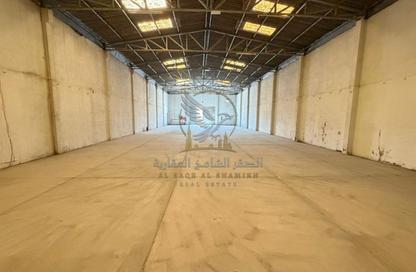
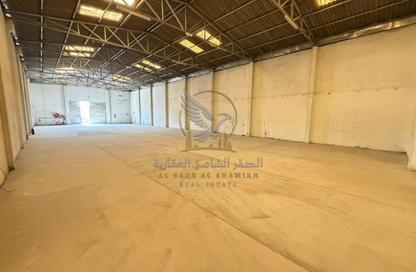
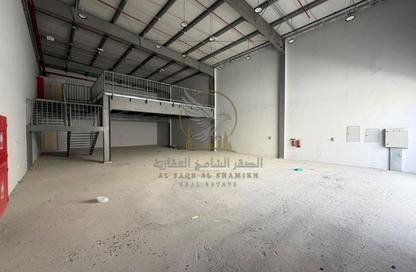
Your guide to finding a warehouse for rent in the UAE
The UAE is one of the most strategically positioned logistics and commercial markets in the world. Government initiatives such as Operation 300bn are actively expanding the country's industrial sector with a target to significantly strengthen the national economy by 2031. For businesses of all sizes, this translates into a well-developed ecosystem of industrial zones, free zones, and logistics corridors built to support everything from heavy manufacturing to last-mile e-commerce delivery.
Finding a warehouse for rent in the UAE means placing your operations at the center of major global trade routes, with direct access to some of the busiest ports and airports in the region. The market covers a broad range of options, from compact warehouses for storage units suited to small distributors to large-scale industrial warehouses for rent facilities designed for multinational operations. Renting rather than buying gives businesses the flexibility to scale their space as operations grow without committing significant capital to a fixed asset.
Market overview
The national average yearly rent for a warehouse for rent in the UAE sits at approximately AED 680,000, with the average unit covering around 4,500 sq ft. Prices vary considerably depending on the emirate, power capacity, and proximity to ports or major highways.
Most industrial leases in the UAE are paid annually. The market covers a wide range of property types, from dry storage and bonded facilities to climate-controlled units and smart warehouses with automated systems. Regardless of size or specification, standard features across most industrial warehouse for rent options include loading docks, roller shutter doors, and basic utility connections. Higher-specification units add features such as racking systems, high-clearance eaves, CCTV, and dedicated office annexes.
Demand for warehouses for storage space is strong across all emirates, driven by the growth of e-commerce, logistics, and manufacturing. Free zone facilities attract international businesses through 100% foreign ownership and customs exemptions, while mainland zones offer more flexibility for businesses trading directly with local consumers.
Average prices and sizes of warehouses for rent in the UAE
Rental rates for a warehouse for rent vary significantly across the seven emirates. The breakdown below reflects average annual costs and typical size ranges by location.
- Dubai: An entry-level small warehouse for rent starts from around AED 15,000 per year, while large networked facilities of up to 66,000 sq ft can reach AED 1,460,000 annually
- Abu Dhabi: Average yearly rent of approximately AED 1,470,000, with typical units spanning around 11,000 sq ft and some exceeding 65,000 sq ft
- Sharjah: Average yearly rent of AED 429,000 for units averaging 3,800 sq ft
- Ras Al Khaimah: Average yearly rent of approximately AED 643,000 for units around 4,300 sq ft
- Ajman and Umm Al Quwain: Most affordable entry points, with Ajman averaging AED 217,000 per year for units ranging from 1,500 to 6,000 sq ft
To illustrate real-world values: a logistics company can lease a 3,500 sq ft warehouse for rent in Dubai's Ras Al Khor for approximately AED 200,000 per year. In Abu Dhabi's ICAD zone, a 37,674 sq ft unit averages around AED 2,380,000 annually. A small warehouse for rent in Al Jurf, Ajman, covering 2,500 sq ft is available for around AED 100,000 per year.
Businesses should weigh the lower rental rates in the northern emirates against potential increases in transportation costs if their primary customer base is concentrated in Dubai or Abu Dhabi.
Top locations for warehouses for rent in the UAE
Dubai: JAFZA and Al Quoz
Jebel Ali Free Zone (JAFZA) is the leading destination for import and export businesses, offering direct access to Jebel Ali Port alongside full foreign ownership and tax exemptions. A warehouse for rent in JAFZA suits international trade companies and large-scale distributors. Al Quoz, centrally located between major highways within the city, is the preferred choice for wholesalers, retailers, and e-commerce operators who need fast last-mile delivery to Dubai residents. Both areas offer a strong availability of industrial warehouses for rent options across a range of sizes.
Abu Dhabi: ICAD and KIZAD
The Industrial City of Abu Dhabi (ICAD) in Mussafah handles heavy industry, with units offering large power capacities and open loading yards. It suits manufacturing and fabrication businesses requiring robust infrastructure. KIZAD in Al Samha connects directly to the deep-water Khalifa Port, making it the top choice for businesses handling significant international maritime freight and needing minimal transit time from ship to warehouse for storage.
Sharjah: Al Sajaa and the Industrial Area
Sharjah links Dubai to the northern emirates and offers some of the most practical mid-range warehousing in the country. Al Sajaa Industrial Oasis sits along the E611 highway and is well-positioned for distribution companies serving both Sharjah and Dubai without paying Dubai-level rents. The central Sharjah Industrial Area offers a broad inventory of affordable units suited to small and mid-sized manufacturing and storage operations.
Ras Al Khaimah: RAKEZ
The Ras Al Khaimah Economic Zone (RAKEZ) is growing in popularity for manufacturing, fabrication, and industrial storage. The Al Ghail Industrial Zone provides power supplies of up to 500 KV, supporting heavy machinery operations. The zone suits businesses that need a customizable, large-format industrial warehouse for rent at lower operational costs than the main UAE business hubs.
What type of warehouse for storage should you choose?
Before searching for a warehouse for rent in the UAE, it is worth narrowing down your technical requirements. Standard dry storage covers general goods and suits most distribution and retail operations. Perishable goods require climate-controlled facilities that maintain specific temperatures and humidity levels. Businesses involved in cross-border trade should consider bonded warehouses, which allow imported goods to be stored duty-free until they are sold. High-volume operations may benefit from smart warehouses equipped with automated retrieval systems and IoT-enabled inventory management.
Technical considerations for an industrial warehouse for rent
When evaluating an industrial warehouse for rent, pay close attention to eave height. Taller clearances allow for vertical racking, meaning you can store more in a smaller floor area and reduce overall lease costs. Check that the compound has sufficient parking and turning space for large delivery vehicles. Many standard units lack adequate cooling systems, so it is worth arranging a professional HVAC inspection before signing and negotiating that the landlord covers major repair costs within the lease terms.
Legal compliance and zoning
UAE municipalities enforce zoning regulations that strictly define what types of business activity are permitted in each industrial area. If you intend to use part of your warehouse for storage as a retail showroom or customer-facing space, you will need a formal zoning amendment from the relevant local authority before proceeding. To formalize an agreement for a warehouse for rent, companies must provide a valid UAE business license, corporate ownership documents, and Emirates IDs of the authorized signatories. Contracts must be registered through the appropriate system for the emirate, such as Ejari in Dubai or the Abu Dhabi Real Estate Centre (ADREC).
Location and transportation
The UAE's road network forms the backbone of its logistics infrastructure. Sheikh Zayed Road (E11) and Emirates Road (E611) run the length of the country, connecting all seven emirates and providing reliable overland access for distribution fleets.
For bulk cargo movement across the Emirates, the Etihad Rail freight network offers a more efficient alternative to road transport and is now operational across the country. Businesses operating in Abu Dhabi should also factor in the Darb toll gate system, which charges commercial vehicles during peak crossing hours.
Port access is a key consideration for import and export businesses. Jebel Ali Port in Dubai and Khalifa Port in Abu Dhabi are the two largest facilities in the country and sit adjacent to their respective major industrial zones, significantly reducing the distance between arrival and storage.
Pros and cons of renting a warehouse in the UAE
Pros
- Unmatched global connectivity through Jebel Ali Port, Khalifa Port, and multiple international airports
- Free zone options across Dubai, Abu Dhabi, Sharjah, and Ras Al Khaimah offer 100% foreign ownership and customs exemptions
- Wide range of warehouse for rent options from small warehouse for rent units in Ajman to large-scale automated hubs in Dubai
- Government-backed rental benchmarks such as ADREC in Abu Dhabi provide transparent pricing references for tenants
- Etihad Rail freight network provides a cost-effective alternative to road-based inter-emirate distribution
Cons
- Extreme summer temperatures require constant, heavy cooling, which significantly increases monthly utility costs for warehouse storage operations
- Adding a retail or customer-facing element to a standard industrial unit requires a municipal zoning amendment, which takes time and involves additional approvals
- Moving goods across emirates involves navigating different toll systems and varying local transport regulations, which adds logistical complexity
FAQs about warehouses for rent in the UAE
What documents are required to rent a warehouse in the UAE?
Companies need to provide a valid UAE business license, the passport and Emirates ID of the authorized signatory, and official corporate ownership documentation. Contracts must then be registered through the relevant local authority, such as Ejari in Dubai or ADREC in Abu Dhabi.
What is the cheapest emirate to rent a warehouse in the UAE?
Ajman offers the lowest average annual rates, at approximately AED 217,000 per year for units ranging from 1,500 to 6,000 sq ft. Umm Al Quwain and Sharjah also provide affordable options for businesses that do not need to be based in Dubai or Abu Dhabi.
What is the difference between a free zone and a mainland warehouse for rent?
Free zone facilities such as JAFZA and RAKEZ allow 100% foreign business ownership and offer customs duty exemptions, but trading is generally limited to within the zone or internationally. Mainland warehouses allow businesses to trade freely across the UAE and deal directly with local customers, but standard corporate ownership rules apply.
Can I use a warehouse for storage and retail at the same time?
Not without additional approval. Operating a customer-facing retail space within a standard industrial warehouse for rent requires a formal zoning amendment from the local municipality. Operating without this approval can result in significant penalties.
Is short-term warehouse rental available in the UAE?
Yes. Businesses that want to avoid long-term financial commitments can access public storage facilities or private operators offering flexible, pay-as-you-go warehousing solutions, particularly in Dubai and Sharjah.
How do I move goods between emirates efficiently?
The main arterial roads, E11 and E611, connect all seven emirates and are the primary routes for overland distribution. The Etihad Rail freight network provides a more efficient alternative for bulk cargo, while port-to-port shipping is available for maritime freight between Abu Dhabi and Dubai.
What size warehouses are available to rent in the UAE?
The market covers a very broad range, from a small warehouse for rent of 1,500 sq ft in Ajman to mega facilities exceeding 180,000 sq ft in Dubai and Abu Dhabi. The right size depends on your inventory volume, operational requirements, and the specific industrial zone you choose.